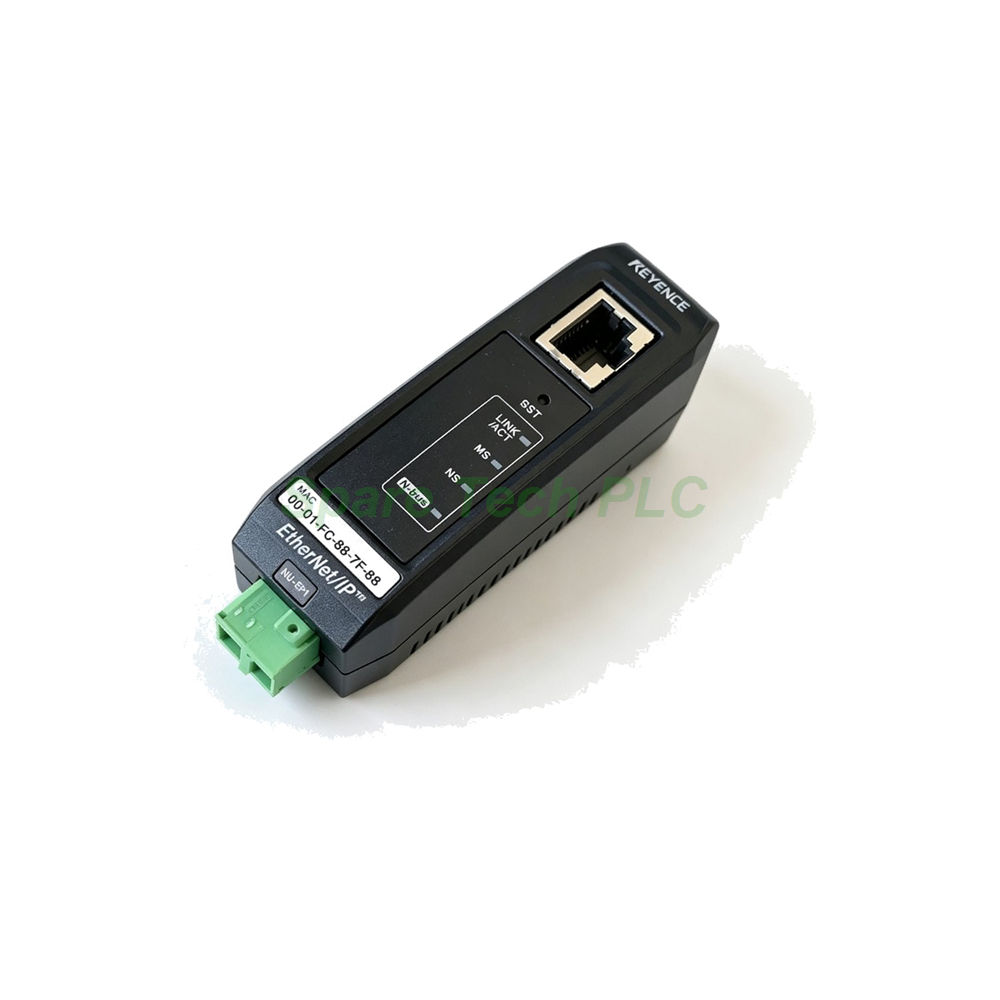
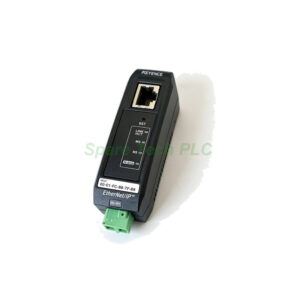
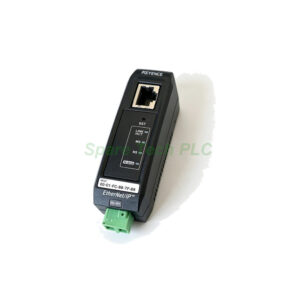
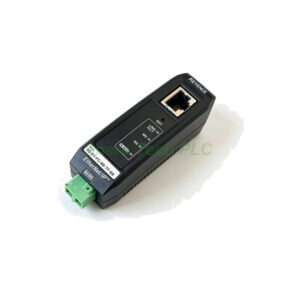
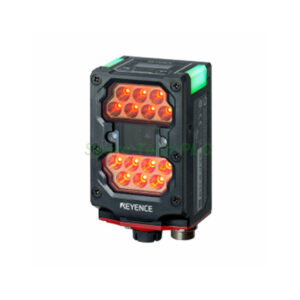
Keyence NU-EC1A EtherCAT Communication Unit
Product Introduction
The Keyence NU-EC1A links N-bus sensor amplifiers to EtherCAT control networks. It builds on the proven NU platform and adds explicit device ID support for easier node identification. Consequently, commissioning becomes faster on multi-node machines. This unit handles up to 16 sensor amplifiers through a wiring-saving connector, which cuts cabinet wiring effort. Additionally, engineers can assign clear device identities without extra hardware.
Technical Specifications
Network performance meets standard EtherCAT requirements. Specifically, the NU-EC1A uses IEEE802.3u (100BASE-TX) Ethernet at 100 Mbps. Two RJ45 ports allow daisy-chain layouts, and each node reaches up to 100 meters. Moreover, Cat 5e or higher STP cabling maintains signal integrity in noisy panels. The unit supports cyclic process data, mailbox CoE, and explicit device ID functions.
On the sensor side, the module accepts up to 16 N-bus compatible amplifiers. Total passing current stays at 1,200 mA or less. Therefore, users should sum amplifier currents before wiring. Besides, the wiring-saving connector reduces terminal count and speeds installation.
Electrical and Environmental Parameters
Power comes from a 24 VDC ±10% supply with ripple of 10% or less. Unfortunately, Keyence does not publish power consumption for this model. However, the 24 V rail and low-current design suit most control cabinets. The unit operates between -20 and +55 °C without freezing. Relative humidity tolerance spans 35 to 85% RH without condensation. Storage temperature and protection ratings remain unpublished. For instance, install the device in a dry enclosure to avoid condensation risks.
The Keyence NU-EC1A weighs approximately 0.08 kg including connectors. Dimensions are not available from the manufacturer. Meanwhile, the compact body fits tight DIN-rail spaces in dense panels.
Installation Guide
First, mount the unit inside the control cabinet on a DIN rail. Next, connect the N-bus amplifiers using the wiring-saving connector. Then, attach EtherCAT cables to both RJ45 ports with Cat 5e STP or better. After that, apply 24 VDC power within tolerance and confirm the status LEDs. Finally, configure the EtherCAT master to read the explicit device ID and start cyclic data exchange.
Additionally, verify that total amplifier current stays below 1,200 mA. Keep each node within 100 meters of the next device. Use shielded cable and separate power from signal lines where possible. Therefore, network stability improves in high-noise environments.
Packaging List
Keyence NU-EC1A Network Unit ×1
Wiring-saving connector ×1
RJ45 connectors ×2 (pre-installed)
Quick start guide ×1
FAQ
Q1: What does explicit device ID add on the NU-EC1A?
A: The NU-EC1A allows the EtherCAT master to identify each node explicitly, which simplifies addressing and maintenance on multi-unit networks.
Q2: How many sensor amplifiers can this unit connect?
A: It supports up to 16 N-bus compatible amplifiers, with a combined passing current of 1,200 mA or less.
Q3: Which cable type should I use for the EtherCAT ports?
A: Use Cat 5e or higher shielded twisted-pair cable with RJ45 connectors. Node distance reaches 100 meters.
Q4: Is power consumption data available for the NU-EC1A?
A: Keyence does not publish power consumption for this model. The unit runs on 24 VDC ±10% with ripple of 10% or less.
Q5: How do you ship the NU-EC1A and what is included?
A: We ship via Fedex, UPS, and DHL. The package includes the unit, wiring-saving connector, pre-installed RJ45 connectors, and a quick start guide.