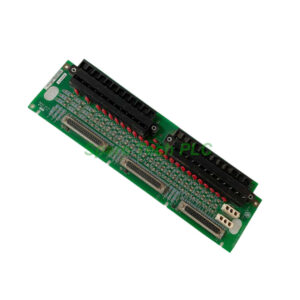
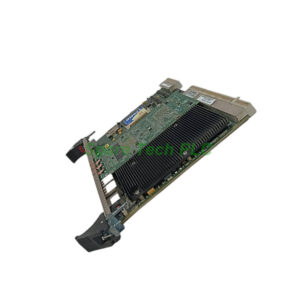
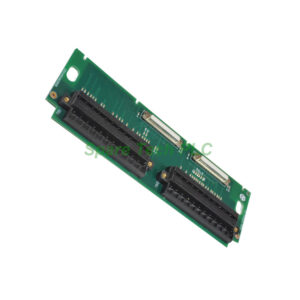
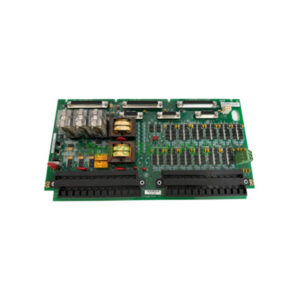
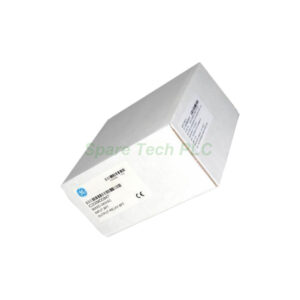
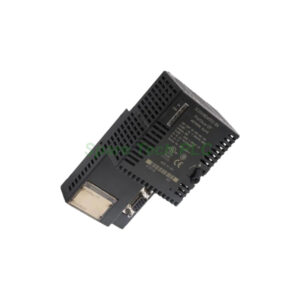
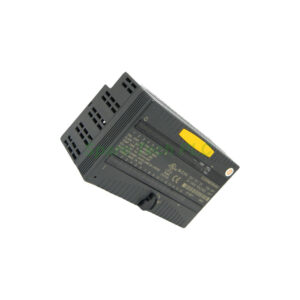
GE IS200TBAIH1CCC Analog Input Terminal Board for Mark VIe Systems
The IS200TBAIH1CCC functions as a versatile analog input terminal board within GE’s Mark VIe series. Engineers use this board to connect field transmitters to the control system. It provides 10 analog input channels and 2 analog output channels. Additionally, it supports multiple transmitter types and flexible output ranges.
Key Technical Specifications of the IS200TBAIH1CCC
This board measures 10.16 cm wide by 33.02 cm high. Its operating temperature ranges from 30°C to 65°C. The IS200TBAIH1CCC is manufactured in the United States. It comes with three DC-37 pin connectors for linking to I/O processors.
Each terminal board includes 12 channels in total. Ten channels are dedicated to analog inputs, while two channels serve as analog outputs. The input span for transmitters goes from 1-5 V DC, derived from a 4-20 mA current loop. Furthermore, each output delivers 24 V with a maximum current of 21 mA per connection.
Transmitter Compatibility and Input Flexibility
The IS200TBAIH1CCC works with many transmitter configurations. You can connect two-wire, three-wire, four-wire, or externally powered transmitters. Moreover, it accepts voltage inputs of ±5 V or ±10 V DC. This flexibility makes the board suitable for various field devices, including pressure, temperature, and flow transmitters.
For current input, the board handles the standard 4-20 mA range. It converts this current into a 1-5 V DC signal internally. The analog outputs can be configured for either 0-20 mA or 0-200 mA. Therefore, the IS200TBAIH1CCC adapts easily to different actuator or display requirements.
Noise Suppression and Signal Protection
Electrical noise can corrupt analog signals in industrial environments. For this reason, the IS200TBAIH1CCC includes specialized noise suppression circuitry on all inputs and outputs. This protection guards against surges and high-frequency interference. As a result, the board maintains accurate signal transmission even near heavy electrical equipment like turbine generators or variable frequency drives.
Connectivity and TMR Configuration Options
The board uses three DC-37 pin connectors labeled JR1, JR2, and JR3. For a simplex system, you only need to connect JR1. In a Triple Modular Redundant (TMR) setup, however, all three connectors are used. The R, S, and T controls each receive a fanned-out copy of the input signals.
For TMR outputs, the board aggregates current from the three connected output drivers. A measuring shunt on the IS200TBAIH1CCC determines the total current. Then, the electronics regulate this total to match the commanded setpoint. This design enhances operational accuracy and fault tolerance.
Installation Guidelines for the IS200TBAIH1CCC
First, power down the Mark VIe rack before handling the board. Next, slide the IS200TBAIH1CCC into its designated slot and secure it with screws. Then, wire the 10 analog inputs and 2 analog outputs directly to the two I/O terminal blocks on the board.
Each terminal block is secured with two screws. It features 24 terminals that accept wires up to #12 AWG. Adjacent to each terminal block, you will find a shield terminal attachment point. Use these points to connect cable shields properly. This step minimizes interference and ensures clean signals.
For simplex systems, connect one cable to JR1. For TMR systems, connect cables to all three DC-37 connectors. Finally, power on the system and verify each channel’s reading.
Jumper Configuration for Inputs and Outputs
The IS200TBAIH1CCC uses jumpers to customize channel behavior. Refer to the installation diagram for jumper locations. Below are the available jumper settings:
J1A through J8A: Select current input or voltage input for channels 1 to 8.
J1B through J8B: Connect return to common or leave it open per channel.
J9A and J10A: Choose between 1 mA or 20 mA input current for specific channels.
J9B and J10B: Connect return to common or leave open for designated channels.
Jumper J0: Sets output 1 to either 20 mA or 200 mA configuration.
Additionally, you can perform advanced adjustments using the toolbox. The toolbox allows fine-tuning for VAIC (Voltage Analog Input Configuration) or PAIC (Power Analog Input Configuration). These software-based settings expand the board’s customization beyond the basic jumpers.
Mechanical and Environmental Parameters
Operating Temperature: 30°C to 65°C
Dimensions: 10.16 cm (W) x 33.02 cm (H)
Weight: 0.92 kg (gross)
Country of Manufacture: USA
Mounting: Standard rack mounting within Mark VIe cabinet
The IS200TBAIH1CCC has a vertical orientation. Its narrow width saves panel space. Meanwhile, the terminal blocks are rated for #12 AWG wires, which handle most field wiring needs.
Integration with Mark VIe Control System
In a Mark VIe system, the IS200TBAIH1CCC connects directly to I/O processors via the DC-37 connectors. The board can be mounted side by side with other I/O terminals. For systems requiring high availability, TMR wiring provides redundancy without additional hardware.
Always verify that the jumper settings match your transmitter types before applying power. Incorrect jumpers may produce wrong readings or damage the input circuits. Furthermore, use the toolbox to confirm PAIC or VAIC settings after hardware configuration.
Packaging List
Note: No cables, certificates, or warranty documents are included in this package.
Shipping Information
All orders ship via FedEx, UPS, or DHL. Tracking numbers are provided within 24 hours after dispatch. International delivery typically takes 3 to 7 business days.
Frequently Asked Questions (FAQ)
1. Can I use the IS200TBAIH1CCC with a Mark VI (non-VIe) system?
No, this board is designed specifically for Mark VIe systems. It uses different connectors and signal levels than the older Mark VI series.
2. What happens if I wire a 4-20 mA transmitter to a channel set for voltage input?
The IS200TBAIH1CCC may give incorrect readings. Always set jumpers J1A–J8A to match your transmitter type. Voltage inputs expect 1-5 V DC, not current.
3. How do I know if I need simplex or TMR wiring?
Check your system’s redundancy requirement. Simplex uses one processor. TMR uses three processors for fault tolerance. The IS200TBAIH1CCC supports both, but TMR requires all three DC-37 connectors.
4. Does the board provide loop power for two-wire transmitters?
No, the IS200TBAIH1CCC does not supply loop power. Two-wire transmitters need an external 24 V DC power supply connected in series with the input.
5. Can I order just one piece of the IS200TBAIH1CCC?
Yes, single units are available from stock. Contact us for bulk pricing or volume discounts if needed.