
By Wayne — Sales Engineer
1606-XLP100E Industrial DC Power Supply: Installation and Maintenance Guide
Product Introduction
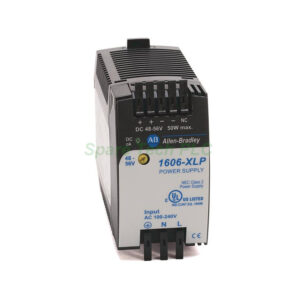
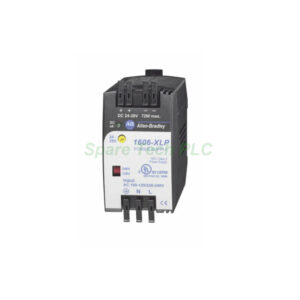
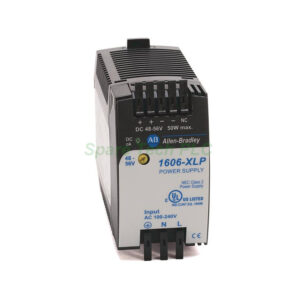
The 1606-XLP100E belongs to the Allen-Bradley XLP series of switched-mode power supplies. Firstly, this model provides a regulated 24V DC output with a rated current of 4.2A. Therefore, it suits small to medium control loads. In addition, the unit accepts a wide AC input range from 85V to 264V. Besides, its compact housing saves valuable panel space. Meanwhile, the 1606-XLP100E operates efficiently across a broad temperature range. Furthermore, engineers deploy this model in packaging lines, material handling systems, and process control cabinets. The 1606-XLP100E also features overload and short-circuit protection. Specifically, these protections safeguard downstream devices from fault conditions.
Core Value
Firstly, the 1606-XLP100E delivers high power density in a slim form factor. Moreover, its efficiency exceeds 90 percent under typical load conditions. Therefore, users save energy and reduce heat generation. In addition, the wide input range ensures global compatibility. Besides, the unit provides stable output regulation even during input voltage fluctuations. Meanwhile, the 1606-XLP100E supports parallel operation for redundant power schemes. Furthermore, its DIN-rail clip enables fast installation without special tools. Specifically, this power supply reduces wiring time and panel complexity. The 1606-XLP100E also meets common industrial EMC standards. Consequently, it minimizes interference with sensitive control electronics.
Technical Insights
Firstly, the 1606-XLP100E offers a 24V DC output with ±1 percent regulation accuracy. Moreover, ripple and noise remain below 50mV peak-to-peak. In addition, the unit handles a 150 percent power boost for short durations. Therefore, it supports startup of capacitive loads and small motors. Besides, the 1606-XLP100E includes an active power factor correction circuit. Meanwhile, this feature keeps harmonic distortion low. Furthermore, the supply provides a green LED status indicator for output voltage presence. Specifically, engineers use this indicator during commissioning and troubleshooting. The 1606-XLP100E also features a DC-OK relay contact. Consequently, control systems monitor supply health in real time. In addition, the unit holds output voltage stable during load transients. Therefore, sensitive PLC modules receive clean power.
Installation & Maintenance
Firstly, mount the 1606-XLP100E on a standard 35mm DIN rail. Moreover, leave at least 20mm clearance above and below the unit. In addition, connect input wiring to the L and N terminals. Besides, verify the PE ground connection for safety. Meanwhile, tighten terminal screws to the specified torque. Furthermore, connect the 24V DC output to the load circuit. Specifically, observe correct polarity to prevent damage. The 1606-XLP100E requires no external cooling fan. Therefore, keep ventilation slots free of dust. In addition, inspect terminals every six months for looseness. Besides, measure output voltage periodically with a calibrated meter. Meanwhile, replace the unit if the DC-OK contact fails. Consequently, preventive checks extend service life. The 1606-XLP100E needs no calibration or internal adjustment.

Buyer's Guide FAQ
Q1: What input voltage range does the 1606-XLP100E accept?
A: The 1606-XLP100E accepts 85V to 264V AC input. Therefore, it works on 120V and 240V mains worldwide.
Q2: Can I parallel two 1606-XLP100E units for redundancy?
A: Yes, the 1606-XLP100E supports parallel operation. Moreover, use external decoupling diodes for true redundancy.
Q3: What is the rated output current of the 1606-XLP100E?
A: The unit delivers 4.2A at 24V DC continuously. In addition, it provides a 150 percent boost for short periods.
Q4: How do I monitor the 1606-XLP100E status remotely?
A: The 1606-XLP100E provides a DC-OK relay contact. Therefore, wire this contact to a PLC input for status monitoring.
Q5: What maintenance does the 1606-XLP100E require?
A: The 1606-XLP100E needs only periodic cleaning and terminal checks. Besides, verify output voltage every six months.