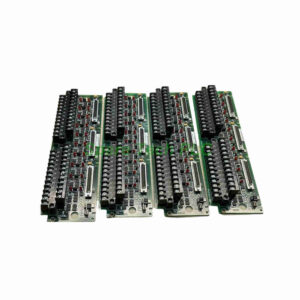
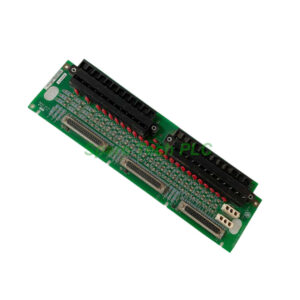
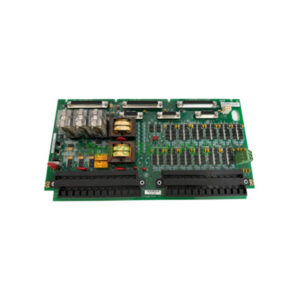
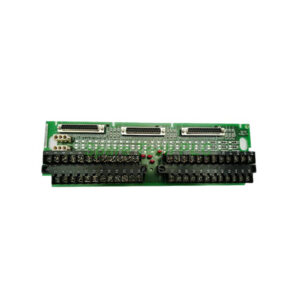
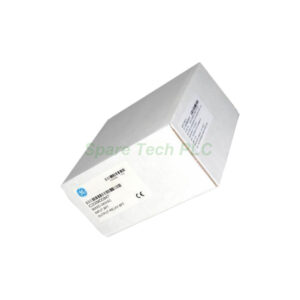
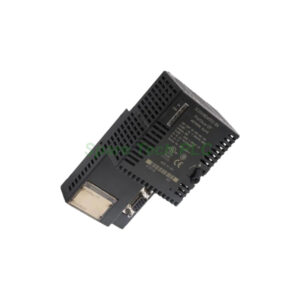
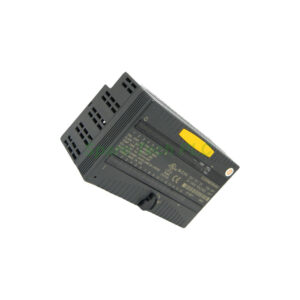
GE IS200TRTDH1CCC RTD Terminal Board for Mark VI Temperature Monitoring
The IS200TRTDH1CCC serves as a dedicated resistance temperature device (RTD) terminal board within GE’s Mark VI series. Engineers use this board to measure temperature accurately in turbine control applications. It handles up to 16 three-wire RTD inputs. Additionally, it converts analog RTD signals into digital temperature values for the controller.
Technical Specifications of the IS200TRTDH1CCC
This board measures 10.16 cm wide by 33.02 cm high. Its operating temperature ranges from -30°C to +65°C. The IS200TRTDH1CCC uses surface mount technology for compact construction. It comes with two DC-type connectors specifically designed for VRTD (Voltage Resistance Temperature Device) applications.
The board accommodates eight channels per terminal board. Each channel supports three-wire RTD connections. The voltage span for RTD measurements runs from 0.3532 V to 4.054 V. This wide range captures temperature variations with high resolution. Maximum lead resistance allowed is 15 ohms, which includes both the lead resistance and two-way cable resistance.
Supported RTD Types and Sensor Compatibility
The IS200TRTDH1CCC works with many RTD sensor types. You can connect the following sensors:
10 ohm platinum RTDs
100 ohm platinum RTDs
200 ohm platinum RTDs
10 ohm copper RTDs
120 ohm nickel RTDs
This variety ensures compatibility across different temperature ranges and applications. Platinum RTDs offer high accuracy over wide spans. Copper RTDs provide good linearity at lower costs. Nickel RTDs work well in specific industrial environments. Therefore, the IS200TRTDH1CCC adapts easily to your existing temperature sensors.
Noise Suppression and Signal Integrity
Electrical noise can distort low-level RTD signals. For this reason, the IS200TRTDH1CCC includes advanced noise suppression circuitry. This protection guards against surges and high-frequency interference. As a result, temperature readings remain stable even near heavy electrical equipment. The board also incorporates shield terminal strips adjacent to each terminal block. These strips attach to chassis ground, reducing electromagnetic interference further.
Communication with I/O Processors
The IS200TRTDH1CCC communicates with one or more I/O processors. These processors convert analog RTD inputs into digital temperature values. After conversion, the digital values transfer seamlessly to the controller. This process ensures precision and consistency in temperature monitoring. Moreover, it allows swift decision-making based on accurate temperature data.
Simplex Configuration and Connector Details
The IS200TRTDH1CCC is a simplex board. It features two DC-type connectors specifically for VRTD applications. This specialization makes the board ideal for systems that rely on DC-type connections. Note that other variants exist for different configurations. For instance, the TRTDH1B is a TMR variant using six DC-type connectors. The TRTDH1D uses two PRTD normal scan connectors. The TRTDH2D uses two PRTD quick-scan connectors. Always verify that you have the correct variant for your system.
Installation Guidelines for the IS200TRTDH1CCC
First, power down the Mark VI rack before handling the board. Next, slide the IS200TRTDH1CCC into its designated slot. Secure it firmly with screws. Then, wire the 16 three-wire RTD inputs directly to the two barrier-type terminal blocks on the board.
Each terminal block is fastened with two screws. It contains 24 terminals that accept wires up to #12 AWG. Adjacent to each terminal block, you will find a shield terminal strip. Connect your cable shields to this strip. The strip attaches to chassis ground. This step minimizes noise and ensures signal integrity.
For proper three-wire RTD wiring, connect each RTD’s two current leads and one sense lead to the correct terminals. Follow the numbering labels on the terminal blocks. Finally, power on the system and verify temperature readings from each channel.
Fault Detection Mechanisms
The IS200TRTDH1CCC includes robust fault detection features. High and low limit checks are performed at the hardware level. These checks detect out-of-range conditions and trigger appropriate responses. Additionally, software-level high and low limit checks provide a second layer of protection.
The board also detects failed ID chips. This capability enables quick identification of potential issues. Therefore, system operators can resolve problems before they interrupt operations. These fault detection mechanisms enhance overall system safety and reliability.
Mechanical and Environmental Parameters
Operating Temperature: -30°C to +65°C
Dimensions: 10.16 cm (W) x 33.02 cm (H)
Weight: 0.88 kg (gross)
Country of Manufacture: USA
Technology: Surface mount
Mounting: Standard rack mounting within Mark VI cabinet
The IS200TRTDH1CCC has a vertical orientation. Its narrow width saves panel space. The surface mount technology reduces component size and improves vibration resistance.
Lead Resistance and Measurement Accuracy
Maximum lead resistance is limited to 15 ohms. This limit includes both the RTD lead resistance and the two-way cable resistance. Keeping lead resistance low minimizes measurement errors. For long cable runs, use thicker wires (lower AWG number) to stay within this limit. Exceeding 15 ohms may cause inaccurate temperature readings.
Integration with Mark VI Control System
In a Mark VI system, the IS200TRTDH1CCC connects to VRTD boards via the two DC-type connectors. The board is typically used for temperature monitoring of bearings, inlet air, exhaust gases, and cooling water. Three-wire RTD configuration cancels out lead resistance errors automatically. This feature makes the board highly accurate for critical temperature measurements.
Always verify that your RTD type matches the board’s supported list. Connecting an unsupported RTD type may produce incorrect readings or damage the input circuits.
Packaging List
Note: No cables, certificates, or warranty documents are included in this package.
Shipping Information
All orders ship via FedEx, UPS, or DHL. Tracking numbers are provided within 24 hours after dispatch. International delivery typically takes 3 to 7 business days.
Frequently Asked Questions (FAQ)
1. Can I use the IS200TRTDH1CCC with two-wire RTDs instead of three-wire?
The board is designed for three-wire RTDs. Two-wire RTDs will work but with reduced accuracy because lead resistance cancellation is not fully achieved.
2. What happens if my lead resistance exceeds 15 ohms?
The IS200TRTDH1CCC may produce inaccurate temperature readings. Higher lead resistance adds offset errors. Use shorter cables or thicker wires to stay within the 15 ohm limit.
3. Is this board compatible with the Mark VIe system?
No, the IS200TRTDH1CCC is designed specifically for Mark VI systems. Mark VIe uses different I/O packs and connectors.
4. How do I know if I need the simplex or TMR version?
Check your system’s redundancy requirement. The IS200TRTDH1CCC is a simplex board for non-redundant applications. For TMR, you would need the TRTDH1B variant with six connectors.
5. Can I order just one piece of the IS200TRTDH1CCC?
Yes, single units are available from stock. Contact us for bulk pricing or volume discounts if needed.