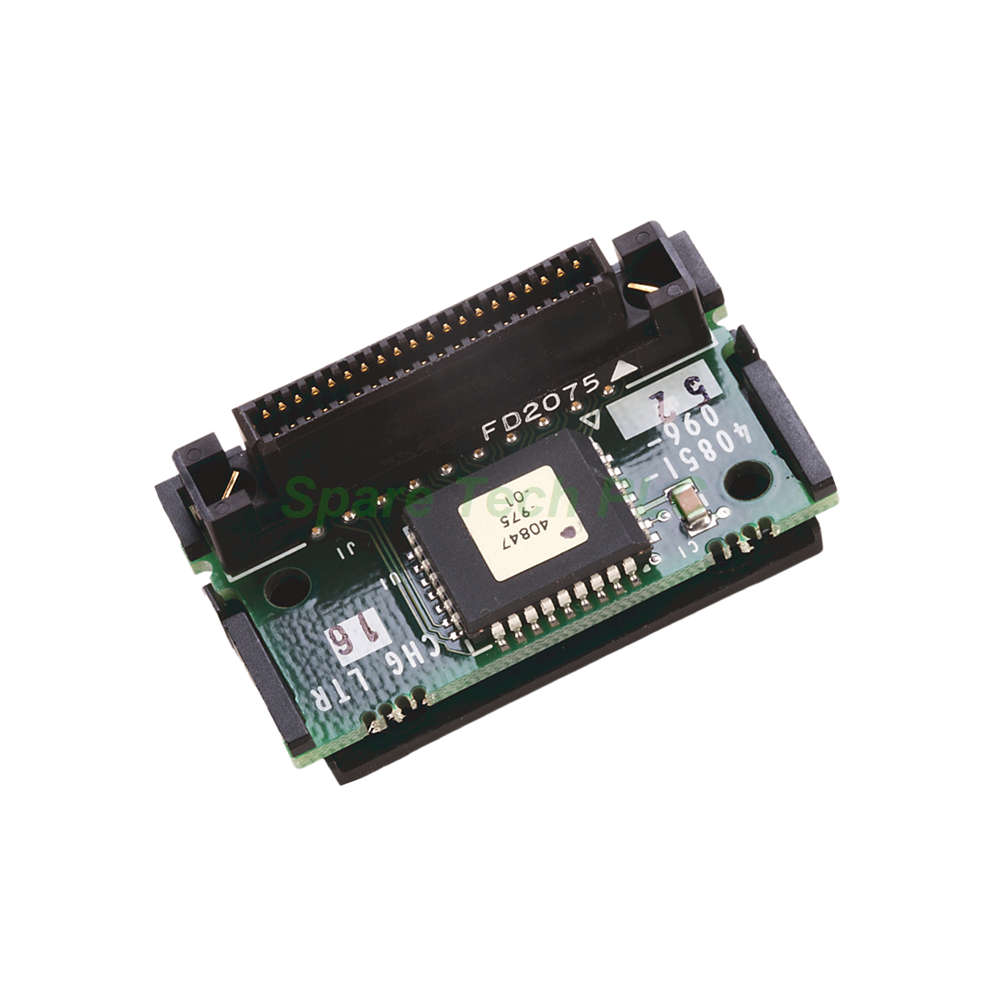
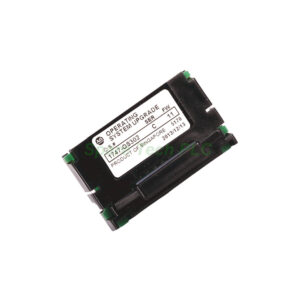
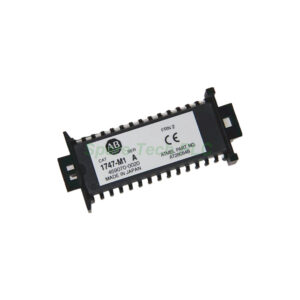
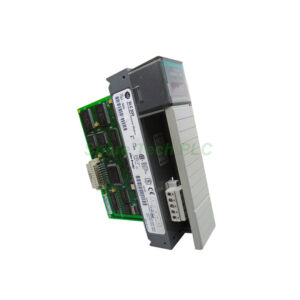
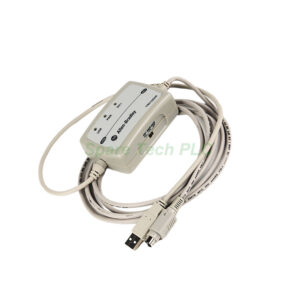
Allen-Bradley 1747-OS401 Firmware Upgrade Kit Overview
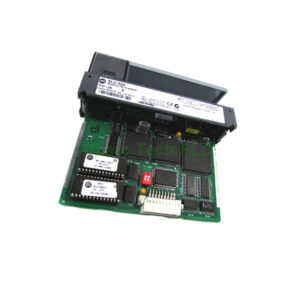
The 1747-OS401 is a powerful firmware/operating system upgrade kit designed specifically for the Allen‑Bradley SLC 5/04 processor platform. This upgrade dramatically expands the processor's instruction set, enabling it to handle more sophisticated process control tasks. By installing the 1747-OS401, you gain access to advanced mathematical functions, trigonometric operations, and enhanced data manipulation capabilities. Consequently, this upgrade transforms your SLC 5/04 into a more capable controller suitable for demanding automation environments.
Core Specifications and Enhanced Instruction Set
The 1747-OS401 provides a significant boost in programming flexibility and computational power. It introduces a wide range of new instructions that are essential for complex control strategies.
Compatible Processor: This upgrade kit is specifically designed for the SLC 5/04 processor architecture. It is not compatible with SLC 5/03 or SLC 5/05 processors.
Indirect Addressing: The 1747-OS401 supports indirect addressing for both word-level and bit-level references. This feature provides greater flexibility in handling data and allows for more efficient programming of repetitive or complex logic.
Advanced Mathematical Instructions: This firmware adds support for essential mathematical functions, including ATN (arctangent), cosine, sine, tangent, and natural logarithmic calculations. These functions are vital for executing complex calculations in process control, motion control, and analytical applications.
Data Manipulation Instructions: The upgrade includes support for SCP (Scale with Parameters), ABS (Absolute Value), SWP (Swap), ASN (Arc Sine), and ACS (Arc Cosine) instructions. This comprehensive set enables users to perform a multitude of data manipulation and control tasks efficiently.
Installation Guidelines
Proper installation ensures a successful firmware upgrade and prevents potential issues. Follow these instructions carefully.
Pre-Installation: First, save the current user program to a memory module or a programming terminal. The existing program will be erased during the upgrade process.
Installation Procedure: Remove the SLC 5/04 processor from its chassis. Carefully install the 1747-OS401 upgrade chip onto the processor board. Reinsert the processor and apply power.
Verification: After the upgrade, verify the new firmware version using your programming software. The enhanced instruction set should now be available for use in your ladder logic programs.
Packaging and Logistics
Your order includes the firmware upgrade chip and necessary documentation. All items are packaged securely to prevent electrostatic discharge damage.
Shipping: We use FedEx, UPS, or DHL to provide fast and reliable global delivery.
Frequently Asked Questions (FAQ)
Q1: Which processor is compatible with the 1747-OS401?
The 1747-OS401 is specifically designed for the SLC 5/04 processor. It upgrades the operating system to OS401, which provides an expanded instruction set. It is not compatible with SLC 5/03 or SLC 5/05 processors.
Q2: What new instructions does the 1747-OS401 provide?
This upgrade adds support for advanced mathematical instructions, including sine, cosine, tangent, arctangent (ATN), and natural logarithm. Additionally, it provides SCP, ABS, SWP, ASN, and ACS instructions for enhanced data manipulation.
Q3: Does the 1747-OS401 support indirect addressing?
Yes. The 1747-OS401 enables indirect addressing for both word-level and bit-level references. This capability provides greater programming flexibility and efficiency when handling complex data structures.
Q4: Will upgrading to OS401 erase my existing program?
Yes. The user program is cleared as part of the firmware upgrade process. Therefore, you must save your ladder logic program before starting the installation.
Q5: What are the main benefits of upgrading to the 1747-OS401?
The upgrade significantly enhances your SLC 5/04 processor's capabilities. It enables complex mathematical computations, improves data handling through indirect addressing, and provides a broader range of instructions for advanced process control applications.