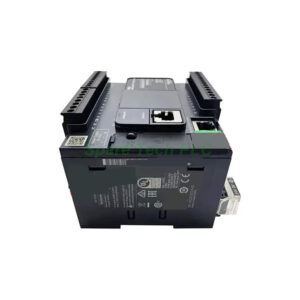
Modicon M221 PLC – Compact, Reliable, and Versatile
Product Introduction
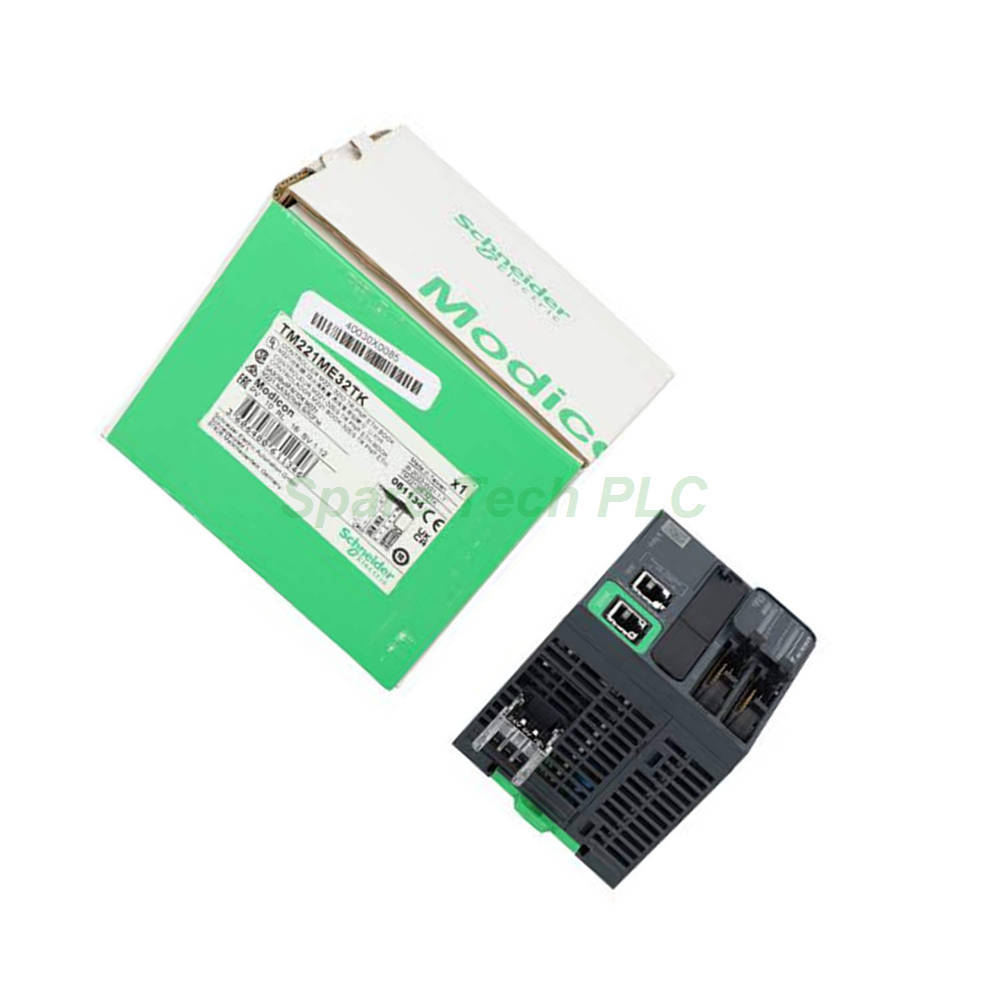
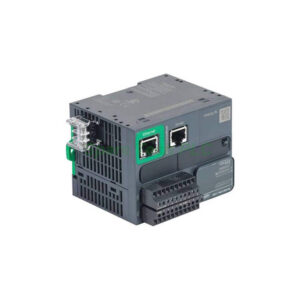
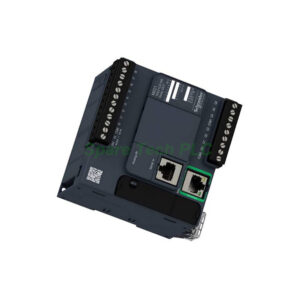
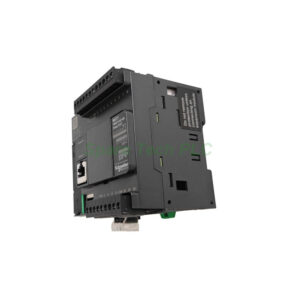
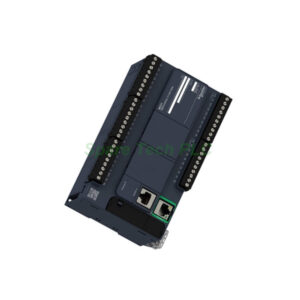
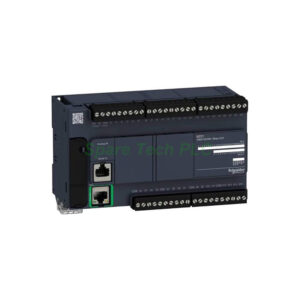
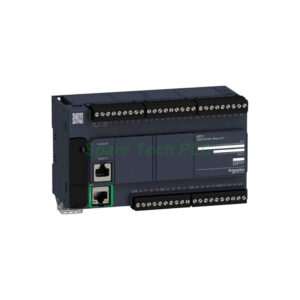
The TM221ME32TK belongs to the Modicon M221 series, a well-known family of logic controllers from Schneider Electric. Manufacturers and system integrators often choose this model for its balanced I/O count and flexible communication options. This controller operates on a 24 V DC supply and includes 16 discrete inputs, 16 transistor outputs, and 2 analog inputs. It also features an Ethernet port and a USB port, which simplify programming and device connectivity.
Furthermore, the TM221ME32TK supports up to 7 expansion modules. This scalability allows you to adapt the system as your application grows. Its compact dimensions (90 x 70 x 70 mm) save valuable panel space. Meanwhile, the built-in real-time clock and data backup memory ensure reliable operation even during power interruptions.
Key Technical Specifications
Power Supply and Power Consumption
The controller accepts a supply voltage ranging from 20.4 to 28.8 V DC. Its nominal rating is 24 V DC. Without expansion modules, it consumes only 4.2 W. However, with a full set of expansions, power consumption can reach 23.2 W. Additionally, the built-in power supply provides 0.52 A at 5 V and 0.48 A at 24 V for the expansion bus.
Discrete and Analog Inputs
This model offers 16 discrete inputs, all compliant with IEC 61131-2 Type 1 standards. Among these, 4 inputs serve as fast inputs. For analog signals, it provides 2 channels with a 0–10 V range and 10-bit resolution. The conversion time is 1 ms per channel plus one controller cycle. Input impedance values are 3.4 kΩ for standard inputs, 4.9 kΩ for fast inputs, and 100 kΩ for analog inputs. Moreover, the discrete inputs support both sink and source wiring, giving you flexibility in field wiring.
Transistor Outputs
The TM221ME32TK includes 16 transistor outputs, all with positive logic (source type). Each output can sink 0.1 A at 24 V DC. Two of these outputs (Q0 and Q1) are fast outputs capable of 100 kHz operation in PWM or PLS mode. Outputs Q2 and Q3 support 5 kHz, while the remaining outputs run at 0.1 kHz. Therefore, you can use this controller for both high-speed positioning and general-purpose switching tasks.
Communication and Connectivity
For programming and data exchange, the controller includes a Mini B USB 2.0 port and an RJ45 Ethernet port. The Ethernet interface supports 10BASE-T/100BASE-TX and offers Modbus TCP client/server, Ethernet/IP adapter, and DHCP client services. In addition, a non-isolated serial link (RS232/RS485) is available on an RJ45 connector. This serial port supports Modbus RTU/ASCII protocols. Transmission rates range from 1.2 to 115.2 kbit/s, depending on the interface and cable length.
Memory and Real-Time Clock
The controller has 256 kB of RAM for user applications and data, plus another 256 kB for internal variables. It also includes 256 kB of built-in flash memory for backing up programs and data. For additional storage, you can insert an optional 2 GB SD card. The real-time clock keeps accurate time with a drift of only 30 seconds per month at 25 °C. A BR2032 lithium battery maintains the clock and data for up to one year after power loss.
High-Speed Functions
Specifically, the TM221ME32TK supports up to 4 fast inputs for high-speed counting (HSC mode) at 100 kHz. These counters can operate in A/B, Pulse/Direction, or Single Phase modes. For motion control, it offers PTO positioning for up to 2 axes in pulse/direction mode or 1 axis in CW/CCW mode, both at 100 kHz. Additionally, the built-in PID regulator can handle up to 14 simultaneous loops, making it suitable for process control applications.
Mechanical and Environmental Ratings
Physical Dimensions and Mounting
The controller measures 90 mm in height, 70 mm in width, and 70 mm in depth. It weighs only 0.27 kg. You can mount it on a DIN rail (TH35-7.5 or TH35-15) or on a panel using a fixing kit. This flexibility simplifies installation in various cabinet layouts.
Temperature and Humidity Ranges
For horizontal installation, the operating temperature ranges from -10 °C to 55 °C. For vertical mounting, the maximum temperature drops to 35 °C. Storage temperature ranges from -25 °C to 70 °C. The unit operates reliably in relative humidity from 10% to 95% (non-condensing). Therefore, it performs well in most industrial environments.
Vibration and Shock Resistance
The controller withstands vibrations of 3.5 mm at 5–8.4 Hz and 1 gn at 8.4–150 Hz on both DIN rail and panel mounting. It also resists shocks up to 147 m/s² for 11 ms. These ratings ensure long-term durability in machinery and moving equipment.
Electrical Immunity and Emissions
This device meets EN/IEC 61000-4-2, -3, -4, -5, -6, and -8 standards for EMC. It handles electrostatic discharge up to 8 kV in air and 4 kV on contact. Conducted and radiated emissions comply with EN/IEC 55011 Class A limits. Additionally, it endures micro-breaks of up to 10 ms without malfunction.
Installation and Wiring Guidance
Mounting Instructions
First, choose a suitable location inside your control panel. Ensure adequate airflow around the unit. Then, snap the controller onto the DIN rail or secure it with screws for panel mounting. Leave enough clearance for cables and connectors.
Power Supply Wiring
Connect the 24 V DC power supply to the 3-terminal block. Observe correct polarity to avoid damage. The controller includes short-circuit and overload protection with automatic reset, which enhances safety.
Input and Output Connections
Use the two HE-10 connectors (20 pins each) for discrete inputs and outputs. For analog inputs, use the dedicated 4-terminal connector. For fast inputs and outputs, use shielded cables to minimize noise and maintain signal integrity. Specifically, keep shielded cable lengths under 10 m for fast inputs and 3 m for fast outputs.
Communication Cabling
Connect your programming PC via the USB port or Ethernet. For serial communication, use an RJ45 cable. The Ethernet port supports standard CAT5e or CAT6 cables up to 100 m. Meanwhile, the serial link works best with cables up to 15 m for RS485 and 3 m for RS232.
Packaging List
1 x TM221ME32TK logic controller
1 x 3-pin power supply terminal block (pre-installed)
1 x 4-pin analog input connector
2 x HE-10 connectors (20 pins each) for I/O
1 x Quick start guide (paper)
1 x SD card slot cover (pre-installed)
Note: Cables, programming software, and mounting accessories are sold separately.
Frequently Asked Questions (FAQ)
1. Can I expand the I/O capacity of the TM221ME32TK?
Yes. You can connect up to 7 expansion modules (relay output type) to increase your total I/O count. This makes the controller suitable for applications that require more than 32 points.
2. What programming software works with this controller?
Schneider Electric's SoMachine or EcoStruxure Machine Expert – Basic software supports this model. You can also use the USB or Ethernet port for programming and debugging.
3. Does it support Modbus communication?
Yes. The serial link supports Modbus RTU/ASCII (master/slave). The Ethernet port supports Modbus TCP client, server, and slave modes. Additionally, it works as an Ethernet/IP adapter.
4. How do I backup my program and data?
You can store your application and data in the built-in flash memory. For larger backups, insert an optional SD card (up to 2 GB). The battery-backed RAM also retains data for up to one year after power loss.
5. What is the maximum output frequency for positioning?
The fast outputs Q0 and Q1 can generate pulses up to 100 kHz in PTO, PWM, or PLS mode. This allows precise control of stepper or servo drives for two axes.