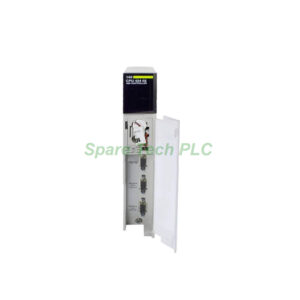
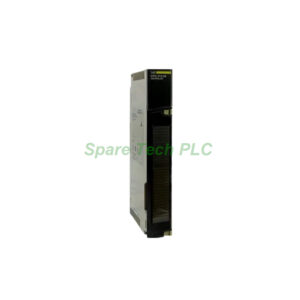
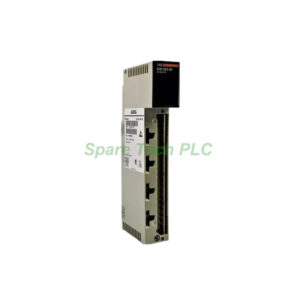
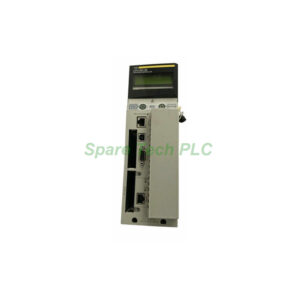
140DAI34000C Modicon Quantum Discrete Input Module
Product Introduction
The 140DAI34000C from Schneider Electric functions as a dedicated discrete input module within the Modicon Quantum PLC family. This module captures digital signals from switches, sensors, and other field devices, converting them into usable data for the central processor. Its 16 input channels and 24 V AC operating voltage make it a practical choice for many industrial monitoring and control applications.
Key Technical Specifications
The Schneider Electric 140DAI34000C provides 16 discrete input channels that operate at a nominal voltage of 24 V AC. This configuration allows it to interface directly with a wide range of standard industrial sensors and switching devices. For addressing purposes, the module requires 1 input word in the system's memory map.
In terms of electrical characteristics, the input current ranges from 10.7 to 12 mA, which ensures consistent and reliable signal detection. The module's maximum leakage current is specified at 1.9 mA, a critical parameter for minimizing false triggers and maintaining signal integrity. Additionally, it draws a bus current of 180 mA from the rack backplane and has a maximum power dissipation of 5.5 W, reflecting its efficient energy design.
Standards and Compliance
This input module carries the CE marking, confirming its conformity with essential European health, safety, and environmental protection standards. Moreover, it adheres to UL 508 and CSA standards, which are widely recognized benchmarks for industrial control equipment. These certifications provide assurance of the module's quality and its suitability for use in regulated environments.
Mechanical and Environmental Parameters
The 140DAI34000C is designed in a standard format, ensuring straightforward compatibility with Modicon Quantum racks and backplanes. It operates reliably within an ambient temperature range of 0°C to 60°C, making it suitable for various factory floor conditions. Weighing approximately 0.30 kg, the module is lightweight and easy to handle during installation.
Installation Guidelines
Installing the 140DAI34000C involves a few simple steps. Begin by turning off the power to the rack to ensure safety. Then, align the module with the guide rails inside the Quantum chassis and slide it in until it securely seats into the backplane connector. Finally, tighten the retaining screws to lock the module in place. Once installed, you can proceed with wiring the field devices to the front terminals.
Packaging List
Shipping Information
All orders are dispatched using reliable express services, including Fedex, UPS, and DHL.
Frequently Asked Questions
1. What type of field devices can I connect to the 140DAI34000C?
You can connect devices that provide a discrete 24 V AC signal, such as proximity sensors, limit switches, push buttons, and selector switches. The 140DAI34000C is specifically designed to handle these AC inputs.
2. How does the 140DAI34000C handle input filtering?
The module typically includes built-in input filtering to debounce signals from mechanical contacts. This helps prevent false triggering caused by contact bounce or electrical noise, ensuring stable and accurate data acquisition.
3. What happens if the input current exceeds the specified range?
Exceeding the input current range of 10.7 to 12 mA could potentially damage the input circuitry. It is important to ensure that the connected field devices comply with this specification to maintain reliable operation.
4. Is the 140DAI34000C compatible with the 140CPU42402C processor?
Yes, the 140DAI34000C is fully compatible with the 140CPU42402C and other Modicon Quantum series processors. It can be used alongside other I/O modules to build a complete control system.
5. What does the CE marking on this module signify?
The CE marking indicates that the 140DAI34000C meets the essential requirements of relevant European directives, including safety and electromagnetic compatibility standards. This certification facilitates its use in installations within the European Economic Area.