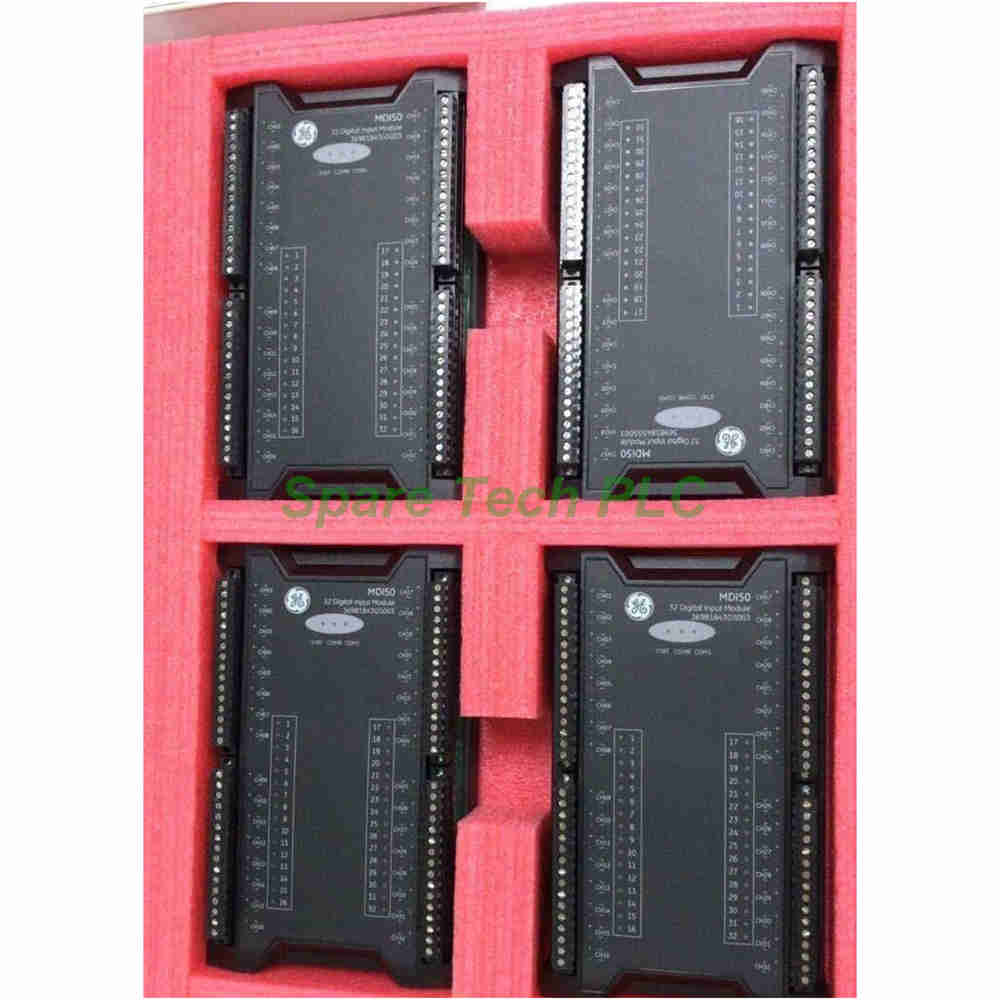
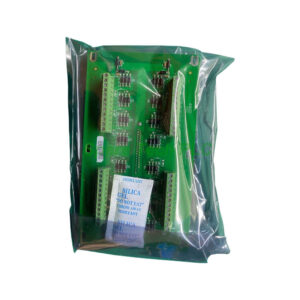
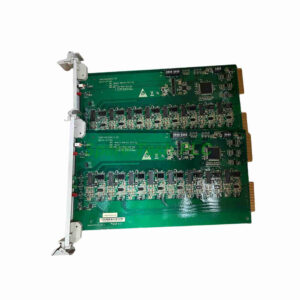
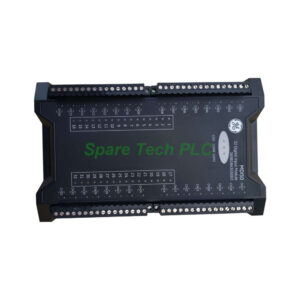
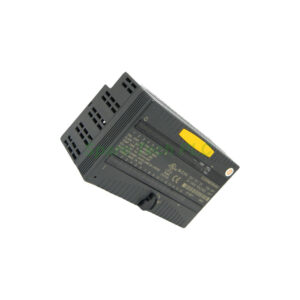
GE MAI50 Nexus Series Analog Input Module
Product Introduction
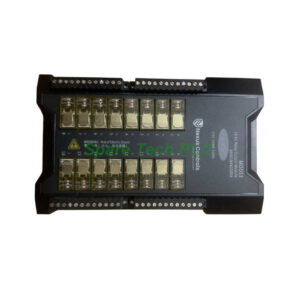
The GE MAI50 belongs to the Nexus series and functions as a high-performance analog input module. This unit delivers 16 differential analog inputs with field-selectable ranges of ±10V, ±5V, and 0(4)–20mA. Its built-in 16-bit ADC converts signals with a maximum error of just 0.1%. Designed for critical process monitoring, the MAI50 supports dual-redundant 24V DC power supplies and provides extensive isolation between channels and the system bus. Additionally, the MAI50 meets rigorous EMC standards, making it suitable for power generation, oil and gas, and heavy manufacturing applications.
Technical Specifications
Input Characteristics
The module offers 16 analog input channels grouped in two banks of eight. Each channel accepts voltage or current signals without external shunt resistors. Specifically, the signal ranges include ±10V, ±5V, and 0(4)–20mA. For current measurements, the built-in burden resistor simplifies wiring. Moreover, the GE MAI50 supports over-range detection up to ±10% for 4–20mA inputs, while software flags alarm conditions accordingly. Measurement accuracy reaches 0.1% of full scale, ensuring precise data acquisition.
Analog-to-Digital Conversion
A high-performance 32-bit embedded processor manages the ADC, which provides 16-bit resolution with eight channels per conversion group. The sampling sequence minimises crosstalk between adjacent channels. Furthermore, the MAI50 achieves a common-mode rejection ratio exceeding 120dB and a differential-mode rejection ratio above 60dB. These figures effectively suppress electrical noise from motors, drives, and switching power supplies.
Isolation and Protection
Isolation ratings are particularly robust. Channel-to-channel isolation stands at 250VAC, while channel-to-ground isolation reaches 500VAC. More importantly, the system bus isolation is rated at 1500VAC, protecting the main controller from field-side faults. This triple-layer isolation design makes the MAI50 a reliable choice for high-voltage environments.
Communication and Bus
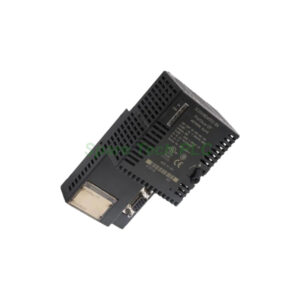
The GE MAI50 communicates over a redundant high-speed intelligent serial bus at 1Mbps. A female DB-9 connector provides the physical interface. This redundant architecture ensures uninterrupted data transfer even if one bus path fails. Meanwhile, front-panel LEDs indicate module status, communication activity, and fault conditions for quick diagnostics.
Power Requirements
Dual 24V DC inputs (±10%) support 1:1 redundancy. The MAI50 draws 11.0W maximum, with typical consumption around 3W and peak at 5W. The operating voltage range spans 21.6–26.4V DC. This redundant power design enhances system availability in mission-critical applications.
Mechanical and Environmental Parameters
Physical Dimensions
The module measures 209mm in height, 129.5mm in width, and 51mm in depth. Its compact form factor fits standard Nexus series racks.
Terminal Connections
A single-row European-style removable terminal block accepts 2.5mm² wire, supporting dual-wire terminations. This detachable design simplifies field wiring and future maintenance.
Environmental Limits
Operating temperature ranges from 0°C to 60°C, with relative humidity between 10% and 90% (non-condensing). Vibration resistance covers 10–500Hz with acceleration not exceeding 10m/s². Additionally, the GE MAI50 tolerates industrial dust levels with particle sizes above 0.5µm limited to fewer than 18,000 particles per litre.
Regulatory Compliance
The MAI50 complies with CFR 47 FCC Part 15: 2009, ANSI C63.4-2003, EN 61326-1: 2006, CISPR 11: 2007, and IEC 61000-4-2/3/4/5/6/8/11. It carries CE certification as part of the complete system.
Installation Guidance
Mounting Instructions
Secure the module to the rack using screw-type mounting. Ensure the mounting surface is flat and free from excessive vibration. Tighten all screws evenly to avoid mechanical stress on the PCB.
Wiring Recommendations
Use 2.5mm² copper wire for terminal connections. Strip approximately 7–8mm of insulation before inserting into the removable terminal block. For current loop inputs, connect the positive lead to the corresponding channel terminal and the negative lead to the common return. Double-wire terminations are permitted, enabling daisy-chaining of power or signal returns.
Bus Connection
Connect the DB-9 female port to the system bus using a shielded serial cable. For redundant bus operation, both ports must be connected to separate bus paths. Verify that termination resistors are properly configured at the physical layer.
Power Connection
Apply both 24V DC supplies simultaneously for full redundancy. Each supply must deliver at least 0.5A continuously. Use a separate pair of terminals for each power input to avoid single-point failures.
Packaging List
GE MAI50 analog input module × 1
Removable terminal block (single-row, European-style) × 1
Screw mounting kit (screws and washers) × 1 set
Product label with serial number × 1
Quick installation guide (printed) × 1
Shipping Method: FedEx, UPS, DHL
Frequently Asked Questions
Q1: Can the MAI50 accept both voltage and current inputs simultaneously on different channels?
Yes. Each channel is individually configurable for ±10V, ±5V, or 0(4)–20mA. You can mix signal types across the 16 channels without any hardware modifications.
Q2: What happens if one of the two 24V DC power supplies fails?
The module continues to operate normally on the remaining supply. The 1:1 redundant architecture ensures zero downtime during a single power failure. However, the front-panel LED will indicate the fault for maintenance.
Q3: Is the MAI50 compatible with older GE Nexus racks?
Yes. The GE MAI50 maintains mechanical and electrical compatibility with all Nexus series backplanes. Please verify firmware revision for full feature support.
Q4: Why is there no over-range alarm for ±10V inputs?
The MAI50 provides software-based over-range detection only for 4–20mA current inputs. For ±10V range, the ADC saturates at the rails without generating a specific alarm flag.
Q5: What is the recommended cable type for current loop connections?
Use twisted-pair shielded cable with the shield grounded at one end. This minimises induced noise and maintains the high common-mode rejection ratio specified for the MAI50.