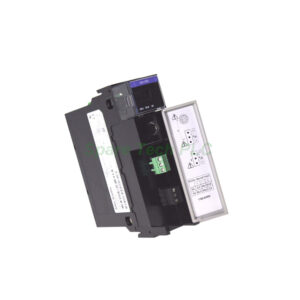
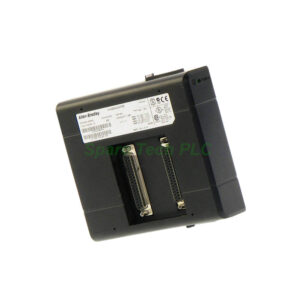
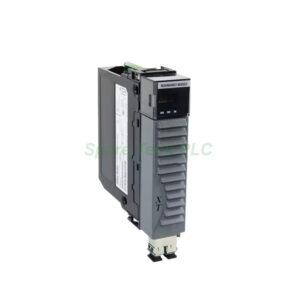
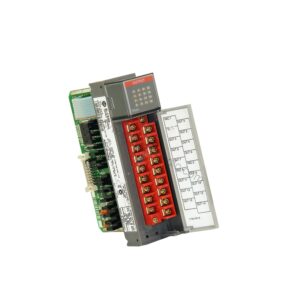
Allen-Bradley 1756-RM2K ControlLogix Enhanced Redundancy Module
Product Introduction
The 1756-RM2K from Allen‑Bradley is a dedicated redundancy module for the ControlLogix platform. Only one redundancy module is required per chassis. This module works best when paired with 1756-L7x controllers in both the primary and secondary chassis.
Why use the Allen-Bradley 1756-RM2K? It delivers enhanced speed with 1000 MB per second transmission. The fiber connection supports a maximum length of 10 kilometers at a 1310 nm wavelength. This long distance makes it ideal for geographically separated control rooms.
Furthermore, redundant fiber ports prevent any single point of failure. If one fiber path fails, the other takes over immediately. Channel switchover keeps the processing chassis synchronized. You may experience only a short delay of up to 10 milliseconds during switchover.
Technical Specifications
Manufacturer: Allen‑Bradley
Series: ControlLogix
Module Type: Enhanced Redundancy Module
Transmission speed: 1000 MB per second
Fiber length: 10 kilometers (maximum)
Wavelength: 1310 nm
Channels: 1
Fiber ports: Redundant (no single point of failure)
Compatible controllers: 1756‑L7x series
Communication modules supported: 7 enhanced ControlNet and EtherNet/IP modules
Wire size: 20 AWG
Electrical Ratings
Current draw (5.1V DC): 1.16 Amps
Current draw (24V DC): 3.4 mA
Power dissipation (max): 6 Watts
Thermal dissipation: 21 BTU per hour
Physical & Environmental Specifications
Dimensions: 5.51 x 4.41 x 5.71 inches
Weight: 0.64 lbs (0.29 kg)
Operating temperature: 0°C to 60°C (32°F to 140°F)
Enclosure: None (open-style)
Mounting: Any slot in the ControlLogix chassis
Compatible Cables
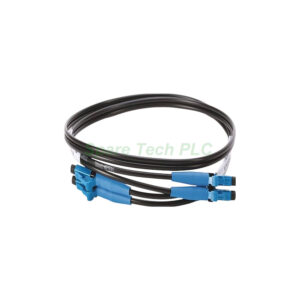
The 1756-RM2K works with the following fiber cables:
1756-RMC1: 1 meter length
1756-RMC3: 3 meter length
1756-RMC10: 10 meter length
Installation Guide
First, power down both ControlLogix chassis completely. Then select any available slot in each chassis. Install one 1756-RM2K module into the primary chassis. Install a second 1756-RM2K into the secondary chassis.
Next, connect the fiber cables between the two modules. Use 1756-RMC1, 1756-RMC3, or 1756-RMC10 cables depending on your distance. The Allen-Bradley 1756-RM2K uses redundant fiber ports. Connect both fiber pairs for full redundancy.
Then power up both chassis. The modules will automatically synchronize. For best scan performance, pair these modules with 1756-L7x controllers. Cross loading happens automatically through the redundant fiber connection.
Operation Notes
Only one 1756-RM2K is required per chassis. Do not install multiple redundancy modules in the same chassis. The module supports Ethernet network systems. During channel switchover, the processing chassis remains synched. Scan time may encounter a short delay of up to 10 milliseconds. This is normal behavior.
Packaging List
1 x 1756-RM2K Enhanced Redundancy Module
1 x quick reference guide
Fiber cables are sold separately (1756‑RMC1, 1756‑RMC3, or 1756‑RMC10)
No certificate or warranty documents included
Shipping Methods
We ship worldwide using Fedex, UPS, or DHL. Tracking number provided within 24 hours.
Frequently Asked Questions (FAQ)
1. Can I use the 1756-RM2K with older L6x controllers?
No. The 1756-RM2K is designed specifically for 1756-L7x controllers. For L6x controllers, use the older 1756-RM module instead.
2. How far apart can the two chassis be?
The fiber connection supports up to 10 kilometers (6.2 miles) between chassis. Use the 1310 nm wavelength for optimal performance over long distances.
3. What happens if one fiber port fails?
The Allen-Bradley 1756-RM2K has redundant fiber ports. If one path fails, the other continues operating. This eliminates any single point of failure in your system.
4. How many redundancy modules fit in one chassis?
Only one 1756-RM2K is supported per chassis. Installing more than one is not required and may cause system conflicts.
5. What is the typical switchover delay?
During channel switchover, you may experience up to 10 milliseconds of delay. The processing chassis stays synchronized during this brief period.