Allen-Bradley 1756-RMC1 Fiber Optic Cable for Redundancy Systems
Product Introduction
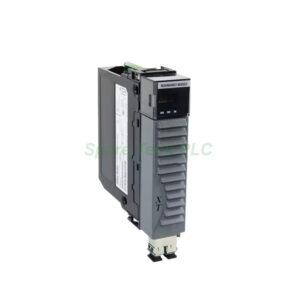
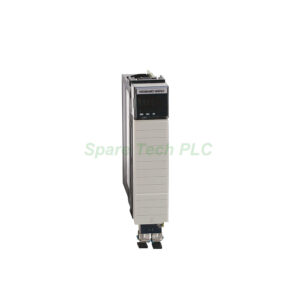
The 1756-RMC1 belongs to the ControlLogix series of connector cables. Its length measures exactly one meter, which equals 3.28 feet. This cable is specifically made to work with the 1756-RM2 and 1756-RM2K redundancy modules. Among all available cables for these modules, this one is the shortest. You will need to order it separately because redundancy modules and chassis do not include it in their packaging.
Technical Specifications
This section lists the key optical and electrical parameters.
The part number is 1756-RMC1, and the cable type is a fiber optic communication cable. Its length reaches 1 meter or 3.28 feet. The wavelength operates at 1300 nanometers. Transmission speed stays below 1000 MB per second. It supports a single channel. Maximum ambient operating temperature reaches 70 degrees Celsius, which is 158 degrees Fahrenheit. The standard operating range runs from 0 to 60 degrees Celsius or 32 to 140 degrees Fahrenheit. Wire size is rated at 20 AWG.
For instance, the 1300 nm wavelength ensures stable signal transmission over short distances. Meanwhile, the single channel design keeps the cable simple and reliable for redundancy links.
Mechanical and Environmental Data
Here are the physical dimensions and handling requirements.
This cable has no enclosure, meaning it is an open-style fiber optic assembly. Shipping dimensions are 5.51 inches in height, 4.41 inches in width, and 5.71 inches in depth. The cable connects at the bottom of the module in a downward orientation. Before connecting the 1756-RMC1, you must remove its protective caps. Because it contains optical fibers, you should avoid making sharp bends. Using an LC connector coupler helps prevent bending and allows easy connection and disconnection without removing the module from the chassis.
Furthermore, make sure the cable route is free from activities that could run over, abrade, cut, or otherwise damage it. A redundant fiber cable system can tolerate one fault on a single channel. However, network operation becomes unpredictable if a fault occurs on both channels.
Installation Guidelines
Follow these steps for a proper setup.
First, remove the protective caps from both ends of the 1756-RMC1. Then, locate the bottom port on your redundancy module. Next, insert the LC connector gently until it clicks. Additionally, route the cable away from moving parts or sharp edges. Finally, use the LC coupler to secure the cable and prevent excessive bending.
Do not pull the cable with force. Moreover, keep the bend radius wider than the recommended minimum to avoid breaking internal fibers.
Compatibility Information
The 1756-RMC1 works with both standard and extreme-environment redundancy modules. It is fully compatible with the 1756-RM2 and 1756-RM2K models. Building a ControlLogix redundant controller system requires one or two of these cables depending on your chassis configuration.
Packaging List
The package includes the following items:
One 1756-RMC1 fiber optic cable, 1 meter in length.
Two protective caps (already installed on the connectors).
Note: No certificates or warranty documents are included in the box.
Shipping Information
We ship worldwide using FedEx, UPS, or DHL. Orders placed before 2 PM ship same day.
Frequently Asked Questions (FAQ)
Can I use the 1756-RMC1 with the 1756-RM2XT module?
Yes. The 1756-RMC1 works with both standard and extreme-environment redundancy modules, including the 1756-RM2XT.
What is the maximum operating temperature for this cable?
The cable withstands a maximum ambient operating temperature of 70 degrees Celsius or 158 degrees Fahrenheit.
Do I need to order this cable separately from the redundancy modules?
Yes. Redundancy modules and chassis do not ship with these connectors. You must order the 1756-RMC1 separately before system assembly.
How should I handle the cable to avoid damage?
Remove the protective caps before connection. Avoid sharp bends. Use an LC connector coupler to prevent bending. Keep the cable away from areas where it could be run over, abraded, or cut.
What happens if a fault occurs on both fiber channels?
A redundant fiber cable system can tolerate one fault on a single channel. But network operation becomes unpredictable if a fault occurs on both channels.