
1734-ARM POINT I/O Media Redundancy Adapter Installation & Setup
Product Introduction
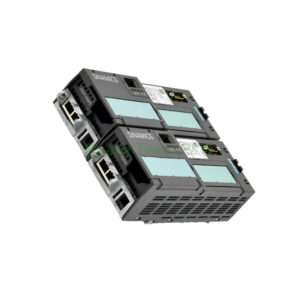
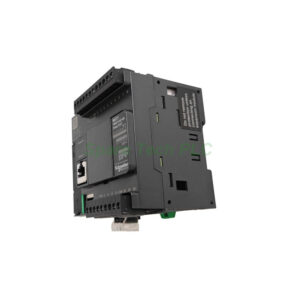
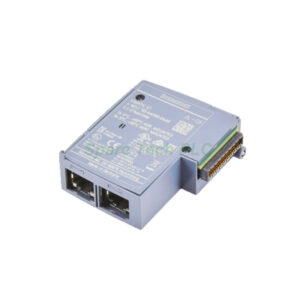
The Allen‑Bradley 1734‑ARM functions as a redundant media adapter. It belongs to the POINT I/O product family. This module enables DeviceNet communication with built‑in media redundancy. Specifically, the 1734‑ARM supports both DeviceNet and ControlNet protocols through a ring topology. It actively monitors the communication links for faults. Upon detecting a break, the adapter reroutes traffic within 50 milliseconds. This rapid recovery ensures uninterrupted data flow. Furthermore, the 1734‑ARM acts as a master on the PointBus backplane. It also works as a slave on the DeviceNet network. You install it as the first module in a POINT I/O bank.
Core Value
Firstly, the 1734‑ARM significantly improves network reliability. It eliminates single points of failure in critical I/O networks. Consequently, your system experiences less unplanned downtime. Moreover, this adapter simplifies network troubleshooting. Its front‑panel LEDs provide clear status indications for each redundant link. You can quickly identify a cable fault from a distance. In addition, the 1734‑ARM supports hot‑swapping of downstream I/O modules. This feature allows maintenance without powering down the entire system. Therefore, you maintain production continuity during repairs. Meanwhile, the compact housing fits standard DIN rails. It occupies the same footprint as other POINT I/O adapters.
Technical Insights
The 1734‑ARM features two DeviceNet ports for ring connectivity. Each port supports baud rates up to 500 kbps. The module handles 64 bytes of input and 64 bytes of output data. Moreover, it includes an internal switch that manages active link selection. This switch monitors both ports continuously. It automatically selects the healthy path for data transmission. The adapter also provides electrical isolation between ports. This isolation prevents ground loop issues. Furthermore, the 1734‑ARM draws its power from the DeviceNet network. It consumes a maximum of 100 mA at 24V DC. The operating temperature ranges from 0°C to 55°C. Therefore, this adapter performs well in typical industrial environments.
Installation & Maintenance
Begin the installation by mounting the 1734‑ARM onto a grounded DIN rail. Position it at the far left of the POINT I/O bank. Next, connect the DeviceNet cables to both ports. Use a terminated trunk line with proper end resistors. Then, set the node address using the rotary switches. Specifically, choose an address between 0 and 63. Apply network power and observe the module status LEDs. A steady green NET indicator confirms proper communication. For maintenance, periodically inspect the cable connections for wear. Additionally, verify the terminations remain intact. To replace the adapter, power down the DeviceNet network first. Then, remove the module and insert the replacement unit. Restore power and verify normal operation.

Buyer's Guide FAQ
What is the primary purpose of the 1734‑ARM?
This adapter provides media redundancy for DeviceNet networks. It automatically recovers from cable breaks.
Which protocols does the 1734‑ARM support?
The module supports DeviceNet and ControlNet protocols with ring topology redundancy.
What is the failover time for the 1734‑ARM?
The adapter switches to the backup link within 50 milliseconds after detecting a fault.
Can I hot‑swap I/O modules behind the 1734‑ARM?
Yes. You can remove and replace downstream POINT I/O modules without system shutdown.
How many I/O modules can I connect to the 1734‑ARM?
The adapter supports up to 63 POINT I/O modules on the backplane.