
iC60N 2P C40 MCB Guide for Installation and Maintenance
Product Introduction
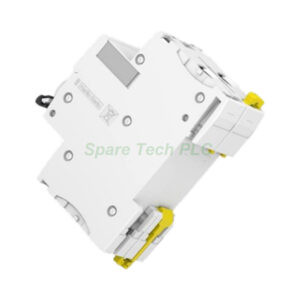
The Schneider Electric iC60N 2P C40 is a two-pole miniature circuit breaker from the Acti9 iC60N range, rated 40A with a C-type trip curve. It trips between 5 and 10 times rated current, making it suitable for circuits with moderate inrush currents such as small motors, transformers, and lighting. The compact DIN-rail design and Acti9 accessory compatibility make it a common choice in industrial panels.
Core Value
The iC60N 2P C40 offers a practical balance of performance and integration. Its C curve tolerates brief startup surges without nuisance tripping. The two-pole design allows simultaneous disconnection of both conductors for safe isolation. Acti9 accessories such as auxiliary contacts and shunt trips snap on without changing the base device, reducing spare-part variety. The device carries major international certifications for global project compliance.
Technical Insights
The 40A rating is the continuous current at reference ambient temperature. The C curve magnetic trip threshold is roughly 200A to 400A. The 2P version interrupts two conductors, typically phase and neutral or two phases, with both poles mechanically linked. Breaking capacity is in the 6kA to 10kA range at 400V AC depending on the reference. Voltage rating is typically 230/400V AC, 50/60Hz. Ambient temperature affects carrying capacity, so derating tables should be consulted in hot panels.
Installation & Maintenance
Mount on standard 35mm DIN rail with adequate spacing for heat dissipation. Use conductors sized for 40A, insert fully into terminals, and tighten to specified torque. Verify phase and neutral polarity and coordinate with upstream devices for selectivity. After installation, test mechanical operation and confirm trip indicator status. Routine maintenance includes inspecting for overheating, tightening terminals, and exercising the mechanism. Replace any breaker that trips repeatedly under fault conditions or shows damage.

Buyer's Guide FAQ
Q1: What does the C40 designation mean?
A1: C-type trip curve with 40A rated current. It trips magnetically between 5 and 10 times rated current, suitable for moderate inrush loads.
Q2: Can it be used for motor protection?
A2: It provides branch and short-circuit protection for small motors but is not a dedicated motor protection device. Combine with a contactor and overload relay for full protection.
Q3: What is the difference between iC60N and other Acti9 ranges?
A3: iC60N is the standard range. iC60H offers higher breaking capacity, and iC60L offers different characteristics. Selection depends on prospective short-circuit current and required endurance.
Q4: Is it compatible with standard Acti9 accessories?
A4: Yes. It accepts Acti9 auxiliary contacts, shunt trips, and undervoltage releases. Check compatibility tables for specific catalog numbers.
Q5: What should I check if it trips frequently without an obvious fault?
A5: Check for loose terminals, ambient temperature derating, harmonics, and load imbalance. Verify load current does not exceed derated capacity. If it trips at low current, the breaker may be faulty or the circuit may have an intermittent fault.