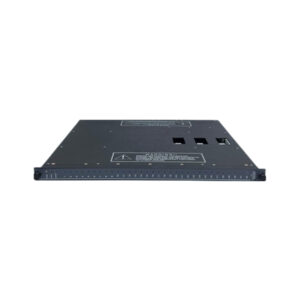
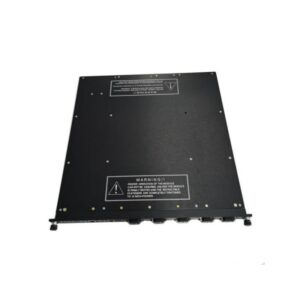
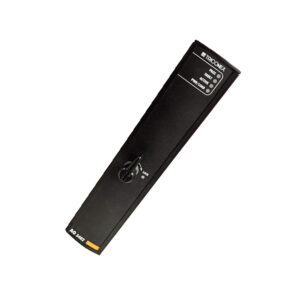
Triconex 3007 Main Processor Module
The Triconex 3007 Main Processor serves as the central brain of the Triconex safety-instrumented system. Specifically, the module utilizes a National NS32GX32 32-bit processor to handle safety logic with deterministic timing. In a standard chassis, three Triconex 3007 units work in parallel to create a redundant environment. This design ensures that the system outvotes hardware failures without interrupting critical safety functions. Therefore, the Triconex 3007 remains essential for high-availability applications in the oil and gas sector.
Multi-Processor Architecture
Regarding technical depth, the module employs multiple sub-processors to offload communication and I/O tasks. Specifically, the Triconex 3007 includes a dedicated Intel 80C152 communication processor and an Intel 80C31 I/O processor. The main CPU focuses exclusively on the user program while the sub-processors manage the field data bus. Meanwhile, the integrated math co-processor accelerates floating-point calculations for complex control loops. Consequently, the module delivers consistent scan times regardless of the current communication traffic volume.
Data Integrity and Memory
The Triconex 3007 features 1MB of SRAM and 512KB of EPROM to store vital control strategies safely. Specifically, the module uses a 4 Mbps TriBus link to synchronize data between the three processors. This high-speed DMA interface allows for constant voting of input data and internal variables. Moreover, the integrated clock calendar includes a battery backup with minimal daily time drift. Therefore, the module maintains accurate records for Sequence of Events data during critical plant incidents.
Technical Specifications
Regarding hardware connectivity, the Triconex 3007 provides an optically isolated serial port for diagnostic analysis. Specifically, the RS-232 interface features a 500 VDC isolation rating to protect the internal logic. Furthermore, the module communicates with the backplane using the RS-485 protocol for I/O tasks. In addition, the logic power consumption remains stable at 15 W during standard operation cycles. These specifications make the module a reliable choice for legacy Tricon v9.0 to v9.5.x systems.
Mechanical and Environmental Parameters
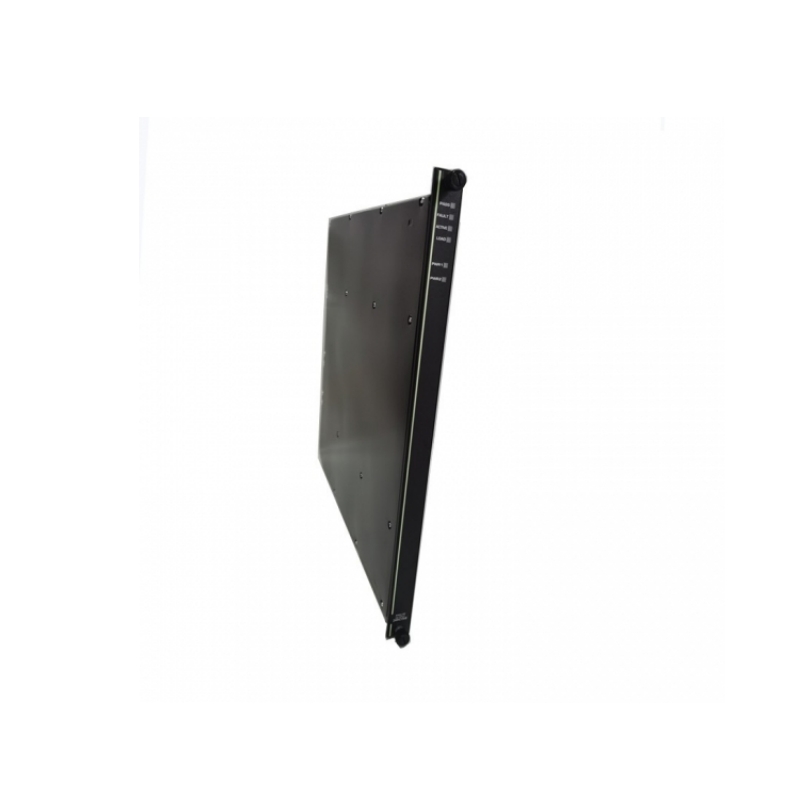
Specifically, the Triconex 3007 utilizes a ruggedized metal enclosure to prevent electromagnetic interference. The module features a color-coded faceplate to match the standard Tricon processor styling for easy identification. Furthermore, the front panel includes several LED indicators that display the health of the TriBus and CPU. Besides its processing power, the module withstands the vibrations found in demanding industrial rack environments. Finally, the use of high-grade SRAM ensures that memory retention remains stable over years of use.
Installation Guide
First, confirm that your Tricon system version is between v9.0 and v9.5.x for full hardware compatibility. Next, slide the Triconex 3007 into one of the three dedicated main processor slots. After that, push the module firmly until the connectors engage and the locking levers click. Furthermore, verify that all three processors show a synchronized state on the front-panel display. Finally, use the TriStation software to download the control project and confirm that the TriBus is active.
Packaging List
1 x Triconex 3007 Main Processor Module
Factory-Original Protective Anti-Static Case
Shipping Carrier: Fedex, UPS, DHL
FAQ
Q: What is the main difference between the 3006 and 3007 modules? Specifically, the Triconex 3007 features 1 megabyte of SRAM while the model 3006 provides 2 megabytes.
Q: Which Tricon system versions are compatible with this processor? The module works exclusively with Tricon v9.0 through v9.5.x systems and not the newer v10 versions.
Q: Does the module support high-speed math calculations? Yes, the Triconex 3007 includes a National NS32381 math co-processor to handle 32-bit mathematical operations.
Q: How does the module handle communication with I/O cards? Specifically, the unit uses an internal Intel 80C31 I/O processor to manage the field bus communication.
Q: Is there any electrical isolation on the diagnostic port? Absolutely, the RS-232 serial port features 500 VDC optical isolation to ensure safe connection to external tools.