Product Introduction
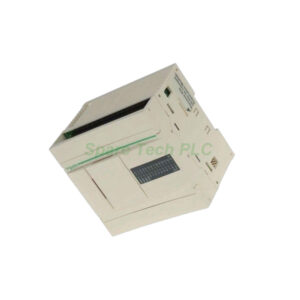
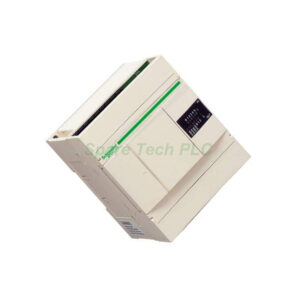
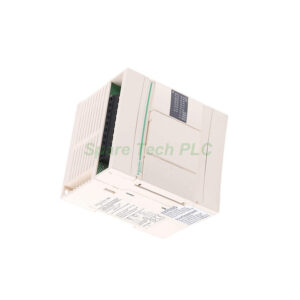
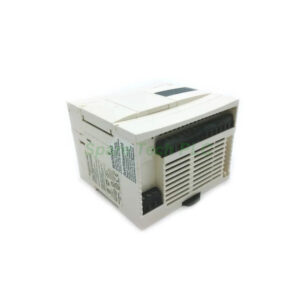
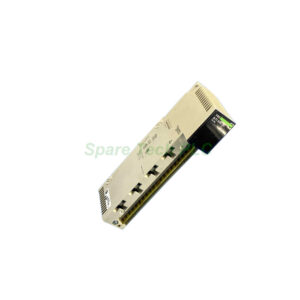
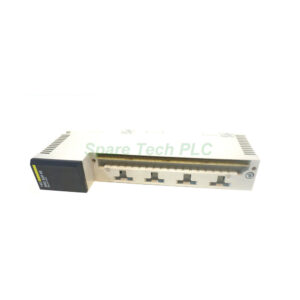
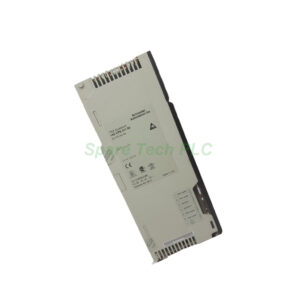
The Schneider Electric TWDLCAA24DRF is a versatile and compact PLC base controller engineered for efficient machine and process control. It integrates a 100 to 240V AC power supply and features 14 discrete DC inputs alongside 10 relay outputs. Furthermore, its design allows for connection to up to 4 I/O expansion modules, significantly extending its application scope. This model supports Modbus communication via a non-isolated serial link, making it a robust choice for various automation environments.
Technical Specifications
Power Supply and Inputs
The TWDLCAA24DRF operates on a wide supply voltage range of 85 to 264V AC. Its 14 discrete inputs accept 24V DC, and you can configure them as either sink or source logic. Specifically, the input current is rated at 7 mA for channels I0.2 to I0.13 and 11 mA for I0.0 to I0.1. Consequently, the input impedance is 3400 Ohms for the former and 2100 Ohms for the latter.
Output and Performance
For outputs, the unit provides 10 relay contacts, each capable of switching up to 2A at both 240V AC and 30V DC. Meanwhile, its program memory accommodates 3000 instructions, with an execution time of just 1 ms per 1000 instructions. The system overhead is a minimal 0.5 ms, ensuring swift processing for most control loops.
Communication and Expansion
This PLC features a non-isolated serial link with a Mini DIN connector, supporting Modbus RTU/ASCII master/slave protocols at speeds up to 38.4 kbit/s. Moreover, it includes a serial link interface adaptor for RS232C or RS485. To adapt to future needs, the TWDLCAA24DRF allows for the installation of up to 4 additional I/O expansion modules, significantly boosting your total I/O count to as high as 152 points depending on the connector type.
Mechanical and Environmental Parameters
Physical Dimensions and Mounting
Weighing only 0.305 kg, the TWDLCAA24DRF boasts a compact footprint with dimensions of 90 mm (W) x 95 mm (H) x 70 mm (D). You can easily mount it on a 35 mm symmetrical DIN rail or a plate using a specific fixing kit. For reliable operation, ensure the ambient temperature stays between 0 and 55°C during use.
Environmental Resilience
Designed for rugged environments, this controller withstands vibration up to 4 gn (25-100 Hz) when mounted on a plate. Its shock resistance is rated at 15 gn for 11 ms. Additionally, it operates within a relative humidity range of 30 to 95% without condensation, featuring an IP20 protection rating for safe use in control cabinets.
Installation Guide
First, ensure the power supply is disconnected before beginning the installation. Next, mount the base controller securely on a DIN rail or panel, ensuring proper grounding at the (GND) terminal. Then, wire the inputs and outputs according to the terminal descriptions, connecting sensors to the COM terminal and relay loads to the COM0, COM1, COM2, and COM3 groups. Finally, power up the unit and check the PWR LED to confirm the supply voltage is correct. Remember to avoid wiring AC power to the DC input terminals to prevent damage.
Packaging List
The product package for the Schneider TWDLCAA24DRF includes the following items:
Schneider Electric TWDLCAA24DRF Compact Base Controller
Non-removable Screw Terminal Block Kit
Product Quick Start Guide
Technical Documentation CD (if applicable)
All items will be shipped via Fedex, UPS, or DHL.
Frequently Asked Questions (FAQ)
1. Q: What type of power supply does the TWDLCAA24DRF require?
A: It requires a 100 to 240V AC mains supply, with an operational limit of 85 to 264V AC at 50/60Hz.
2. Q: Can the TWDLCAA24DRF communicate with other devices?
A: Yes, it uses an RS485 serial link supporting Modbus master/slave protocols. Additionally, you can use a serial interface adaptor for RS232C.
3. Q: Is it possible to add more I/O points to this base controller?
A: Absolutely. The TWDLCAA24DRF supports a maximum of 4 expansion modules, increasing your total I/O count significantly.
4. Q: How is the program memory backed up in case of power loss?
A: The internal RAM is backed by a lithium battery for up to 30 days. This battery has a typical service life of 10 years and charges in about 10 hours.
5. Q: What is the maximum switching frequency for the relay outputs?
A: For optimal durability, the relay outputs should be operated at a rate not exceeding 30 cycles per minute.