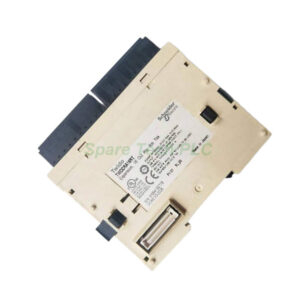
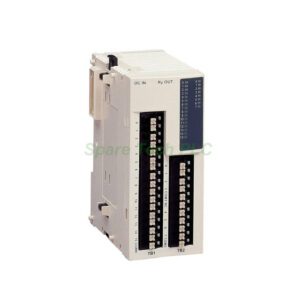
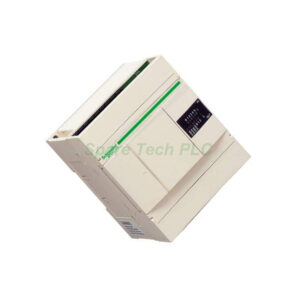
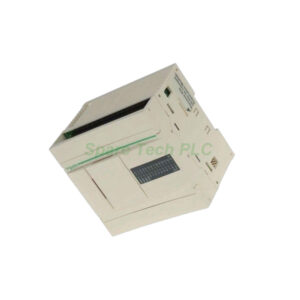
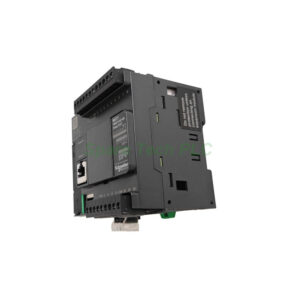
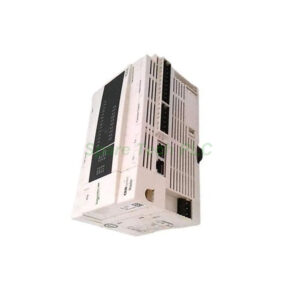
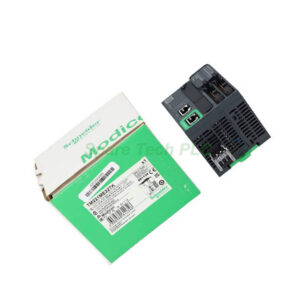
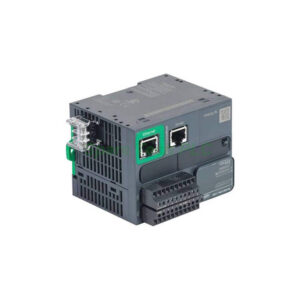
Schneider Electric TWDDRA8RT Twido Discrete Output Module
The Schneider Electric TWDDRA8RT provides a compact and cost-effective way to add 8 relay outputs to your Twido PLC system. This discrete output module drives solenoids, contactors, lamps, and other loads with its 8 normally open relay contacts. Each output channel supports up to 2 A, and a single common organizes all outputs with a total capacity of 7 A. The TWDDRA8RT includes a removable screw terminal block, which greatly simplifies both initial wiring and future module replacement.
Technical Specifications
Understanding these specifications helps you integrate the TWDDRA8RT correctly into your control system.
Output Characteristics:
Discrete Outputs: 8, relay (Form A / normally open)
Output Common: 1 common for all 8 outputs
Current per Channel: 2 A
Maximum Current per Common: 7 A
Contact Resistance: 40000 µOhm
Response Time: ≤ 7 ms
Isolation and Protection:
Terminal Block:
Connection Type: Removable screw terminal block
This feature enables offline pre-wiring. Additionally, it allows for rapid module disconnection during servicing without disturbing individual wire terminations.
Power Consumption
The TWDDRA8RT consumes power from both the 5 V DC and 24 V DC supplies. When all 8 outputs are energized, it draws 30 mA at 5 V DC and 40 mA at 24 V DC. In the de-energized state, it only consumes 5 mA at 5 V DC. Therefore, you must factor these values into your overall power budget to ensure stable system operation.
Installation and Mounting
Follow these steps to install the TWDDRA8RT correctly:
Mounting: Secure the module onto a standard 35 mm DIN rail within your control cabinet. Leave adequate space for airflow around the module.
Block Removal: Detach the screw terminal block from the module. This action provides clear access to all connection points.
Wire Preparation: Strip the wire ends to approximately 7–8 mm, suitable for screw terminal connections.
Output Wiring: Connect your loads to the output terminals labeled 0 through 7. For AC loads, route the live wire through the relay contact and connect the neutral directly. For DC loads, pass the positive line through the contact.
Common Connection: Wire the single common terminal (COM) to the return path of your power supply. This common serves all 8 outputs, so ensure your total load does not exceed 7 A.
Block Reattachment: Plug the terminal block back into the TWDDRA8RT module and tighten it securely.
Verification: Carefully inspect all connections before applying power to the system.
Environmental and Mechanical Parameters
The TWDDRA8RT operates reliably under standard industrial conditions.
Operating Temperature: 0...55 °C
Storage Temperature: -25...70 °C
IP Degree of Protection: IP20 (suitable for installation inside a control panel)
Product Weight: 0.11 kg (approx. 0.17 kg with packaging)
Product Certifications: UL, CSA
Packaging List
Note: Cables, DIN rail, and mounting hardware are sold separately.
Frequently Asked Questions (FAQ)
Q1: Can the TWDDRA8RT switch both AC and DC loads?
Yes, the relay contacts on the TWDDRA8RT are dry contacts. Consequently, they can handle both AC and DC loads up to the rated 2 A per channel and 7 A per common.
Q2: How many commons does the TWDDRA8RT have?
The TWDDRA8RT has a single common that serves all 8 outputs. Therefore, you must ensure the total current through this common does not exceed 7 A.
Q3: What makes the screw terminal block removable?
The terminal block detaches from the module body. This design allows you to wire the block outside the cabinet or disconnect all wires at once for fast module replacement.
Q4: What is the response time of the TWDDRA8RT outputs?
The relay outputs respond within 7 ms. This speed makes the TWDDRA8RT suitable for general-purpose control applications that do not require high-speed switching.
Q5: Does the TWDDRA8RT require external overcurrent protection?
Yes, it is highly recommended to fuse each output or at least the common terminal. This precaution protects the TWDDRA8RT from damage caused by load short circuits or overcurrent conditions.