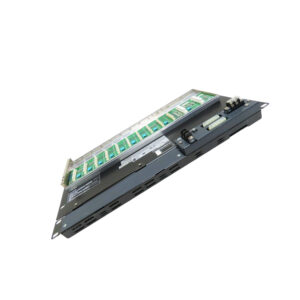
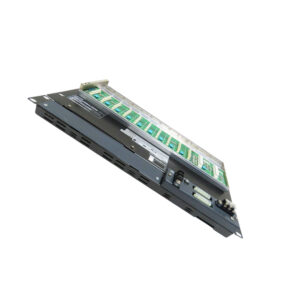
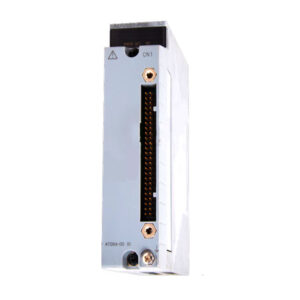
NFDV161-P51 Yokogawa Digital Input Module
High-Density Signal Monitoring
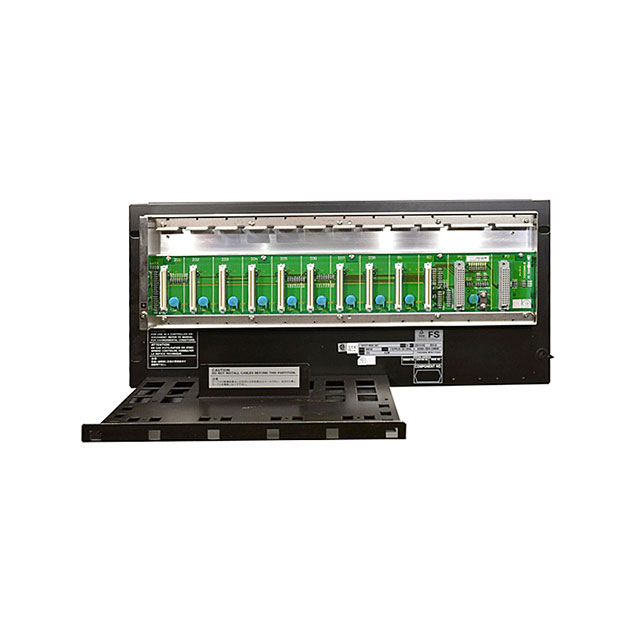
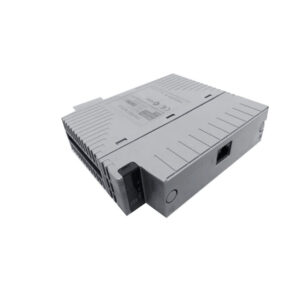
The Yokogawa NFDV161-P51 represents the cutting edge of I/O density for safety-instrumented systems. Primarily, this module provides 64 isolated input channels within a single compact unit, significantly reducing cabinet footprint. For instance, it is widely used to monitor the status of limit switches, emergency stop buttons, and process interlocks. Furthermore, the hardware supports two distinct functional modes: standard Status Input for continuous monitoring and Push Button (edge count) for pulse detection. Additionally, the unit features dual MIL-50 pin connector sets on the front, facilitating rapid and organized wiring to terminal boards. Therefore, the NFDV161-P51 is the ideal choice for high-integrity safety systems requiring massive I/O counts.
Performance & Timing Specifications
The NFDV161-P51 is engineered for safety-critical speed, ensuring that even the briefest signal changes are captured by the logic solver. Specifically, the input response time is rated at 8 ms or less for status inputs, allowing for near-instantaneous safety actions. Meanwhile, for push-button applications, the module can detect pulses with a minimum ON time of 20 ms. Moreover, the hardware supports a maximum ON/OFF cycle of 25 Hz, making it capable of tracking rapid mechanical sequences. Specifically, the 64 channels are organized into four groups of 16, with common terminals (plus or minus) shared per 16 channels. Furthermore, the unit manages power efficiently with a maximum 5V system consumption of 550 mA.
Mechanical and Safety Features
The physical build of the NFDV161-P51 emphasizes reliability and isolation to prevent field faults from impacting the control network. For instance, the module weighs only 0.3 kg, yet it provides robust electrical isolation between the 24V DC field signals and the internal 5V system bus. Additionally, this specific "-P51" variant is built to standard industrial protection levels, though it does not include explosion-proof certification. Specifically, the "Common per 16 channels" design simplifies wiring while maintaining a degree of fault containment between groups. Meanwhile, the module is designed for vertical mounting, ensuring optimal heat dissipation during continuous operation. Therefore, the hardware maintains its precision and reliability throughout the multi-year lifecycle of the plant.
Installation Guide
Installing the NFDV161-P51 requires careful verification of the common polarity and the specific needs of your 64 input signals. First, power down the I/O rack or follow specific "hot-swap" guidelines if adding to an active safety node. Specifically, slide the module into its designated slot until the rear connectors click firmly into the backplane. Next, connect your pre-wired MIL-50 cables to the two front-facing sets, ensuring the locking clips are engaged. Furthermore, confirm that your 24V DC field power source is properly grounded and matches the common polarity (Plus or Minus) set for each 16-channel group. Specifically, use the engineering software to define which channels require edge counting for push-button inputs. Finally, perform a physical signal test from the field to verify that the 8ms response time is reflected in the controller logic.
Packaging List
1 x Yokogawa NFDV161-P51 Digital Input Module
2 x Dust Covers for MIL-50 Ports
Protective Anti-static Packaging
Shipping Method: Fedex, UPS, DHL
FAQ
1. How are the 64 channels wired for common power? The channels are divided into four groups; each group of 16 channels shares a single common terminal (either plus or minus).
2. What is the difference between "Status" and "Push Button" modes? Status mode monitors continuous states (ON/OFF), while Push Button mode counts edges (pulses) for signals that may be too fast for standard scanning.
3. Does this module support hot-swapping? Yes, like most ProSafe-RS I/O modules, the NFDV161-P51 is designed for online replacement within redundant systems.
4. What are the two MIL connectors on the front used for? Each MIL-50 connector handles 32 of the 64 channels, typically connecting to high-density terminal boards via pre-fabricated cables.
5. What is the minimum signal duration the NFDV161-P51 can detect? For push-button inputs, the module requires a minimum ON detection time of 20 ms to guarantee signal capture.