Home /
Products /
IS200TRPGH1BCC GE Mark VI Terminal
IS200TRPGH1BCC GE Mark VI Terminal
IS200TRPGH1BCC
Manufacturer: GE Series: Mark VI Model Number: IS200TRPGH1BCC Weight: 1.45kg Condition: In Stock Availability: 100% Original Brand New Product Origin: U.S.A Shipping port: Xiamen Warranty: 12 Month
IS200TRPGH1BCC GE Mark VI Primary Trip Terminal Board
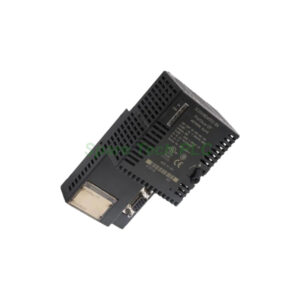
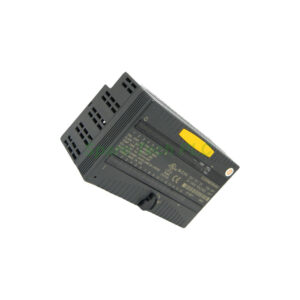
The IS200TRPGH1BCC functions as a gas turbine primary trip terminal board. GE designed this board for the Mark VI series. Its main job is to manage trip solenoids and flame detection. Additionally, this board supports both simplex and TMR applications. Three voting circuits give you redundancy for critical operations.
Key Technical Specifications
The IS200TRPGH1BCC contains nine magnetic relays. These relays connect to three trip solenoids. Each solenoid uses a rated voltage of 125 V dc. Their response time follows an L/R constant of 0.1 seconds. Moreover, each solenoid includes a metal oxide varistor for current suppression. This protects the board from voltage spikes.
Furthermore, the board accepts inputs from eight Geiger-Mueller flame detectors. These detectors receive a supply voltage of 335 V dc. The control relay coils run on 28 V dc. Therefore, the IS200TRPGH1BCC provides comprehensive turbine protection. The H1B version specifically includes three voting relays per trip solenoid. This makes it ideal for triple modular redundant (TMR) systems.
Mark VI and Mark VIe System Compatibility
The IS200TRPGH1BCC connects to VTUR boards in Mark VI systems. Cables with molded plugs link the board to the VME rack. That rack houses the VTUR controller. Meanwhile, Mark VIe systems use a different setup. PTUR packs on the TTURH1C control this terminal board. D-type connectors accept the I/O packs as input. Both system types support simplex and TMR configurations.
Specifically, the IS200TRPGH1BCC works with the TREG board. Together, they form the primary and emergency sides of the trip interface. This dual-board design increases system reliability. Consequently, many gas turbine operators prefer this arrangement.
Physical Layout and Components
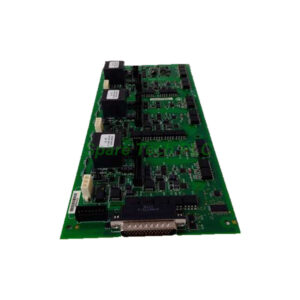
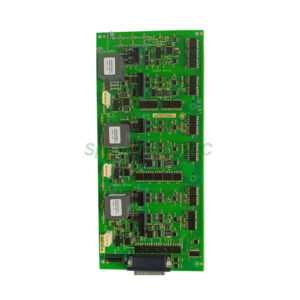
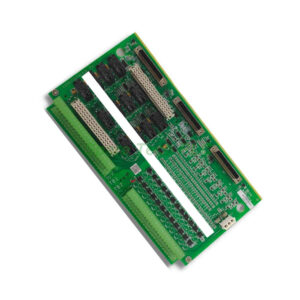
The IS200TRPGH1BCC has a clear and organized layout. Two large black terminal blocks sit on the left side. Each block contains 24 silver terminals. The first block uses numbers 1 through 24. The second block uses numbers 25 through 48. Eight solid yellow capacitors form a vertical line at the bottom center. Additionally, two vertical rows of small white capacitors sit to the left. These rows are parallel to each other. They contain a total of 16 capacitors.
On the bottom right side, you will find a white block of connector ports. This block holds 12 small ports. Below it, three more white connectors line up vertically. Each of these has three ports. Furthermore, three additional connector ports sit on the right border. These align in a vertical line. Each connector contains 37 female ports. Several small integrated circuits are attached across the board.
Installation Guidelines
First, power down the turbine control cabinet completely. Next, locate the dedicated slot for the IS200TRPGH1BCC. Insert the board carefully into its backplane connectors. Push evenly until fully seated. Then, secure the board with any mounting screws. After that, connect all cable harnesses to their matching ports.
For instance, the eight flame detector inputs need proper polarity. The three trip solenoid outputs must connect to the correct ETD devices. Meanwhile, avoid touching the relay contacts directly. Static discharge can damage the sensitive circuits. Therefore, always wear a grounded wrist strap during installation.
Why Choose This GE Terminal Board
The IS200TRPGH1BCC comes from GE's reliable Mark VI family. GE manufactured this board in the United States. It follows the detailed specifications in manual GEH-6421J. Furthermore, this board supports TMR applications with three voting relays per solenoid. This redundancy improves safety for gas turbine operations. The metal oxide varistors also add long-term surge protection.
Additionally, this board is easy to troubleshoot. The clear component layout helps technicians identify parts quickly. The eight flame detector inputs give you complete combustion monitoring. Three trip solenoids ensure fast shutdown when needed. Many power plants trust this model because of its proven track record.
Packaging and Delivery
Packaging List
One IS200TRPGH1BCC terminal board
One anti-static bag
One foam-lined shipping carton
Shipping Method
We ship exclusively via FedEx, UPS, or DHL. Tracking number provided within 24 hours.
Frequently Asked Questions (FAQ)
1. Is the IS200TRPGH1BCC a new board? Yes, it comes in a new surplus factory package. The board has never been installed.
2. Can I use this board in a simplex system? Yes. However, the H1B version is optimized for TMR applications. Check your system requirements first.
3. What is the difference between H1A, H1B, H2A, and H2B? H1 versions have three voting relays per solenoid for TMR. H2 versions have one relay per solenoid for simplex.
4. Does this board work with Mark VIe systems? Yes, it works with PTUR packs on the TTURH1C controller. Use D-type connectors for I/O pack input.
5. How many flame detectors can I connect? You can connect up to eight Geiger-Mueller flame detectors. Each runs on 335 V dc supply.
Attention: The above product information is sourced from the internet and cannot be guaranteed to be authentic.
For specific product parameters and prices, please contact
SpareTech PLC professionals in a timely manner.
Brand Name
GE
Model No.
IS200TRPGH1BCC
Product Type
Terminal Board
hasMerchantReturnPolicy
Adjust according to reality
Shippingdetails
Adjust according to reality
The IS200TRPGH1BCC is a Primary Trip Terminal Board from GE's Mark VI series. This board manages gas turbine trip functions. It works with PTUR and YTUR controllers. Nine magnetic relays support three voting circuits. Eight flame detector inputs provide reliable monitoring. SpareTech PLC provides you with a PDF version of the instructions about
GE IS200TRPGH1BCC,
where you can download the
GE IS200TRPGH1BCC manual PDF for free: Download PDF