Product Introduction
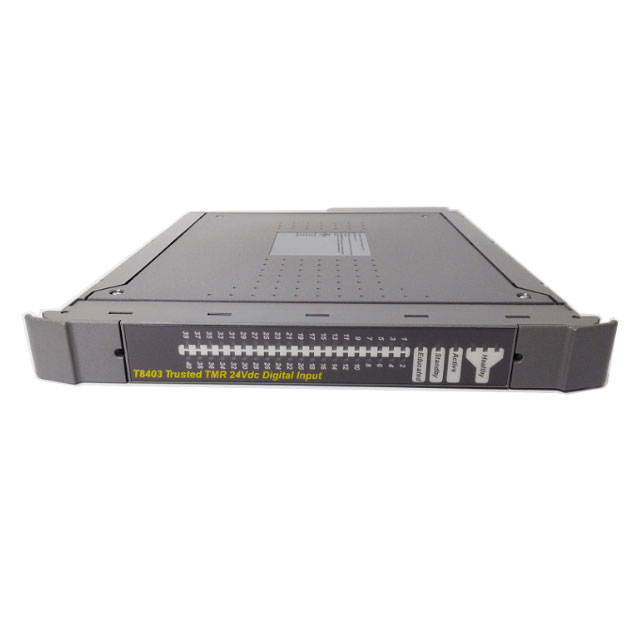
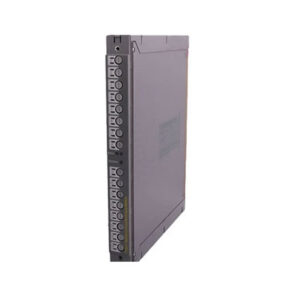
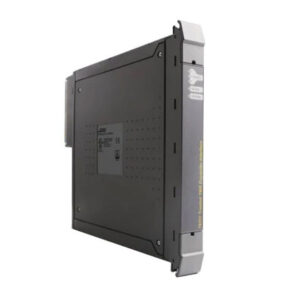
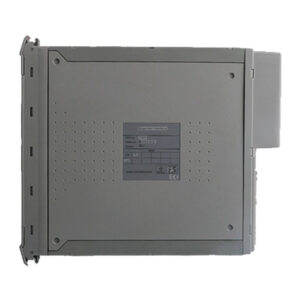
The ICS Triplex T8110B is a high-performance, fault-tolerant Trusted TMR Processor, the core processing component of ICS Triplex’s Trusted safety automation system. As a key module in the Trusted TMR Series, it adopts Triple Modular Redundancy (TMR) architecture and Hardware Implemented Fault Tolerant (HIFT) design, delivering ultra-high reliability and fault tolerance for mission-critical industrial applications.
Designed to work exclusively with the T8100 chassis, the T8110B provides overall system control and monitoring, processing input and output data from various analog and digital I/O modules via a triple redundant Inter-Module Bus. It supports a wide range of high-integrity applications, including fire and gas control, emergency shutdown systems (ESD), industrial monitoring and control, and turbine control—scenarios where system reliability directly impacts safety, production continuity, and environmental protection.
The T8110B is equipped with a 100MHz Motorola Power PC processor, ensuring fast data processing and response times. It features unique capabilities exclusive to this model: IRIG-B002 and 122 time synchronisation signals for precise time stamping, two configurable RS422/485 2/4 wire connections, and one RS485 2 wire connection, enhancing communication flexibility. With TÜV Certified IEC 61508 SIL 3 compliance, it meets the strictest safety integrity requirements for critical industrial systems.
Technical Specifications
Core Functional Parameters
- Architecture: Triple Modular Redundant (TMR) with lock-step configuration, fault-tolerant (3-2-0) operation; Hardware Implemented Fault Tolerant (HIFT) architecture
- Processor: Motorola Power PC series, 100 MHz clock speed
- Memory: Equipped with EPROM, DRAM, Flash ROM, and NVRAM (per Processor fault containment region)
- I/O Interface: Triple redundant Inter-Module Bus (for communication with I/O modules)
- Time Synchronisation: IRIG-B002 and 122 time synchronisation signals (exclusive to T8110B)
- Communication Ports:
- 2 x RS422/485 configurable 2 or 4 wire connections (exclusive to T8110B)
- 1 x RS485 2 wire connection (exclusive to T8110B)
- 1 x Front panel RS232 serial diagnostics port (for system monitoring, configuration, and programming)
- SOE Buffer: 1000 events, transferred to CI buffer of 4000 events (for event logging and analysis)
- Programming Languages: Full suite of IEC 61131-3 programming languages
- Fault Handling: Automatic fault handling (no nuisance alarming), time-stamped fault historian, fast fault recognition and response via dedicated hardware/software test regimes
Electrical Specifications
- Voltage Range: 20 to 32V dc (compatible with standard industrial power systems)
- Heat Dissipation: 80 W (max, requires adequate ventilation)
- Maximum Load: 80 W
- Fault & Failure Contacts: Active and Standby processor fault and failure contacts
- Certifications: TÜV Certified IEC 61508 SIL 3 (meets high safety integrity requirements)
Mechanical & Environmental Parameters
Mechanical Parameters
- Dimensions (LxWxH): 30.3 cm x 9.3 cm x 26.6 cm
- Weight: 2.94 Kg
- Chassis Compatibility: Exclusively compatible with T8100 chassis
- Mounting: Rack-mounted (fits T8100 chassis slots)
- Indicators: Front panel indicators for module health and status
- Connectors: Dedicated connectors for Inter-Module Bus, power supply, and communication ports
Environmental Parameters
- Operating Temperature: 0 °C to 60 °C (32 °F to 140 °F)
- Non-operating (Storage) Temperature: -25 °C to 70 °C (-13 °F to 158 °F)
- Relative Humidity: 0% ~ 95% (non-condensing, typical industrial range)
- Vibration Resistance: Compliant with industrial safety standards (suitable for harsh plant environments)
- Shock Resistance: Compliant with industrial safety standards (protects against mechanical impact)
Key Features & Advantages
- TMR Fault Tolerance: Triple Modular Redundant (TMR) lock-step architecture with 2oo3 voting logic, eliminating single-point failures and ensuring continuous operation even with component faults.
- High Processing Performance: 100MHz Motorola Power PC processor enables fast data processing, I/O scanning, and fault response times.
- Exclusive T8110B Features: IRIG-B002/122 time synchronisation for precise event time-stamping, and multiple configurable RS422/485 ports for flexible communication.
- Hot Replacement: Supports hot swapping without the need to reload application programs, minimizing downtime during maintenance.
- SIL 3 Certification: TÜV Certified IEC 61508 SIL 3, suitable for critical safety instrumented systems (SIS) and emergency shutdown systems (ESD).
- Easy Configuration: No hardware configuration required; only a System.INI file is needed, with configurable options via System Configurator.
- Comprehensive Diagnostics: Front panel RS232 diagnostics port, status indicators, and time-stamped fault historian for easy system monitoring and troubleshooting.
- Chassis Compatibility: Designed exclusively for T8100 chassis, ensuring seamless integration with Trusted system components.
Application Overview
The ICS Triplex T8110B is the central processing unit of Trusted safety automation systems, suitable for a wide range of high-integrity industrial applications:
- Fire and Gas Control: Reliable processing of fire and gas detection signals for timely alarm and control actions.
- Emergency Shutdown Systems (ESD): Core processing for emergency shutdown triggers, ensuring rapid response to hazardous conditions.
- Turbine Control: Precise control and monitoring of turbine operations in power generation and industrial plants.
- Industrial Monitoring & Control: Central processing for analog/digital I/O data, enabling comprehensive system monitoring and control.
- Critical Safety Systems: Any application requiring SIL 3 safety integrity, where system failure could lead to safety hazards, production losses, or environmental damage.
Module Configuration
The T8110B requires no hardware configuration—every Trusted System only needs a System.INI configuration file (details in PD-T8082, Trusted Toolset Suite). By default, the processor is assigned to the left slot of the T8100 Processor chassis. The System Configurator allows customization of port options, IRIG time synchronisation, and system functions, with key configuration sections including:
Updater Section:
- Auto Protect Network Variables: Configures the system to use a reduced Modbus Protocol map (see PD-8151B for details).
- Inter Group Delay: Equates to the Modbus update cycle (default 50 ms), adjustable in 32 integer ms increments (e.g., 33 = 64 ms, 64 = 64 ms). Adjustments have minimal benefit if the application scan time exceeds 50 ms.
Security Section:
- Configures a password for system interrogation via Windows-based HyperTerminal or similar terminal programs, set by selecting "New Password" and entering the password twice.
ICS2000 Section:
- Applies only to Trusted Systems connected to an ICS2000 system via a Trusted to ICS2000 Interface Adapter, allowing selection of data sources for three mimic tables (contact supplier for details).
Installation Guide
Preparation Steps
- Gather necessary tools: screwdriver, torque wrench, and cable cutter.
- Inspect the T8110B module for transportation damage (check housing, connectors, and front panel indicators).
- Verify compatibility with the T8100 chassis (exclusive compatibility) and confirm the module model (ICS Triplex T8110B) matches application requirements.
- Prepare the 20-32Vdc power supply and communication cables, ensuring they meet the module’s electrical specifications.
- Ensure the T8100 chassis is powered off and properly grounded before installation.
Mounting
- Locate the left slot of the T8100 Processor chassis (default slot for the T8110B processor).
- Align the module with the chassis guide rails and slide it into the slot until it clicks into place.
- Secure the module to the chassis using the provided mounting screws, tightening to the recommended torque to ensure stability.
- Ensure adequate ventilation around the module (critical for heat dissipation, as the module dissipates 80W) — maintain a minimum 10cm clearance from other components.
Wiring
- Power Supply Wiring: Connect the 20-32Vdc power supply to the module’s dedicated power terminals, ensuring correct polarity to avoid damage.
- Inter-Module Bus Wiring: Connect the module to the triple redundant Inter-Module Bus (for communication with I/O modules), following the chassis wiring diagram.
- Communication Ports Wiring: Connect external devices to the RS422/485 ports (configurable as 2 or 4 wire) and RS232 diagnostics port as needed.
- Time Synchronisation Wiring: Connect IRIG-B002/122 time synchronisation signals to the dedicated terminals for precise time stamping.
- Shielding: Use shielded cables for all communication and signal wiring, connecting the cable shield to the module’s ground terminal to prevent electromagnetic interference.
Testing & Configuration
- Power on the T8100 chassis and the T8110B module. Check the front panel status indicators to confirm normal operation (green = healthy, no fault lights).
- Connect a terminal or PC to the front panel RS232 diagnostics port to verify system communication.
- Load the System.INI configuration file (per PD-T8082) and use the System Configurator to set port options, IRIG time sync, and security settings.
- Test fault handling by simulating a processor discrepancy; confirm the module automatically detects and handles the fault without nuisance alarms, and the fault is logged in the time-stamped fault historian.
- Verify SOE buffer functionality by triggering test events and confirming they are transferred to the CI buffer (1000 SOE events → 4000 CI buffer events).
Usage Notes
- The T8110B is exclusively compatible with the T8100 chassis — do not attempt to install it in other chassis models.
- Ensure adequate ventilation to manage 80W heat dissipation; insufficient cooling may cause overheating and module failure.
- Do not exceed the 20-32Vdc voltage range or 80W maximum load, as this may damage the module.
- Hot replacement is supported, but ensure proper safety procedures are followed (e.g., de-energize the module slot) before swapping.
- Regularly check front panel indicators and use the RS232 diagnostics port to monitor module health and log faults.
- The System.INI configuration file is critical for proper operation — ensure it is correctly configured per PD-T8082.
- Only use the T8110B in applications that meet its SIL 3 safety integrity requirements; consult the certification documents for details.
Packaging List
1 x ICS Triplex T8110B Trusted TMR Processor Module
4 x Mounting Screws (for chassis installation)
1 x Power Supply Cable (Length: 1.5 meters)
1 x Inter-Module Bus Cable (Length: 2 meters)
1 x RS232 Diagnostics Cable (Length: 1.5 meters)
1 x Installation Manual (English Version)
1 x Wiring Diagram (English Version)
1 x Certification Document (TÜV IEC 61508 SIL 3)
1 x System Configuration Guide (PD-T8082, English Version)
FAQ
Q1: What is the core architecture of the ICS Triplex T8110B?
A1: The T8110B uses Triple Modular Redundant (TMR) architecture with lock-step configuration and 2oo3 voting logic. It has three Processor fault containment regions (FCR), each with a Motorola Power PC processor and associated memory, ensuring fault tolerance and eliminating single-point failures.
Q2: Which chassis is the T8110B compatible with?
A2: The ICS Triplex T8110B is exclusively compatible with the T8100 chassis — it cannot be installed in other chassis models.
Q3: What exclusive features does the T8110B offer?
A3: Exclusive to the T8110B are IRIG-B002 and 122 time synchronisation signals (for precise event time-stamping), two configurable RS422/485 2/4 wire connections, and one RS485 2 wire connection — these features are not available on other Trusted TMR processor models.
Q4: What is the SOE buffer capacity of the T8110B?
A4: The T8110B has an SOE (Sequence of Events) buffer of 1000 events, which is automatically transferred to a CI (Communication Interface) buffer of 4000 events for extended event logging and analysis.
Q5: Does the T8110B support hot replacement?
A5: Yes, the T8110B supports hot replacement — you can replace the module without powering down the entire system or reloading the application program, minimizing downtime.