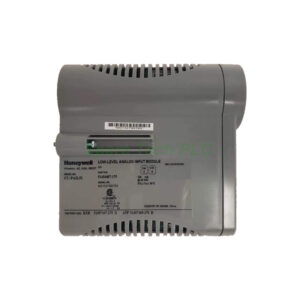
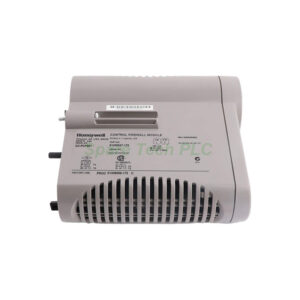
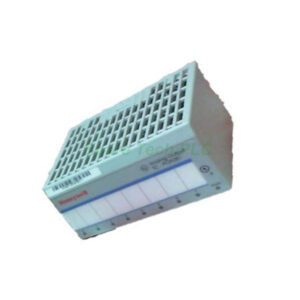
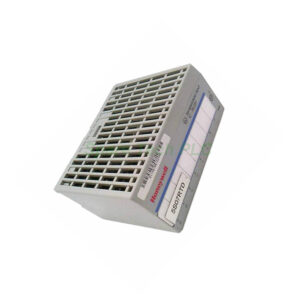
Honeywell CC-PDOD51 Series C Digital Output Module
Product Introduction
The CC-PDOD51 from Honeywell switches reliable 24V digital output signals. It controls solenoid valves, interposing relays, and other process equipment. This module features a bussed output design. All outputs share a common return ground. Therefore, wiring becomes simpler and more organized. Additionally, the CC-PDOD51 includes a coated board for environmental protection.
Technical Specifications of CC-PDOD51
The CC-PDOD51 delivers 32 output channels. Each channel uses sink type open drain technology. Load voltage ranges up to 30 VDC maximum. Load current reaches 0.1 A per channel maximum.
Key Electrical Parameters:
Output type: SINK (Open Drain)
Load voltage: 30 VDC maximum
Load current: 0.1 A per channel maximum
On-state voltage: 0 VDC at 0.1A load current
Off-state voltage: 24 VDC typical
Off-state leakage current: 100 microamps maximum
Turn-on/turn-off time: 10 ms maximum
Isolation Performance:
Power Supply Options for CC-PDOD51
The CC-PDOD51 supports two field power excitation methods. First, it can use internal system power supply. Second, it accepts external 24V field power.
When using an external source, outputs become galvanically isolated from the Series C power system. A wiring option on the IOTA determines the power reference. Users can choose between Series C system power or external field power. Therefore, the CC-PDOD51 adapts to different system architectures.
Bussed Output Architecture
As a bussed output device, the CC-PDOD51 shares a common return for all outputs. All outputs receive power from the same source. This source can be the system power supply or an externally connected 24V supply. Consequently, wiring complexity reduces significantly. Field wiring costs also decrease.
The bussed design works well for applications with multiple loads sharing a common return. For instance, driving several solenoids from one cabinet location becomes straightforward.
Redundancy and Switchover Performance
The CC-PDOD51 supports redundancy applications. When used in redundant configurations, the output gap on switchover is none. Specifically, 0 ms of zero current occurs during output to field switchover. This seamless transition is critical for processes that cannot tolerate output interruptions.
Turn-on and turn-off times reach a maximum of 10 ms. Therefore, the module responds quickly to control system commands.
IOTA Compatibility for CC-PDOD51
The CC-PDOD51 mounts on specific IOTAs. Two models are available depending on redundancy requirements.
Choose the CC-TDOD51 for standard non-redundant installations. Select the CC-TDOD61 when redundant operation is required.
Environmental and Mechanical Data
The CC-PDOD51 includes a coated circuit board. This coating protects against moisture, dust, and mild contaminants. Operating temperature ranges from 0°C to 60°C. Storage temperature runs from -40°C to +85°C. The module weighs approximately 0.48 kg.
Installation Guidelines for CC-PDOD51
Installation requires the correct IOTA. First, mount the CC-TDOD51 or CC-TDOD61 IOTA in the cabinet. Next, attach the CC-PDOD51 onto the IOTA. Then, configure the field power source selection via IOTA wiring.
Important notes:
Verify load voltage does not exceed 30 VDC
Do not exceed 0.1A per channel
Use external field power for galvanic isolation
Ensure proper common return connections
Apply coating only as factory applied; do not recoat in the field
Packaging List for CC-PDOD51
1 x Honeywell CC-PDOD51 Digital Output Module
1 x Module keying kit
1 x IOTA connector label sheet
Anti-static packaging bag
Shipping and Delivery
All orders ship via FedEx, UPS, or DHL. Tracking numbers are provided within 24 hours. International delivery usually takes 3–7 business days.
Frequently Asked Questions (FAQ)
1. What is the difference between sink type and source type outputs?
The CC-PDOD51 uses sink type open drain outputs. This means the output switches the load to ground. The common connection provides positive 24V. Many solenoids and relays work with sink outputs.
2. Can I mix internal and external field power on the same CC-PDOD51?
No. The CC-PDOD51 uses a bussed architecture. All outputs must share the same power source. Choose either internal system power or external field power for the entire module.
3. What IOTA do I need for the CC-PDOD51?
Use CC-TDOD51 for non-redundant applications (9-inch). Use CC-TDOD61 for redundant applications (12-inch). Both IOTAs are designed specifically for this module.
4. How does galvanic isolation work on this module?
The CC-PDOD51 provides 1000 VAC RMS isolation when using user-supplied external field power. System-to-field isolation protects control circuits from field side electrical noise and faults.
5. What is the maximum switching frequency for the CC-PDOD51?
Each channel has a turn-on and turn-off time of 10 ms maximum. Therefore, the practical switching frequency is approximately 50 Hz. However, typical process applications use much lower speeds for solenoid and relay control.