Technical Specifications
Core Function & Safety Classification
The
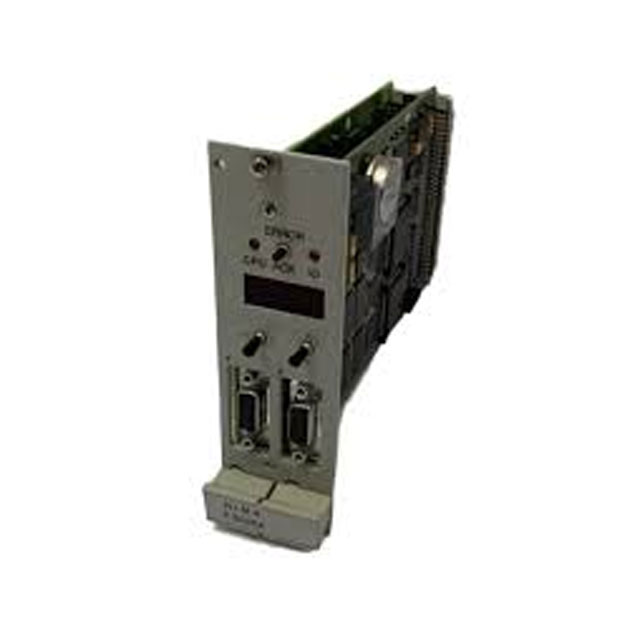
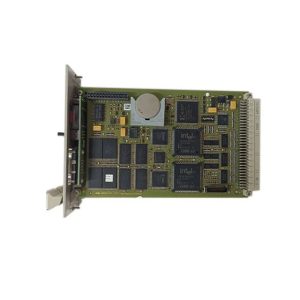
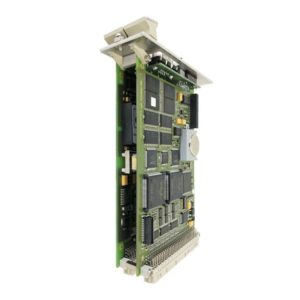
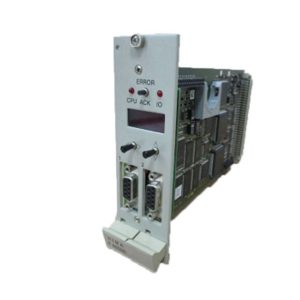
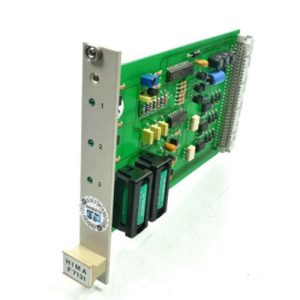
HIMA F3237 is an 8-fold safety-related input module engineered to connect various industrial sensors securely. Specifically, it supports safety-related proximity switches, proximity switches complying with DIN 19234 (NAMUR), and resistor-wired sensors, making it versatile for different industrial applications.
Additionally, the
F3237 falls under safety requirement class AK 1 ... 6, ensuring it meets strict safety standards for critical industrial environments. It also monitors sensor lines for short-circuit and line break, providing early fault detection to prevent hazardous conditions.
Automatic In-Operation Testing
The HIMA F3237 undergoes complete automatic testing during operation to ensure reliable performance. The main test routines include the following key checks:
Switch on and switch off capability of the input circuits
Crosstalk of the input circuits via walking 0 test
Functionality of the input filters to ensure accurate signal processing
Overall correct function of the module
Short circuit and wire break detection in the sensor line
Notably, the function of the LEDs is not tested during these routines. The module requires the appertaining software building block HB-RTE-; for the current version, refer to the description of the operating system.
Switching Time & Operating Points
The
HIMA F3237 has a switching time of approximately 10 ms, ensuring fast response to sensor signals for real-time safety control. It operates based on specific current thresholds (IE) for different signal states, which are critical for accurate sensor monitoring:
Line & Power Specifications
The HIMA F3237 has specific line requirements to ensure stable operation. The line impedance must be ≤ 50 Ohm (according to DIN 19234), and the maximum line length is 1000 m when using a 0.5 mm² wire.
Furthermore, the module uses a supply voltage (US) of 8.2 V and includes shunt resistors (R17 ... R24) with a specification of 681 Ohm; 1 %; 0.25 W (HIMA part number 00 0751681). These components ensure consistent power supply and signal stability.
Non-DIN 19234 Proximity Switch Compatibility
Some proximity switches do not comply with the DIN 19234 standard, which can affect the F3237’s line break supervision. For example, the P&F proximity switch type NJ 5 - 30GK - S1N delivers very low current in the non-damped state.
To guarantee correct function in such cases, users can increase the proximity switch’s output current to 170 µA in the non-damped state by adding a 47 kΩ resistor in parallel. This modification does not limit use in fail-safe circuits, as a resistor break will be signaled like a line break, and real line breaks will still be detected normally.
Mechanical & Environmental Parameters
Mechanical Dimensions & Construction
The HIMAF3237 has a compact design with a space requirement of 4 TE (Terminal Equipment), a standard size for industrial I/O modules. This compact size allows for easy integration into standard industrial control cabinets, even in crowded environments.
The module features a robust construction designed to withstand industrial conditions, ensuring long-term reliability and consistent performance in harsh industrial settings.
Electrical & Environmental Requirements
The F3237 operates on two power supply voltages with specific current draws: 5 V DC: 90 mA and 24 V DC: 170 mA. This dual-voltage compatibility ensures flexibility in different system setups.
It operates reliably in typical industrial environments, withstanding a wide range of operating temperatures and humidity levels. Additionally, it meets strict industrial standards for electromagnetic interference and noise resistance, making it suitable for use in various harsh industrial settings such as chemical plants, power stations, and manufacturing facilities. This robustness ensures the module maintains consistent performance even in challenging conditions, supporting long-term safety and operational stability.
Installation Guide
Pre-Installation Preparation
Before installing the HIMA F3237, check the industrial control rack slot to ensure it matches the module’s 4 TE space requirement. First, turn off the system power completely to avoid electrical damage during installation. Next, prepare the necessary tools, including a screwdriver and appropriate wiring for sensor connections.
Additionally, confirm that the sensors to be connected (safety-related proximity switches, DIN 19234 NAMUR switches, or resistor-wired sensors) are compatible with the module’s operating points. For non-DIN 19234 switches (e.g., P&F NJ 5 - 30GK - S1N), prepare a 47 kΩ resistor for parallel connection if needed.
Step-by-Step Installation
Installing the HIMA F3237 is straightforward and aligns with standard industrial I/O module installation procedures. First, align the module with the appropriate 4 TE slot in the rack and slide it in until it clicks into place securely. Next, secure the module to the rack using the provided screws to ensure stability and prevent loose connections during operation.
After physical installation, connect the sensor lines to the module’s input terminals, ensuring proper wiring to avoid short-circuits or line breaks. For non-DIN 19234 proximity switches, connect the 47 kΩ resistor in parallel to the switch to increase the non-damped state current to 170 µA. Then, connect the module to the 5 V DC and 24 V DC power supplies, verifying the current draws match the specified 90 mA and 170 mA respectively.
Finally, power on the system and check the module’s status to ensure automatic in-operation testing initiates correctly, with no error indications from the diagnostic LEDs.
Post-Installation Check
Once the F3237 is installed and powered on, test its functionality to ensure normal operation. Verify that sensor signals are detected correctly, with the module responding appropriately to 0 signals, 1 signals, line breaks, and short circuits. Check that the automatic in-operation testing routines are running, and confirm that non-DIN 19234 switches (with parallel resistor) function properly without line break supervision issues.
Packaging List
1 × HIMA F3237 8-Fold Safety-Related Input Module
Protective anti-static packaging
Outer carton for safe transportation
FAQ
Q1: What sensors can the HIMA F3237 connect to? A1: The HIMA F3237 connects to safety-related proximity switches, DIN 19234 (NAMUR) proximity switches, and resistor-wired sensors.
Q2: What safety class does the F3237 meet? A2: It falls under safety requirement class AK 1 ... 6, suitable for critical industrial safety applications.
Q3: What are the key operating points for the F3237? A3: 0 signal (0.35 ≤ IE ≤ 1.2 mA), 1 signal (2.1 ≤ IE ≤ 6.0 mA), wire break (≤ 0.28 mA), short circuit (≥ 6.5 mA).
Q4: How is the HIMA F3237 shipped? A4: We ship the F3237 worldwide via Fedex, UPS, and DHL for fast and secure delivery.
Q5: How to use non-DIN 19234 proximity switches with the F3237? A5: Add a 47 kΩ resistor in parallel to the switch to increase its non-damped state current to 170 µA, ensuring correct line break supervision.