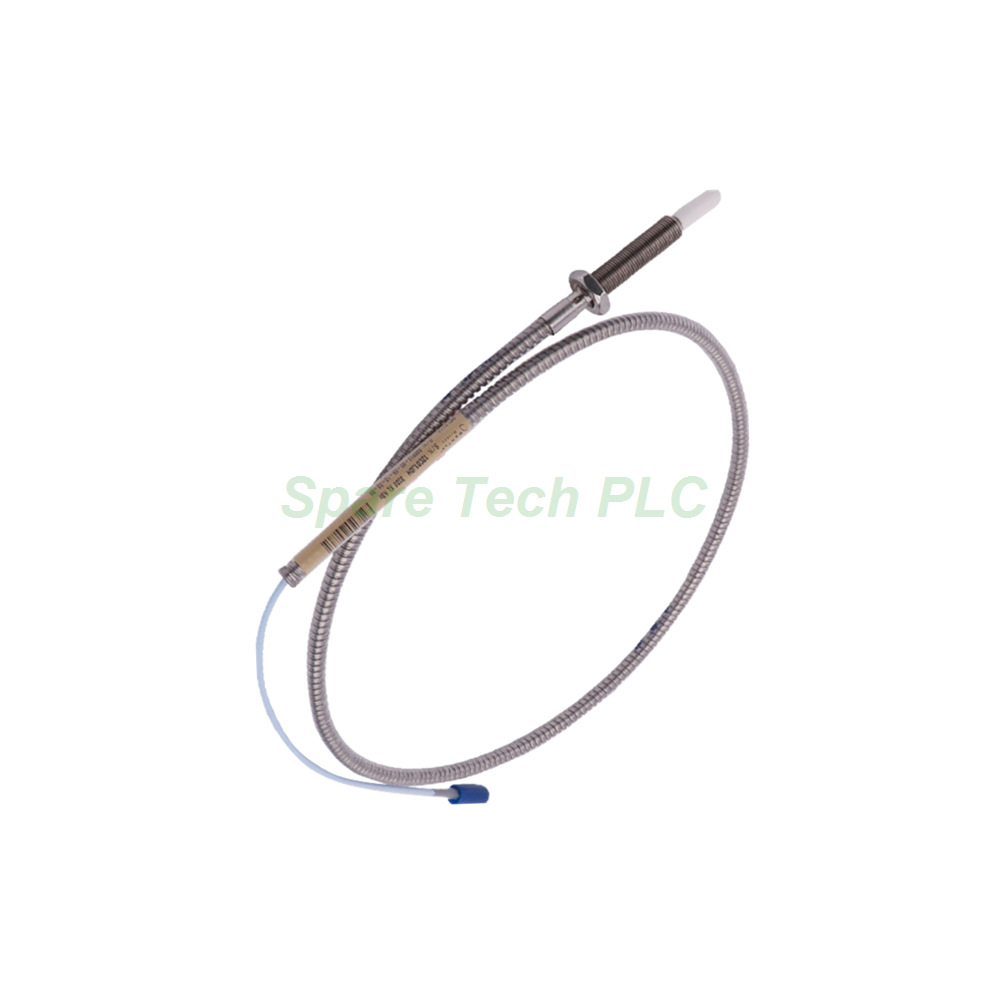
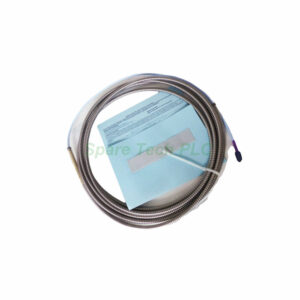
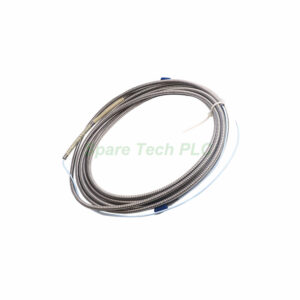
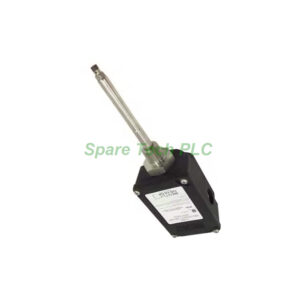
Bently Nevada 330902-00-95-05-01-00 3300 NSv Armored Proximity Probe
Product Introduction
The Bently Nevada 330902-00-95-05-01-00 belongs to the 3300 NSv series and combines stainless steel armor with an extended case design. Specifically, this 3300 NSv Proximity Probe delivers accurate non-contact displacement and vibration measurements for smaller rotating equipment. Consequently, it serves as a reliable monitoring solution for pumps, motors, and light-duty turbines where deep mounting is required.
First, this model features a 1/4-28 UNF thread case with SST armor. Its unthreaded length is 0 inches, while the overall case length is 9.5 inches. This extended case makes it suitable for installations where the probe must reach through thick brackets or housings. Next, the total probe length is 0.5 metre, which equals 20 inches. Additionally, the connector option includes a miniature coaxial ClickLoc connector with a connector protector and standard cable. This unit does not require agency approvals (Option 00).
Furthermore, the probe tip uses polyphenylene sulfide (PPS) material. The probe case, in turn, is constructed from AISI 304 stainless steel (SST). The stainless steel armor provides an extra layer of mechanical protection against abrasion and impact. Meanwhile, the 75 Ω coaxial cable features FEP insulation for stable signal transmission over the short cable run.
Technical Specifications
Electrical and Cable Parameters
The probe cable uses a 75 Ω coaxial design with fluoroethylene propylene (FEP) insulation. This armored model comes in a 0.5-metre total length. Additionally, the DC resistance from the center conductor to the outer conductor (RPROBE) measures 4.0 ± 0.5 ohms. This low resistance ensures consistent and accurate signal transfer.
Mechanical and Environmental Ratings
The operating temperature range spans from -52°C to +177°C (-62°F to +351°F). Similarly, the storage temperature range is identical. However, exposing this 3300 NSv Proximity Probe to temperatures below -34°C (-30°F) for a sustained period may cause premature pressure seal failure. Therefore, you should avoid prolonged low-temperature exposure whenever possible.
Furthermore, the probe seals differential pressure between the tip and the case using a Viton O-ring. Bently Nevada does not pressure-test these probes prior to shipment. For custom pressure testing, please contact their design department directly.
Torque and Thread Engagement
For the 1/4-28 probe case thread, the maximum length of thread engagement is 0.375 inches. The maximum rated torque for this case reaches (red)7.3 N•m (65 in•lb)(/red). However, the recommended installation torque is (red)5.1 N•m (45 in•lb)(/red). Following this recommended value prevents thread damage and ensures reliable mounting.
The connector-to-connector torque should be finger tight only. Its maximum torque is (blue)0.565 N•m (5 in•lb)(/blue). Finally, the minimum bend radius for the cable, with or without armor, is (blue)25.4 mm (1.0 inch)(/blue).
Installation Guidelines
Mounting and Positioning
First, clean the target surface and the mounting hole thoroughly before installing the Bently Nevada 330902-00-95-05-01-00. Then, thread the probe carefully using the 1/4-28 UNF thread. For instance, apply the recommended torque of (red)5.1 N•m(/red) to secure it properly. Over-tightening may strip the fine threads or deform the probe case.
Extended Case for Deep Mounting
The 9.5-inch overall case length is the key feature of this model. Specifically, it allows the probe to reach through thick walls, brackets, or housings while maintaining the correct tip gap. This design eliminates the need for custom mounting adapters in many deep-reach applications. Therefore, installation becomes simpler and more cost-effective.
Cable Routing with Armor Protection
Next, route the armored FEP insulated coaxial cable with care. Specifically, maintain a minimum bend radius of (blue)25.4 mm(/blue) at all times. Although the SST armor provides extra mechanical protection, sharp bends can still damage the internal conductor or degrade signal quality. Additionally, use the ClickLoc connector with its protector to attach the extension cable firmly. Remember to tighten it finger tight only, as excessive torque can damage the connector mechanism.
Environmental Precautions
Furthermore, avoid operating this 3300 NSv Armored Probe below -34°C for extended periods. This precaution preserves the pressure seal's integrity over time. Also, inspect the Viton O-ring for any visible damage before installation. A compromised seal may lead to fluid ingress and measurement inaccuracies.
Packaging List
Bently Nevada 330902-00-95-05-01-00 probe unit (1 pc)
Stainless steel armor (pre-attached over cable)
Miniature coaxial ClickLoc connector with connector protector (pre-attached)
Standard cable assembly (0.5 metre / 20 inches)
Installation instruction sheet (printed)
Note: Calibration certificates and warranty documents are not included in this package.
Shipping and Delivery
We ship all orders via Fedex, UPS, or DHL to ensure fast and reliable delivery. Consequently, you can expect your 3300 NSv Proximity Probe to arrive safely in most regions within 3–7 business days.
Frequently Asked Questions (FAQ)
Q1: What is the thread size of the Bently Nevada 330902-00-95-05-01-00?
A1: This probe features a 1/4-28 UNF thread. The maximum thread engagement length is 0.375 inches.
Q2: Why does this model have a 9.5-inch case length?
A2: The extended 9.5-inch case allows deep-reach mounting through thick walls, brackets, or housings without requiring custom adapters.
Q3: What does the armor protect against?
A3: The stainless steel armor protects the cable against abrasion, impact, and rough handling in harsh industrial environments.
Q4: What is the total cable length for this model?
A4: This model includes a 0.5-metre (20 inches) coaxial FEP cable. Other lengths (1, 5, or 7 metres) are available as different options.
Q5: How tight should I fasten the connector?
A5: Tighten the ClickLoc connector finger tight only. The maximum torque for the connector is 0.565 N•m (5 in•lb). Over-tightening can break the connector.