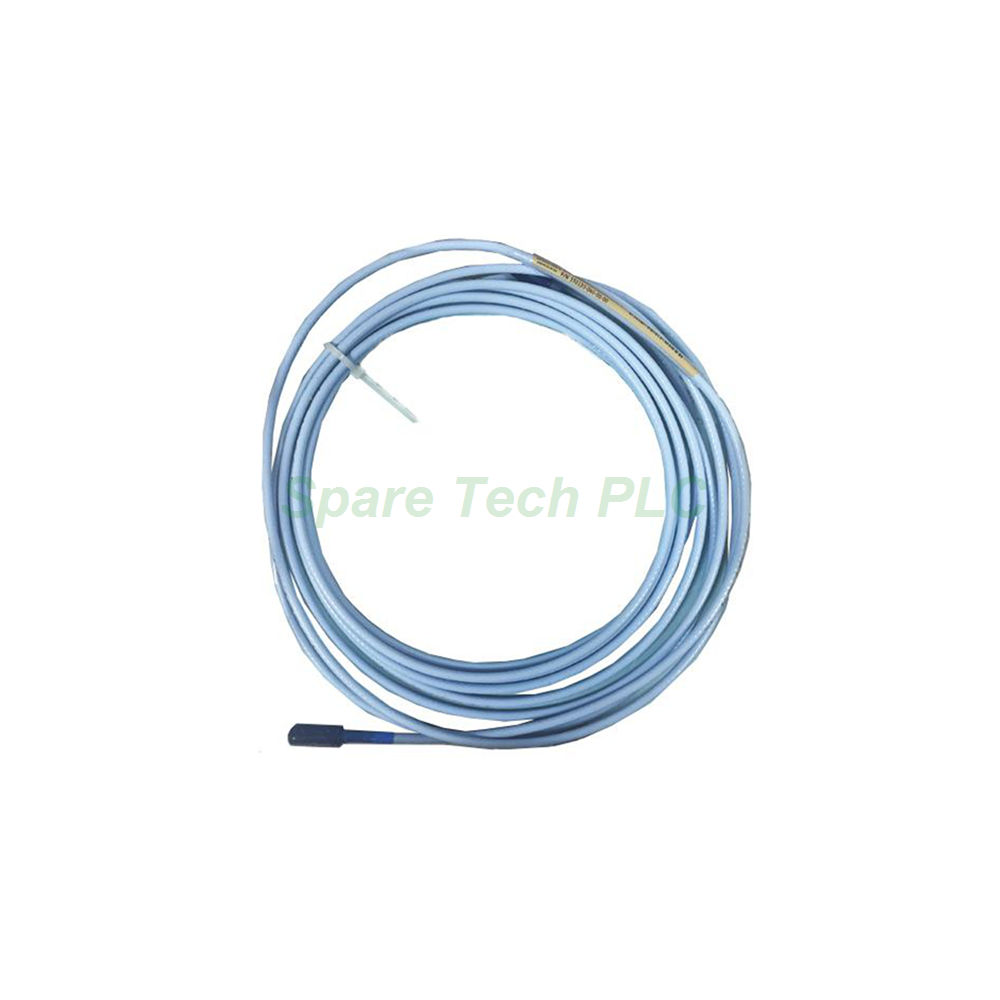
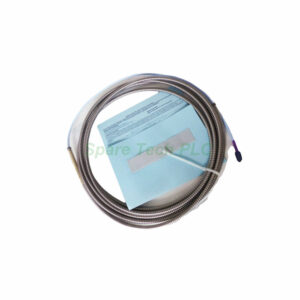
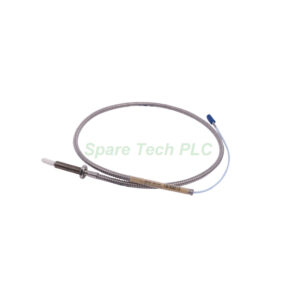
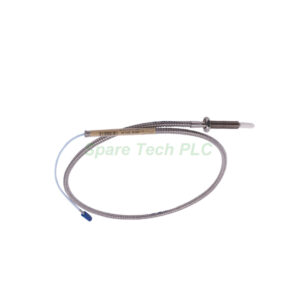
3300 XL 11 mm FluidLoc Extension Cable – Bently Nevada 330730-040-10-00
Product Introduction
The Bently Nevada 330730-040-10-00 is a precision‑engineered extension cable built for the 3300 XL 11 mm proximity probe system. With a length of 4.0 metres (13.1 feet), this cable offers a practical solution for connecting probes to Proximitor Sensors in medium‑distance installations. Its FluidLoc design effectively seals the cable interior, preventing oil and other process liquids from leaking out of the machine—a common failure point in conventional cables.
This model carries the 040 length option and the 10 connector and cable option, which specifies FluidLoc construction without armor. The 00 agency approval code indicates that no special certifications are required, making it a cost‑effective choice for domestic and many international projects. Furthermore, the cable’s triaxial FEP insulation delivers a typical capacitance of 69.9 pF/m, ensuring consistent signal fidelity across the entire linear range.
Users frequently select this 3300 XL extension cable for steam turbines, centrifugal compressors, and large pumps. Its operating temperature range of ‑51°C to +177°C guarantees reliable performance in extreme thermal conditions, while the gold‑plated ClickLoc connectors lock positively to prevent accidental disconnection during machine operation.
Technical Specifications
Electrical Characteristics – The Bently Nevada 330730-040-10-00 offers a center‑conductor resistance of 1.0 ± 0.25 ohms and a coaxial‑conductor resistance of 0.3 ± 0.1 ohms for its 4.0‑m length. Its typical capacitance measures 69.9 pF/m (21.3 pF/ft), which aligns perfectly with the 3300 XL system requirements. For field wiring, we recommend using three‑conductor shielded triad cable with a cross‑section of 0.2 to 1.5 mm² (16 to 24 AWG). The maximum allowable field wiring length between the Proximitor Sensor and the monitor is 305 metres (1,000 feet), though you should consult the frequency response graph for signal rolloff at extended distances.
Mechanical Construction – The probe tip uses polyphenylene sulfide (PPS), while the probe case is manufactured from AISI 304 stainless steel. The cable itself is a 75‑ohm triaxial type with fluoroethylene propylene (FEP) insulation. For environments requiring extra mechanical protection, an optional flexible AISI 302 stainless steel armor with an FEP outer jacket is available. The unarmored version weighs 45 g/m (0.5 oz/ft), totaling approximately 0.18 kg for the 4‑meter length, while the armored version weighs 140 g/m (1.5 oz/ft), totaling 0.56 kg.
Environmental Ratings – Both operating and storage temperatures range from ‑51°C to +177°C (‑60°F to +351°F). This wide tolerance allows the 3300 XL 11 mm extension cable to perform reliably in high‑heat turbine compartments as well as cold outdoor installations. Moreover, the FluidLoc option ensures that oil or moisture cannot escape through the cable’s interior, which is a significant advantage over standard designs.
System Compatibility and Linear Range
The 330730-040-10-00 works seamlessly with all 3300 XL 11 mm probes, including armored and unarmored versions with ½‑20, 5⁄8‑18, M14 x 1.5, or M16 x 1.5 threads. Reverse‑mount probes with 3⁄8‑24 or M10 x 1 threads are also fully compatible. Every component in this transducer system uses gold‑plated brass ClickLoc connectors, which provide a positive locking action. Meanwhile, the patented TipLoc molding method creates a robust bond between the probe tip and body, while CableLoc technology ensures a pull strength of 330 N (75 lb) at the probe‑cable attachment point.
The 3300 XL 11 mm system provides a linear range of 4.0 mm (160 mils), starting from approximately 0.5 mm (20 mils) off the target and extending to 4.5 mm (180 mils). This corresponds to an output voltage of roughly –1 to –17 Vdc. For applications that require extended deviation from straight line (DSL) capability, the range expands to 0.5 – 5.0 mm (20 – 200 mils), or –1 to –19 Vdc. However, this extended DSL range does not apply when zener barriers are used. The recommended gap setting for most installations is 2.5 mm (100 mils), which provides optimal linearity and sensitivity. The incremental scale factor (ISF) is 3.94 V/mm (100 mV/mil) with a ±10% tolerance including interchangeability error when measured in 0.5‑mm increments over the full linear range.
Installation Guidelines
Proper installation of the Bently Nevada 330730-040-10-00 ensures maximum performance and service life. First, always handle the cable with care to avoid sharp bends or kinks, especially near the connectors. Next, connect the extension cable to the probe and the Proximitor Sensor by aligning the ClickLoc connectors and pushing firmly until they lock with an audible click. Then, secure the cable along its path using appropriate clamps or ties, keeping it away from hot surfaces or moving parts.
For armored cables, ensure that the armor does not contact sharp edges that could compromise the FEP outer jacket. Furthermore, when routing the cable through conduit or bulkheads, use grommets or bushings to prevent abrasion. Finally, if you choose to install connector protectors, slide them over the mating points before locking the connectors; this step is especially critical in environments with high humidity or oil mist. Silicone tape is also provided with each extension cable and can serve as an alternative sealing method, but please note that tape is not recommended for applications where the connection will be exposed to turbine oil.
Packaging List
1 x 330730-040-10-00 3300 XL 11 mm FluidLoc Extension Cable (4.0 m)
1 x Set of connector protectors (recommended for humid environments)
1 x Silicone tape roll (for alternative sealing)
1 x Installation instruction leaflet
1 x Anti‑static packaging bag
Shipping method: FedEx, UPS, or DHL (depending on destination and urgency).
Frequently Asked Questions (FAQ)
1. Can I use this 330730-040-10-00 cable with a 5‑meter probe?
Yes, the 3300 XL system allows combining different probe and extension cable lengths as long as the total length does not exceed 10 metres (standard limit). Always verify the total capacitance and resistance to stay within Proximitor Sensor specifications.
2. What is the difference between FluidLoc and standard cables?
FluidLoc cables, like the 330730-040-10-00, include an internal sealing feature that prevents oil and other liquids from leaking through the cable interior. Standard cables lack this feature, making FluidLoc the preferred choice for oil‑filled machines.
3. Is the armored version required for my application?
Choose armored cable when the installation path exposes the cable to mechanical risks such as crushing, abrasion, or impact. The unarmored version is lighter and more flexible, suitable for protected raceways or conduit.
4. How do I clean the connectors before installation?
Use a lint‑free cloth lightly moistened with isopropyl alcohol to wipe the gold‑plated pins and sockets. Allow them to dry completely before mating. Avoid using abrasive materials that could damage the plating.
5. Can I extend the field wiring beyond 305 metres?
Extending beyond 305 metres (1,000 feet) may cause signal rolloff at high frequencies. Please consult the frequency response graph in the manual. For longer runs, consider using a signal conditioner or moving the Proximitor Sensor closer to the probe.