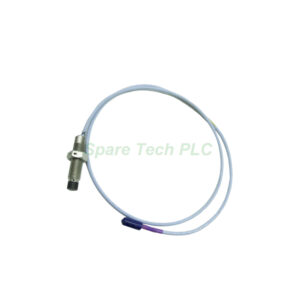
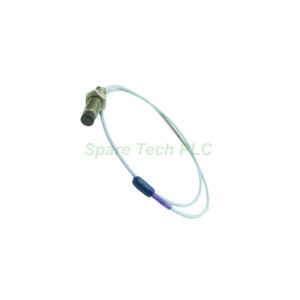
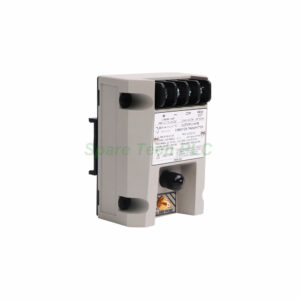
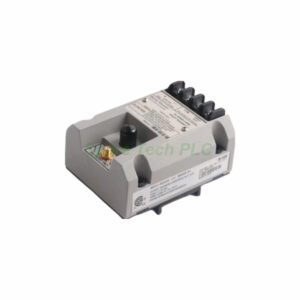
3300 XL 11mm Proximity Probe 330702-00-15-10-02-05
Product Introduction
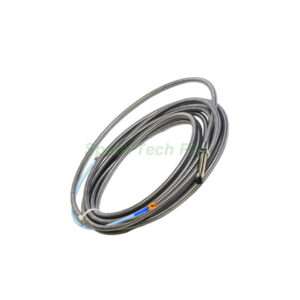
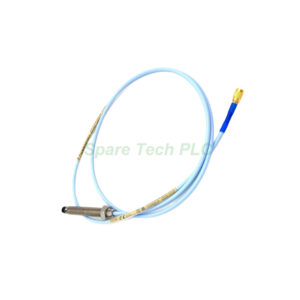
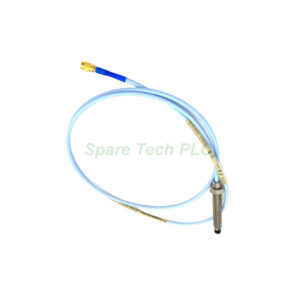
The Bently Nevada 330702-00-15-10-02-05 belongs to the trusted 3300 XL series of eddy-current proximity probes. This model offers an 11 mm tip diameter and a 1/2-20 UNF threaded stainless steel case with armor. It is specifically designed for non-contact measurement of shaft vibration, thrust position, and radial runout in turbomachinery. The probe includes a 1.0-meter triaxial cable with FEP insulation and a miniature coaxial ClickLoc connector for secure signal transmission. Moreover, it carries multiple agency approvals, making it suitable for global installations.
Key Technical Specifications
This sensor operates with a probe DC resistance of 5.9 ± 0.5 ohms between the center and outer conductors. Its tip uses polyphenylene sulfide (PPS) material, while the case is constructed from AISI 304 stainless steel (SST). The cable offers a 75 Ω impedance and uses fluoroethylene propylene (FEP) insulation for durability. Additionally, the 330702-00-15-10-02-05 supports a total length option of 1.0 meter, which is ideal for compact machine train layouts. The connector type is the miniature coaxial ClickLoc, ensuring a firm and reliable connection. For installation, the probe case thread is 1/2-20 UNF with a maximum thread engagement of 0.750 inches.
Mechanical and Environmental Ratings
The Bently Nevada 330702-00-15-10-02-05 handles a wide operating and storage temperature range from -51°C to +177°C. However, remember that prolonged exposure below -34°C may affect the pressure seal life. The probe case torque recommendation is 15.2 N•m for optimal mounting, while the maximum rated torque is 45.2 N•m. Furthermore, the connector-to-connector torque should be finger-tight, with an absolute maximum of 0.565 N•m to avoid damage. The minimum bend radius for the cable, even with SST armor, is 25.4 mm, offering flexibility in tight routing paths.
Installation Guidance
For proper installation, first verify that the threaded hole matches the 1/2-20 UNF specification. Next, apply the recommended torque of 15.2 N•m when tightening the probe case to prevent thread stripping. Use the ClickLoc connector by pushing it firmly until it clicks into place; do not exceed the maximum torque of 0.565 N•m on the connector. Additionally, ensure the cable bend radius stays above 25.4 mm to maintain signal integrity. Since the probe seals differential pressure via a Viton O-ring, check for any visible damage on the sealing surface before mounting. For applications requiring pressure seal verification, contact the custom design department as these units are not pressure tested at shipment.
Packaging and Shipping
Each 330702-00-15-10-02-05 unit ships in factory-sealed anti-static packaging to prevent damage during transit. The package includes the probe assembly with the attached 1.0-meter cable and ClickLoc connector. You will also find a printed installation guide with torque specifications and wiring diagrams. The shipping weight is 0.17 kg, while the gross weight for invoicing is 0.25 kg including packing materials. We dispatch orders via FedEx, UPS, or DHL with tracking numbers provided within 24 hours. Please note that this listing does not include calibration certificates or warranty documents.
Frequently Asked Questions (FAQ)
1. Can this 3300 XL probe work with extensions cables?
Yes, the Bently Nevada 330702-00-15-10-02-05 can connect to extension cables using the ClickLoc interface, but total system length must remain within the driver limits.
2. What is the exact tip material for this model?
The probe tip is made of polyphenylene sulfide (PPS) , which provides excellent resistance to wear and chemical exposure.
3. Is this probe compatible with the 3300 XL 5mm and 8mm systems?
While it shares the same 3300 XL platform, the 11 mm probe has different scaling factors; therefore, it requires a matching 3300 XL 11 mm proximity system.
4. What happens if I exceed the maximum case torque?
Exceeding 45.2 N•m can deform the 304 SST case threads, potentially causing the probe to seize or lose its sealing ability.
5. How should I store the probe before installation?
Store it in a dry, clean area within the -51°C to +177°C range, and avoid bending the cable past its 25.4 mm minimum radius.