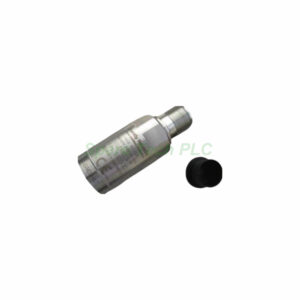
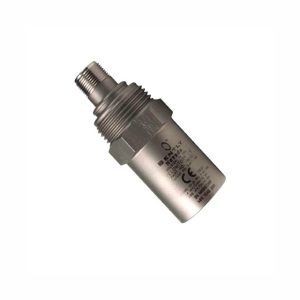
Bently Nevada 330500-00-02 Velomitor Product Introduction
The Bently Nevada 330500-00-02 Velomitor provides direct velocity output for machine protection in hazardous areas. This piezo-velocity sensor carries ATEX approval option "02", making it suitable for explosive atmospheres. Its sensitivity reaches 3.94 mV/mm/s (100 mV/in/s) with a ±5% tolerance. Moreover, the velocity range extends to 1270 mm/s (50 in/s) peak.
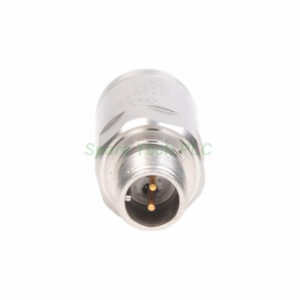
Mounting thread option "-00" means no adapter is required for this model. The case is electrically isolated from ground, which prevents ground loop issues. Additionally, the Bently Nevada 330500-00-02 uses a hermetically sealed 2-pin MIL-C-5015 connector with a 316L stainless steel shell. This construction ensures reliable operation in harsh industrial conditions.
The key difference from the non-approved version is the ATEX certification. Specifically, this sensor meets Ex ia IIC T4 and Ex nL IIC T4 standards. Therefore, you can install it in Zone 0, Zone 1, and Zone 2 classified areas across European facilities.
Technical Specifications of the 330500-00-02 Velomitor
Frequency Response and Accuracy
The Bently Nevada 330500-00-02 delivers a frequency response of 4.5 Hz to 5 kHz (270 to 300,000 cpm) at ±3.0 dB. For tighter tolerances, expect ±0.9 dB from 6.0 Hz to 2.5 kHz (360 to 150,000 cpm). Amplitude linearity stays within ±2% up to 152 mm/s (6 in/s) peak.
Output Characteristics
Output bias voltage measures -12 ±3.0 VDC over temperature, referenced to Pin A. Dynamic output impedance remains less than 2400 Ω. Consequently, the sensor drives long cable runs without signal degradation.
Noise Floor and Transverse Sensitivity
Broadband noise floor from 4.5 Hz to 5 kHz is only 0.004 mm/s (160 μin/s) rms nominal. Transverse sensitivity remains less than 5% of axial sensitivity. This low noise floor allows accurate measurements of small velocity changes.
Resonant Frequency
Mounted resonant frequency exceeds 12 kHz. This high resonance ensures the sensor avoids mechanical amplification within its normal 5 kHz operating range. Therefore, you get clean, reliable velocity data.
Temperature and Base Strain Effects
Temperature sensitivity typically varies from -14% to +7.5% over the full -55°C to 121°C range. Base strain sensitivity is 0.005 in/s/mstrain. The case isolated design further reduces external interference.
Hazardous Area Approvals for the 330500-00-02
The Bently Nevada 330500-00-02 holds multiple ATEX certifications:
Ex ia IIC T4 (Intrinsic Safety)
AEx ia IIC T4 for North American markets
Suitable for Class I, Division 1, Groups A, B, C, and D
Also approved for Class II, Groups E, F, G, and Class III
Temperature rating T4 from -40°C to 100°C ambient
Ex nL IIC T4 (Non-incendive)
AEx nA IIC T4 for North American equivalents
Suitable for Class I, Division 2, Groups A, B, C, and D
Same T4 temperature rating from -40°C to 100°C
Installation Requirement
You must install the Bently Nevada 330500-00-02 per drawing 167537. This drawing specifies zener barriers or galvanic isolators for intrinsic safety circuits. Never exceed the entity parameters of the safety barrier.
Compliance and Certifications
Additionally, the Bently Nevada 330500-00-02 complies with:
FCC Part 15 rules
EMC Directive 2014/30/EU
RoHS Directive 2011/65/EU
DNV rules for ships, high speed craft, and offshore standards
Mechanical and Environmental Parameters
Physical Dimensions and Weight
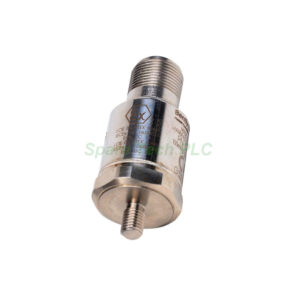
Weight without cable is typically 142 grams (5.0 oz). Diameter measures 25.3 mm (0.995 in). Height reaches 63.2 mm (2.49 in). Case material is 316L stainless steel, which provides excellent corrosion resistance.
Environmental Limits
Operating temperature ranges from -55°C to 121°C (-67°F to 250°F). Note the ATEX rating limits ambient temperature to -40°C to 100°C. Shock survivability peaks at 5,000 g. Relative humidity tolerance reaches 100% non-submerged because the case is hermetically sealed.
Magnetic Field Susceptibility
Susceptibility stays below 51 min/s/gauss at 50 gauss, 50-60 Hz. This low value ensures reliable readings near motors or generators.
Mounting Torque and Polarity
Apply a mounting torque of 32-46 kg-cm (24-40 in-lb) maximum. When the sensor case moves toward the connector, Pin A becomes positive with respect to Pin B. This polarity convention helps you verify correct wiring during installation.
Maximum Cable Length
You can extend the cable up to 305 metres (1,000 feet) using part number 02173006 without signal degradation. For applications with 50g vibration at 10 kHz and 200 pf/m cable capacitance, Bently Nevada recommends a maximum length of 63 metres (208 feet).
Installation Guidelines for the Bently Nevada 330500-00-02
Mechanical Installation
First, prepare a flat mounting surface with a minimum 32 minch rms finish. Clean the threaded hole thoroughly. Next, apply anti-seize compound if operating in high temperatures. Then, screw the sensor into place by hand. Finally, tighten to 32-46 kg-cm (24-40 in-lb) using a calibrated torque wrench. Do not exceed this torque.
Intrinsically Safe Wiring
For Ex ia installations, always use an approved Zener barrier or galvanic isolator. Connect the barrier to the Bently Nevada 330500-00-02 as shown in drawing 167537. Verify that cable capacitance and inductance do not exceed the barrier's entity parameters. Use only shielded twisted pair cable for the field wiring.
Polarity Check
Verify that Pin A connects to the positive input of your monitoring system. The Bently Nevada 330500-00-02 produces positive voltage when the case moves toward the connector. A simple tap test with an oscilloscope confirms correct polarity.
Grounding Considerations
The case is isolated from ground, so you do not need isolation washers. However, the cable shield should connect to ground at the monitor end only. Avoid ground loops by keeping shield connections single-point.
Packaging List
Bently Nevada 330500-00-02 Velomitor piezo-velocity sensor (1 unit)
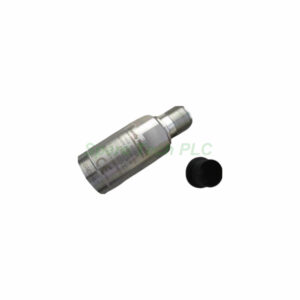
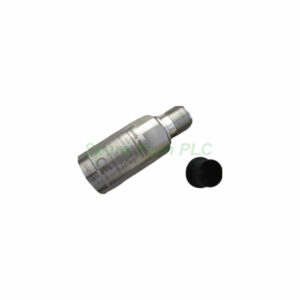
Protective plastic dust cap for 2-pin MIL-C-5015 connector
Installation instruction sheet (1 copy)
ATEX compliance information sheet
Note: Certificates and warranty documents are not included in the package. Intrinsic safety barriers and cables are sold separately.
Shipping Information
All orders ship via FedEx, UPS, or DHL with tracking numbers provided. Delivery typically takes 3-7 business days depending on destination.
Frequently Asked Questions (FAQ)
1. What hazardous area zones can the 330500-00-02 be installed in?
The Bently Nevada 330500-00-02 with Ex ia IIC T4 approval installs in Zone 0, Zone 1, and Zone 2 (gas) environments. The Ex nL version is limited to Zone 2 only. Always verify your specific area classification before installation.
2. What is the ambient temperature limit for the ATEX rating?
Although the sensor operates from -55°C to 121°C, the ATEX T4 rating limits the ambient temperature to -40°C to 100°C. Exceeding these limits voids the hazardous area certification.
3. Do I need a Zener barrier to use this sensor safely?
Yes. For Ex ia installations, you must connect an approved intrinsically safe barrier per drawing 167537. The Bently Nevada 330500-00-02 cannot be directly connected to non-certified equipment in hazardous areas.
4. Can I use the same cable as the non-ATEX version?
Yes. The same Bently Nevada cable 02173006 works for ATEX installations. However, you must respect the maximum cable capacitance limits specified by your safety barrier manufacturer.
5. Does the ATEX approval cover North American installations?
The Bently Nevada 330500-00-02 carries AEx ia IIC T4 and AEx nA IIC T4 ratings, which are acceptable for North American NEC 500 and CEC installations. Additionally, it holds Class I, Division 1 and Division 2 approvals. Always follow local installation codes.