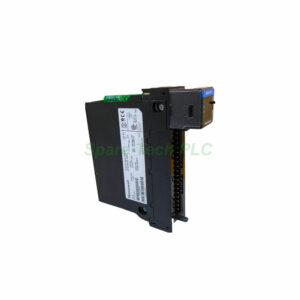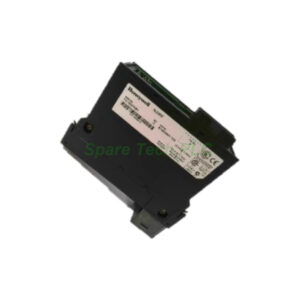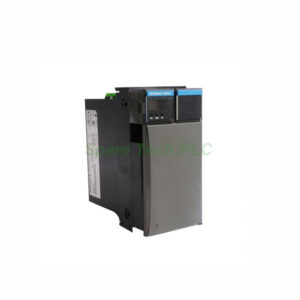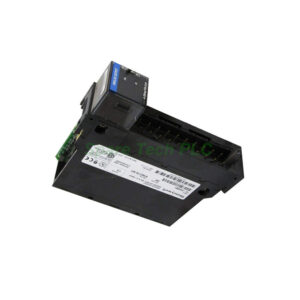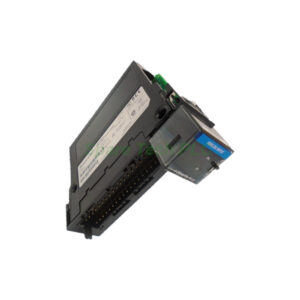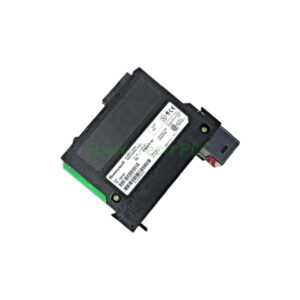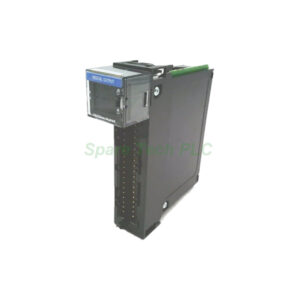
Honeywell TC-ODX161 Output Module
This Honeywell TC-ODX161 module provides 16 diagnostic 10-30 VDC discrete output channels for industrial control systems, delivering robust fault monitoring and reliable signal switching.

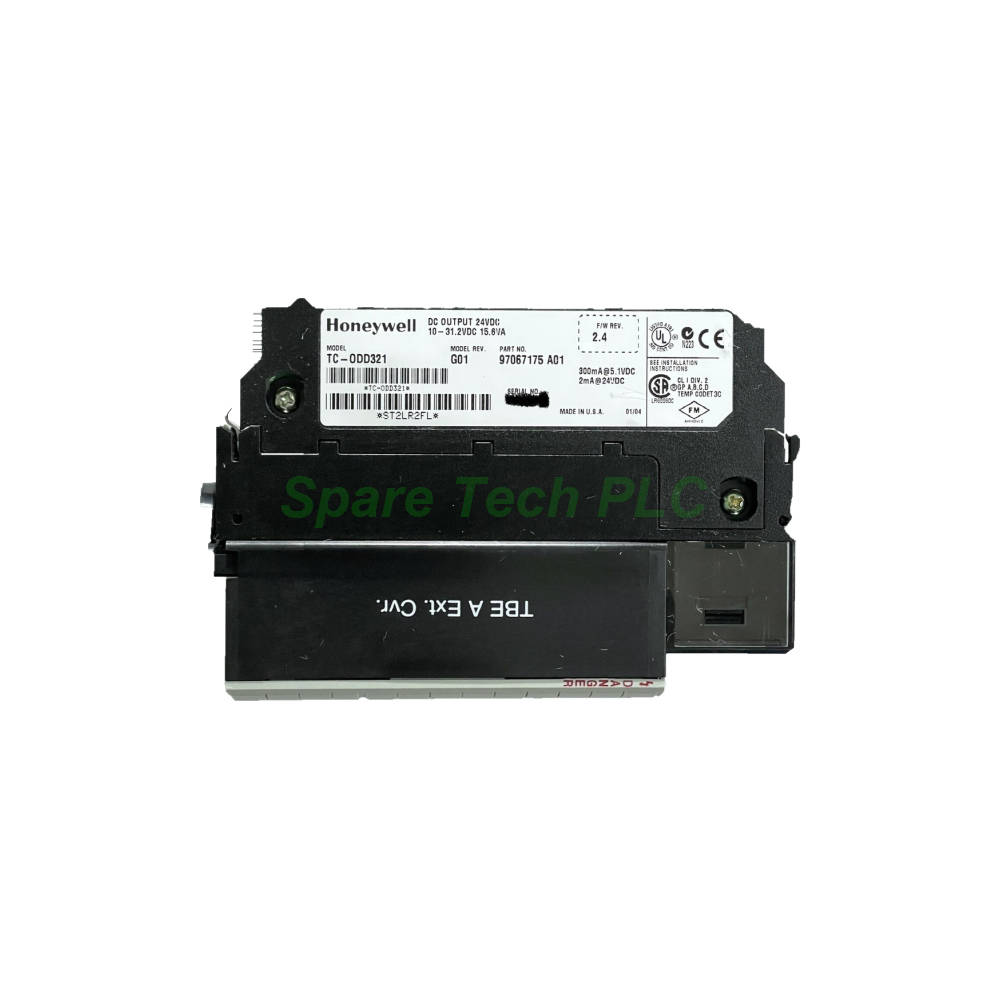
The TC-ODD321 is a 32-point discrete output module designed for 24V DC field devices. System integrators use it to drive relays, solenoids, indicator lamps, and small contactors from a single I/O slot. Specifically, the 32 outputs divide into two groups of 16 points, each with its own common terminal.
This module offers configurable fault states per point. Therefore, outputs can hold their last state, switch ON, or switch OFF when a fault occurs. Engineers also set program-mode states the same way, which supports safe startup and shutdown sequences. Additionally, the module uses the TC-TBCH 36-position terminal block for connection, so field wiring stays organized and removable.
Output voltage ranges from 10-31.2 VDC at 50°C with linear derating, and 10-28 VDC at 60°C. Each point handles a maximum of 0.5A at 50°C, derating linearly to 0.35A at 60°C. Meanwhile, the module total reaches 16A at 50°C and 10A at 60°C.
Surge current is 1A for 10ms per output, repeatable every 2 seconds at 60°C. Flash on time targets 100 µs, with a 150 µs maximum. The minimum on-state load current is 3.0 mA per output, which suits low-current pilot devices.
On-state voltage drop is 1 VDC maximum per point at rated current, or 3 VDC under IEC 1131-2. Off-state leakage stays at 0.5 mA maximum per point. Output delay time is 1.0 ms maximum for both off-to-on and on-to-off transitions.
The module dissipates 6.1W of power internally. Isolation is 100% tested at 2546V DC for 1 second for both group-to-group and user-to-system paths. Continuous voltage between groups is limited to 250V AC.
The TC-ODD321 is not internally fused. Therefore, Rockwell recommends a fused IFM interface module to protect outputs from short circuits. Reverse polarity protection is also absent, so incorrect wiring can damage output circuits. Verify terminal polarity carefully before energizing field wiring.
Fault states per point are configurable as Hold Last State, ON, or OFF. The default is OFF. Program-mode states follow the same options and default. These settings let maintenance teams define predictable behavior during controller faults or program transitions.
The module connects through the TC-TBCH, a 36-position terminal block. It occupies a standard I/O slot in the host chassis and draws backplane current per the module power consumption data. Operating conditions should follow the host system's published environmental limits. Specifically, observe the 50°C and 60°C derating curves for voltage and current, since both ratings shift with temperature.
First, insert the TC-ODD321 into an available I/O slot and secure it to the chassis. Next, attach the TC-TBCH 36-position terminal block to the front connector. Then wire each output to its field device, keeping the 16-point common groups separate. Confirm polarity before powering the load, because the module has no reverse polarity protection.
Additionally, install a fused IFM or external fusing to protect outputs from short circuits. After wiring, configure fault states and program-mode states in the controller software. Finally, verify output delay and leakage against your device requirements, and check that total module current stays within 16A at 50°C.
1 × TC-ODD321 discrete output module
1 × Installation instruction sheet
1 × Anti-static protective bag
1 × Anti-vibration packing insert
Shipping is available via Fedex, UPS, and DHL. Orders typically ship within 3–5 business days after payment confirmation.
Q1: How many outputs does the TC-ODD321 provide?
A: It provides 32 discrete outputs, arranged as two groups of 16 points per common.
Q2: What is the maximum current per point and per module?
A: Each point handles 0.5A at 50°C, derating to 0.35A at 60°C. The module total is 16A at 50°C and 10A at 60°C.
Q3: Is the TC-ODD321 internally fused?
A: No. The module is not protected by internal fusing, so a fused IFM is recommended to protect the outputs.
Q4: What terminal block does this module use?
A: It uses the TC-TBCH 36-position terminal block for field connections.
Q5: What fault states can I configure per point?
A: You can set each point to Hold Last State, ON, or OFF. The default fault state is OFF.
In short, the TC-ODD321 packs 32 discrete outputs into one module with flexible fault handling. Its 16-point common groups, 0.5A per-point rating, and 6.1W dissipation suit dense control panels. Therefore, it works well for driving relays, solenoids, and lamps where predictable fault behavior matters. Remember to add external fusing and confirm polarity during installation.
| Brand Name | |
| Model No. | TC-ODD321 |
| Product Type | Discrete Output Module |
| hasMerchantReturnPolicy | Adjust according to reality |
| Shippingdetails | Adjust according to reality |