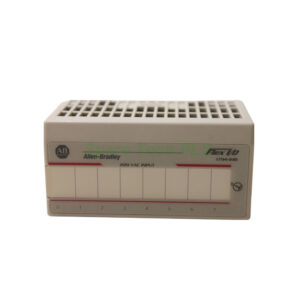
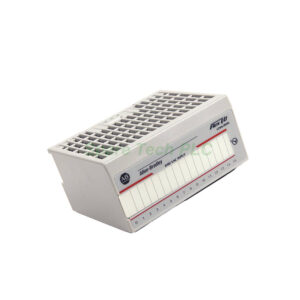
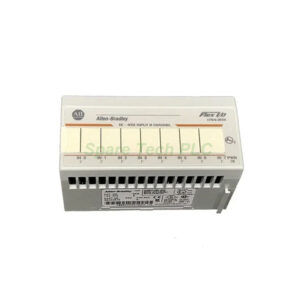
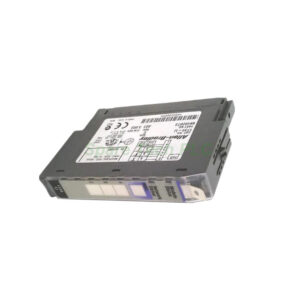
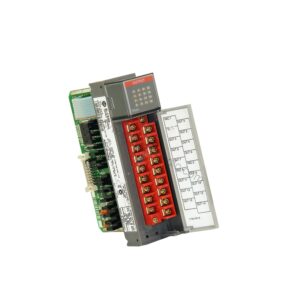
1794-IR8 Flex I/O 8-Channel RTD Input Module
Product Introduction
The Allen-Bradley 1794-IR8 module provides 8 channels of RTD input for precise temperature monitoring. Specifically, it supports a wide range of RTD sensors including platinum, nickel, and copper types. Moreover, this module delivers a 16-bit resolution across a 435 ohm range for accurate measurements. It offers two operating modes: normal mode for faster throughput and enhanced mode for superior accuracy. Additionally, the 1794-IR8 provides 850V DC isolation between inputs and the logic side. Therefore, this module is an excellent solution for multi-point temperature applications in industrial control systems.
Supported RTD Sensors
The 1794-IR8 accommodates a comprehensive selection of RTD sensor types. For platinum sensors, it supports 100Ω Pt α = 0.00385 Euro (-200 to +870°C), 100Ω Pt α = 0.003916 U.S. (-200 to +630°C), 200Ω Pt α = 0.00385 Euro (-200 to +400°C), and 500Ω Pt α = 0.00385 Euro (-200 to +630°C). For nickel sensors, it handles 100Ω Ni α = 0.00618 (-60 to +250°C), 120Ω Ni α = 0.00672 (-60 to +250°C), 200Ω Ni α = 0.00618 (-60 to +250°C), and 500Ω Ni α = 0.00618 (-60 to +250°C). Additionally, it supports 10Ω Copper α = 0.00427 (-200 to +260°C). Furthermore, the module provides a RTD excitation current of 718.36 µA for consistent sensor excitation across all channels.
Accuracy and Resolution
The 1794-IR8 delivers outstanding measurement precision. In normal mode, it offers accuracy of 0.05% full scale maximum. In enhanced mode, however, the accuracy improves to 0.01% full scale typical, without calibration at low humidity. Meanwhile, the module provides 16-bit resolution across the full 435 ohm input range. The data format can be configured as 16-bit 2's complement or offset binary (unipolar). Additionally, the common mode rejection ratio reaches -120 dB at 60 Hz and -100 dB at 50 Hz. The normal mode noise rejection is -60 dB at 60 Hz, ensuring stable readings in electrically noisy environments.
System Throughput and Bandwidth
The 1794-IR8 offers programmable system throughput to match your application requirements. In normal mode, the throughput ranges from 28 ms per channel to 325 ms per channel. Specifically, scanning a single channel takes 325 ms, while scanning all 8 channels takes 2.6 seconds by default. In enhanced mode, the throughput ranges from 56 ms to 650 ms per channel. A single channel scan takes 650 ms, and all 8 channels complete in 2.925 seconds. Furthermore, the channel bandwidth is 0 to 2.62 Hz (-3 dB) , which effectively filters high-frequency noise from temperature measurements.
Isolation and Protection
The 1794-IR8 provides robust isolation for safe and reliable operation. The isolation voltage is 850V DC between inputs and the logic side. Additionally, it is tested at 707V DC for 60 seconds. The module handles overvoltage of 35V DC continuous and 25V AC continuous at 25°C. The signal input range spans 1 to 433 ohms. Meanwhile, the cold junction compensation range is -20 to +100°C. The FlexBus current draw is 20 mA, and the maximum power dissipation is 3.0 W at 31.2V DC, with thermal dissipation of 10.2 BTU/hr.
Mechanical and Environmental Parameters
The Allen-Bradley 1794-IR8 operates reliably in industrial environments. Its operating temperature range is 0 to 55°C, with storage from -40 to 85°C. The module withstands vibration of 5g at 10 to 500 Hz and operating shocks of 30g. Additionally, it handles non-operating shocks of 50g. The relative humidity tolerance is 5 to 95% non-condensing. The module uses an open-style enclosure and mounts on DIN rail. It is compatible with terminal bases such as 1794-TB2, 1794-TB3, and 1794-TB3T. The wire size is determined by the installed terminal base.
Packaging List
Shipping Information
We ship all orders using reputable global carriers. Specifically, your 1794-IR8 will be dispatched via FedEx, UPS, or DHL. This ensures fast and reliable delivery to your facility.
Frequently Asked Questions (FAQ)
Q1: What RTD sensors are compatible with the 1794-IR8?
The 1794-IR8 supports platinum (100Ω, 200Ω, 500Ω), nickel (100Ω, 120Ω, 200Ω, 500Ω), and copper (10Ω) RTD sensors with various alpha coefficients.
Q2: What is the difference between normal mode and enhanced mode?
Normal mode offers faster throughput (28-325 ms/channel) with 0.05% accuracy. Enhanced mode provides higher accuracy (0.01% typical) but slower throughput (56-650 ms/channel). The 1794-IR8 lets you choose based on your priority.
Q3: What terminal base units work with the 1794-IR8?
The 1794-IR8 is compatible with 1794-TB2, 1794-TB3, and 1794-TB3T terminal base units.
Q4: What is the excitation current for RTD sensors?
The 1794-IR8 provides a fixed excitation current of 718.36 µA for all connected RTD sensors.
Q5: Does the 1794-IR8 provide channel-to-channel isolation?
The 1794-IR8 provides 850V DC isolation between inputs and the logic side. It does not provide individual channel-to-channel isolation, but the overall isolation protects the control system from field-side faults.