1794-IM16 Flex I/O Digital Input Module
Product Introduction
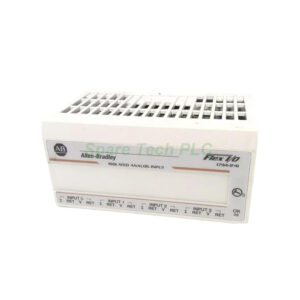
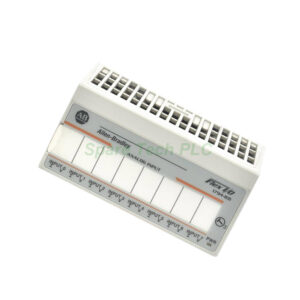
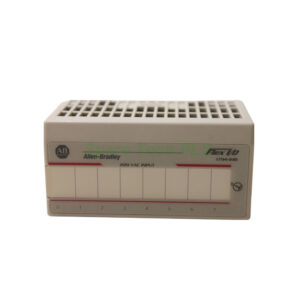
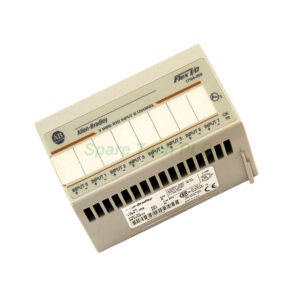
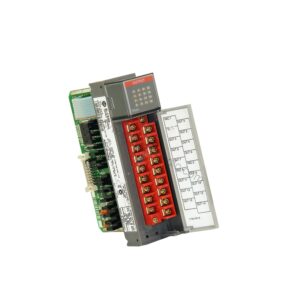
The Allen-Bradley 1794-IM16 module expands your control system's digital input capacity significantly. This Flex I/O component provides 16 non-isolated AC input channels for monitoring field devices. It accepts a wide AC voltage range from 159 to 264V AC, with a nominal rating of 240V AC. Each channel includes a yellow status indicator for quick visual diagnostics. The module works seamlessly with terminal bases like the 1794-TBN and 1794-TBNK. Its open-style enclosure and compact footprint make installation simple. Therefore, the 1794-IM16 is a practical solution for diverse automation projects.
Key Electrical Specifications
This module offers clear and defined input characteristics. The nominal on-state voltage is 240V AC, while the minimum on-state voltage is 159V AC and the maximum is 264V AC. For reliable detection, the on-state current ranges from 5.30 mA to 13.29 mA. The off-state voltage cannot exceed 40V AC, and the off-state current is limited to 2.6 mA. Furthermore, the nominal input impedance is 22.2 kΩ, and the typical input current draw is 11 mA at 240V AC. This module draws a FlexBus current of 32 mA at 5V DC. Its maximum power dissipation is 6 W at 264V AC, with a corresponding thermal dissipation of 20.47 BTU/hr.
Isolation and Protection
The 1794-IM16 provides field-side to backplane isolation rated at 250V continuous with basic insulation type. This isolation is type-tested at 1530V AC for 60 seconds, ensuring robust protection. However, please note that there is no isolation between individual channels. This design is typical for AC input modules and simplifies the internal circuitry. The keyswitch position for this module is set to 8. Additionally, the North American temperature code is T4, indicating safe operation in specific temperature conditions.
Mechanical and Environmental Parameters
The Allen-Bradley 1794-IM16 measures approximately 94 mm (H) x 94 mm (W) x 91 mm (D), which translates to 3.7 x 3.7 x 3.6 inches. It weighs only about 141 grams (4.97 oz) , making it a lightweight addition to your system. The module operates in temperatures from 0 to 55 °C. It uses an open-style enclosure without a specific NEMA rating. The terminal base load current capacity reaches a maximum of 10 A specifically for output modules. Users should refer to the installed terminal base for wire size and screw torque specifications.
Installation and Compatibility
Mounting the 1794-IM16 is straightforward using a DIN rail or panel. It is compatible with terminal bases such as the 1794-TBN and 1794-TBNK. The module provides 16 yellow status indicators on the field side. These LEDs allow operators to quickly verify the state of each input channel. The module's compact design helps save valuable panel space. Meanwhile, its straightforward wiring and clear labeling minimize installation time.
Packaging List
Shipping Information
We ship all orders using reputable global carriers. Your 1794-IM16 will be dispatched via FedEx, UPS, or DHL. This ensures fast and reliable delivery to your facility.
Frequently Asked Questions (FAQ)
Q1: What terminal base units work with the 1794-IM16?
The 1794-IM16 is compatible with the 1794-TBN and 1794-TBNK terminal base units. These bases provide the necessary wiring connections for the AC inputs.
Q2: Is there isolation between the input channels?
No, the 1794-IM16 does not provide isolation between individual channels. However, it does provide 250V continuous isolation between the field side and the backplane.
Q3: Can I use the 1794-IM16 with 120V AC signals?
The 1794-IM16 is specifically designed for 240V AC nominal operation. Its minimum on-state voltage is 159V AC, so it is not suitable for standard 120V AC systems. Please consider other Flex I/O modules for lower voltage applications.
Q4: How many input channels does the 1794-IM16 provide?
The Allen-Bradley 1794-IM16 offers 16 non-isolated digital input channels, making it a high-density input solution.
Q5: What do the yellow LEDs on the module indicate?
Each of the 16 yellow LEDs corresponds to an individual input channel. When an LED is illuminated, it indicates that the respective input is in the on-state, detecting a valid AC signal.