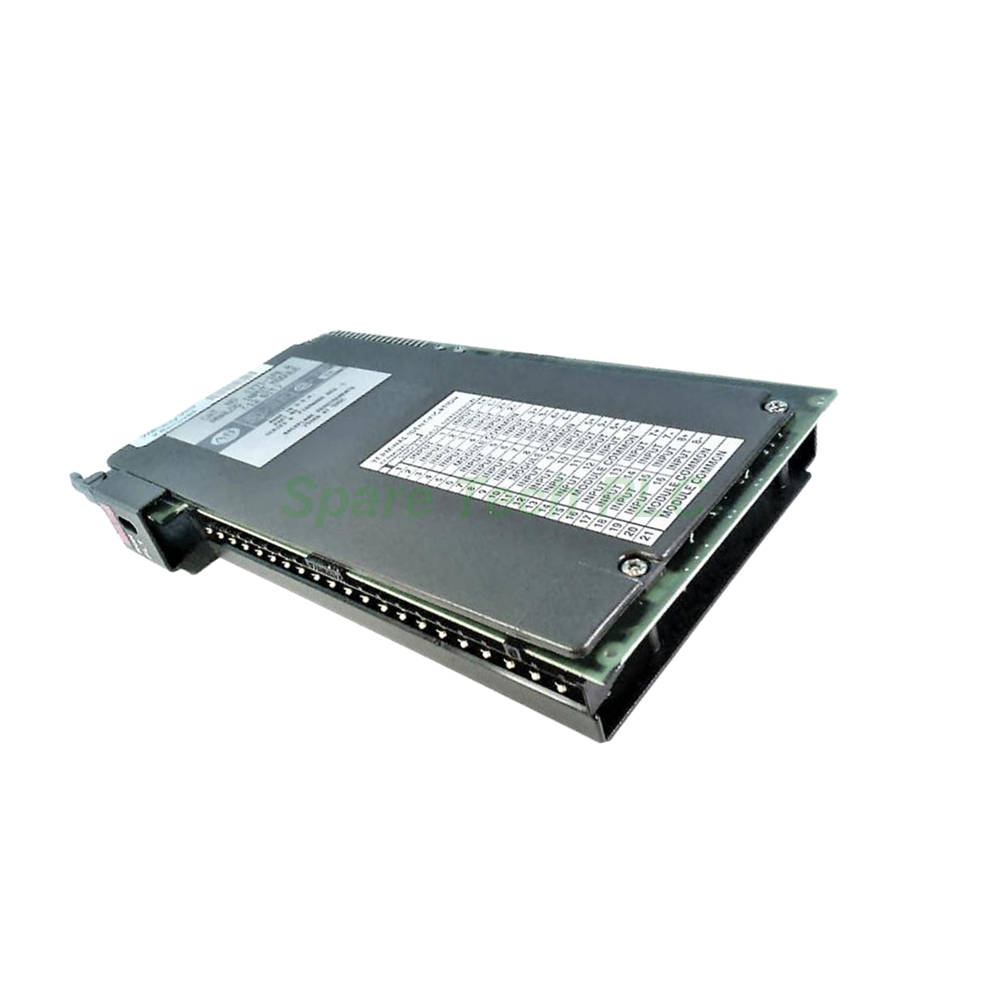
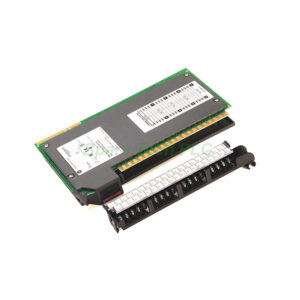
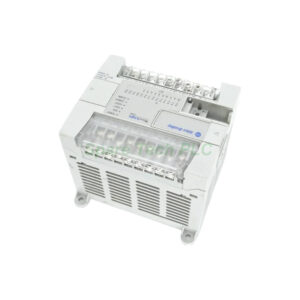
1771-IFEK 16-Channel Analog Input by Allen-Bradley
Product Introduction
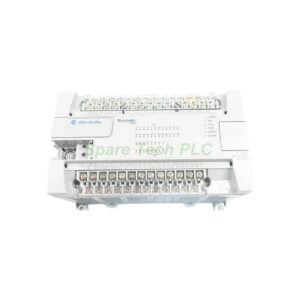
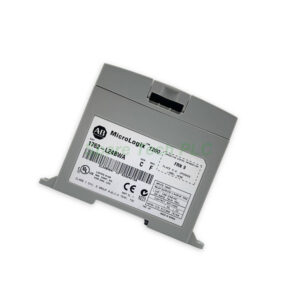
The Allen-Bradley 1771-IFEK is a robust analog input module from the PLC5 series. This module provides a reliable interface between field sensors and the PLC processor. It is specifically designed for demanding applications where environmental protection matters. The conformal coating shields the circuitry from humidity, dust, and corrosive agents. Consequently, this module performs well in challenging industrial settings. Manufacturers choose this module for its durability and measurement accuracy. Its single-slot design fits seamlessly into any 1771 I/O chassis.
Key Technical Specifications
This module offers flexible channel configuration. You can select either Sixteen (16) single-ended inputs or Eight (8) differential inputs. Differential wiring helps reduce noise interference in electrically noisy environments. Single-ended wiring works well for simpler installations with shorter cable runs.
The 1771-IFEK supports a comprehensive range of input signals. For voltage, it accepts 0-5V, 1-5V, -5 to +5V, -10 to +10V, and 0-10V DC. For current, it handles 4-20mA, 0-20mA, and -20 to +20mA signals. This variety ensures wide compatibility with common industrial transducers. The module provides a 12-bit binary resolution, with 12 bits plus a sign bit for ranges that include both positive and negative values. Its accuracy rating is not explicitly stated but aligns with the standard 0.1% typical for this family.
Performance metrics are essential for process applications. The channel update time is 18 ms for 8 channels and 36 ms for 16 channels. The module uses a natural binary or BCD data format, scaling to +/-9999. It draws 750 mA from the backplane and does not require an external power supply. The maximum power dissipation is 2.5 Watts, with a thermal dissipation of 8.52 BTU/hour.
Conformal Coating Protection
The defining feature of the 1771-IFEK is its conformal coating. This protective layer is a polymeric film applied to the circuit board. It effectively prevents moisture from reaching sensitive components. Additionally, it resists corrosion caused by airborne contaminants. This coating also provides some protection against dust and dirt ingress. For facilities in coastal areas or with high humidity, this module offers superior reliability. Therefore, the 1771-IFEK is ideal for chemical plants, offshore platforms, and food processing facilities.
Mechanical and Environmental Parameters
This module is designed for rack mounting in a 1771 chassis. It occupies a single slot in the rack. The front panel includes a green RUN LED and a red FAULT LED. These indicators provide immediate visual feedback on the module's operational status. The module includes optoelectrical isolation. This feature protects the control system from electrical transients and ground loops. It also includes digital filtering to reduce electrical noise on input signals. This filtering results in more stable readings in noisy environments.
Installation Guidelines
Installing the Allen-Bradley 1771-IFEK follows a simple procedure. First, ensure that the chassis is powered down completely. Next, align the module with the chosen slot in the 1771 I/O chassis. Slide it in carefully until it seats firmly against the backplane. Then, secure the module using the retaining screws provided.
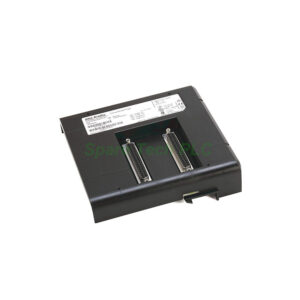
Proper keying is critical for correct installation. Place the keying bands between pins 10 and 12 for the lower connector. For the upper connector, place them between pins 24 and 26. This keying configuration ensures that only a 1771-IFEK module can be inserted into that slot. The module includes a 1771-WG wiring arm. This accessory simplifies wiring and maintenance. You can replace the module without disconnecting any field wiring, which significantly reduces downtime.
Configuration and Digital Features
The 1771-IFEK uses block transfer programming for communication. This method efficiently transfers input data to the processor's data table. It also transfers configuration words back to the module. Configuration parameters offer excellent flexibility. You can enable real-time sampling to regulate the sampling time. This feature helps minimize signal fluctuations.
You can also scale the input values to engineering units. Scaling displays data in meaningful measurements, such as PSI, °C, or gallons per minute. This eliminates the need for manual calculations in your logic program. The data format parameter lets you choose between natural binary and BCD scaling. Therefore, you can tailor the module's behavior to suit your specific application requirements.
Process Variable Applications
This analog input module excels at measuring various process variables. It works with sensors for Pressure, Level, Flow, and Temperature. Additionally, it can measure Speed, Viscosity, and pH. Other common applications include Vibration and Displacement monitoring. The module converts the sensor's analog signal into a proportional four-digit BCD or twelve-bit binary value. The PLC then uses this data for control decisions, alarms, or data logging. As a result, the system responds effectively to real-time process changes.
Packaging and Shipping
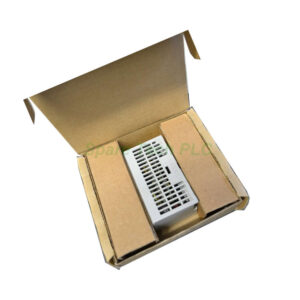
All modules undergo careful packaging before shipment. We use anti-static bags to prevent electrostatic damage. The packaging also provides sufficient cushioning against physical impacts. Please note that the packaging list does not include certificates or warranties. Each shipment includes the module and the 1771-WG wiring arm. We ship globally using trusted couriers such as FedEx, UPS, and DHL.
Packaging List
Allen-Bradley 1771-IFEK Analog Input Module (1 unit)
1771-WG Wiring Arm (1 unit)
Installation Instructions (Printed Quick Guide)
Frequently Asked Questions (FAQ)
1. What is the main difference between the 1771-IFE and the 1771-IFEK?
The primary difference is the conformal coating on the 1771-IFEK. This coating provides extra protection against moisture, corrosion, and contaminants in harsh environments.
2. Can I use the 1771-IFEK in a standard 1771 chassis?
Yes, the 1771-IFEK is compatible with any 1771 I/O chassis. It occupies a single slot and uses the same backplane connection as other PLC5 modules.
3. Does the conformal coating affect the module's heat dissipation?
No, the coating is a thin polymeric film. It does not significantly impact thermal dissipation, which remains at 8.52 BTU/hour for this module.
4. What is the purpose of the 1771-WG wiring arm?
The 1771-WG wiring arm connects all field wiring to the module. Its key advantage is that you can remove the module for maintenance without disconnecting any wires.
5. How does digital filtering improve performance on the 1771-IFEK?
Digital filtering reduces electrical noise on the input signal. It provides a cleaner, more stable reading. However, it adds a slight delay to the overall scan time.