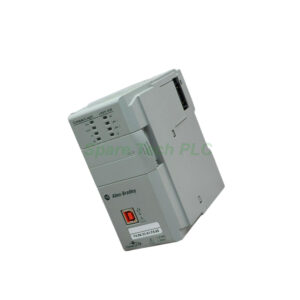
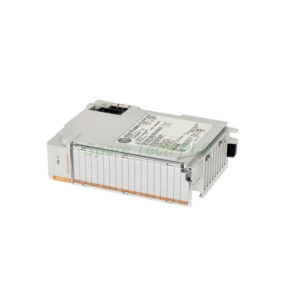
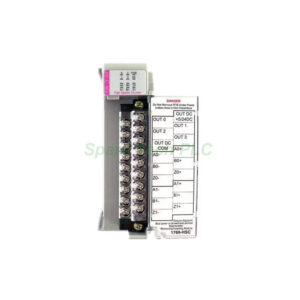
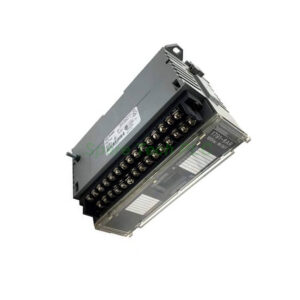
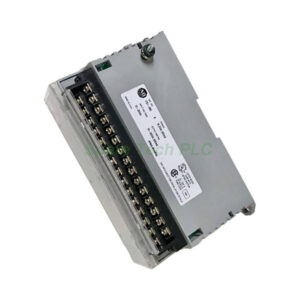
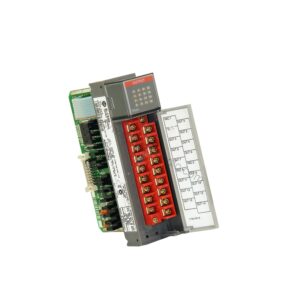
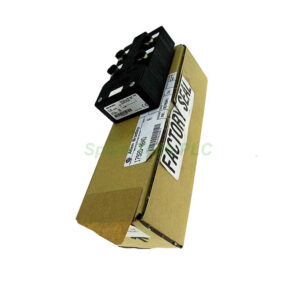
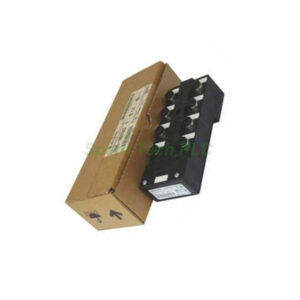
Allen-Bradley 1769-ECR CompactLogix Right End Cap Terminator
Product Introduction
The 1769-ECR serves as a mandatory termination module for any CompactLogix system. You install this right end cap on the right side of the last I/O module. It signals the controller where the FlexBus ends. Without this terminator, your system will not function correctly. Additionally, the 1769-ECR draws minimal power from the backplane. Its open-style enclosure allows flexible mounting in various cabinets.
Key Technical Specifications
The 1769-ECR draws a maximum bus current of 5 mA at 5.1V DC. It draws 0 mA at 24V DC, making it very energy efficient. This end cap operates at altitudes up to 2000 m (6562 ft). The operating temperature ranges from 0°C to 60°C (32°F to 140°F). For storage, it can handle -40°C to 85°C (-40°F to 185°F). Relative humidity tolerance sits at 5% to 95% non-condensing.
Power consumption for this module reaches 33.6 Watts maximum. Power dissipation measures 7.5 Watts. The backplane current rating is 1.4 Amps at 24 Volts. Furthermore, the 1769-ECR carries North American temp code T3C and IEC temp code T4.
Mechanical and Environmental Parameters
Vibration tolerance hits 5 g across 10 to 500 Hz during operation. Shock resistance depends on your mounting method. For DIN rail mounting, operating shock is 20 g. For panel mounting, operating shock reaches 30 g. Non-operating shock ratings are even higher. DIN rail non-operating shock is 30 g. Panel mount non-operating shock reaches 40 g.
The enclosure carries no official IP rating, as it uses an open-style design. Therefore, you must install the 1769-ECR inside a suitable cabinet. In Zone 2 hazardous environments, ensure IP54 protection for the entire enclosure. This component has no tolerance for direct sunlight or UV radiation.
Installation Guide
You must install or remove the 1769-ECR only when the system power is off. Removal or insertion under power will cause a controller error. This error will stop your entire operation unexpectedly. Follow these steps for proper installation:
First, lift the bus lever from its engaged position on the adjacent module. Next, align the 1769-ECR with the guide slots on the previous module. Gently push the end cap until it sits flush against the existing module. Finally, engage the bus lever downward to connect the FlexBus circuitry. If you feel resistance during lever engagement, stop immediately. Inspect the alignment between the 1769-ECR and the guide slot before trying again.
Important Usage Notes
The 1769-ECR does not support Removal and Insertion Under Power (RIUP). Always disconnect power before handling this module. This end cap weighs approximately 130 grams (0.286 lb). Shipping weight is 2 lbs due to protective packaging. Shipping dimensions are 8 x 8 x 5 inches. Both Series A and Series B versions share identical specifications.
Packaging List
Note: This package does not include certificates or warranty documents.
Shipping Methods
We ship using Fedex, UPS, or DHL. All orders include tracking information.
Frequently Asked Questions (FAQ)
1. Do I really need the 1769-ECR for my CompactLogix system?
Yes, you absolutely need it. The 1769-ECR terminates the FlexBus circuitry. Without this end cap, the controller cannot recognize the complete I/O assembly.
2. Can I install the 1769-ECR while the system is running?
No, you cannot. The 1769-ECR does not support RIUP (Removal and Insertion Under Power). Always turn off the system power before installing or removing this module.
3. What happens if I forget to install the 1769-ECR?
The controller will show a configuration error. Your system may not start or may behave unpredictably. The 1769-ECR is mandatory for proper operation.
4. Does the 1769-ECR work with all CompactLogix controllers?
Yes, it works with any 1769 CompactLogix system. This includes L1, L2, L3, and L4 series controllers. The 1769-ECR provides universal termination for the entire product line.
5. What is the current draw of the 1769-ECR?
The 1769-ECR draws only 5 mA at 5.1V DC. It draws 0 mA at 24V DC. This low power draw makes it negligible for your power budget calculations.