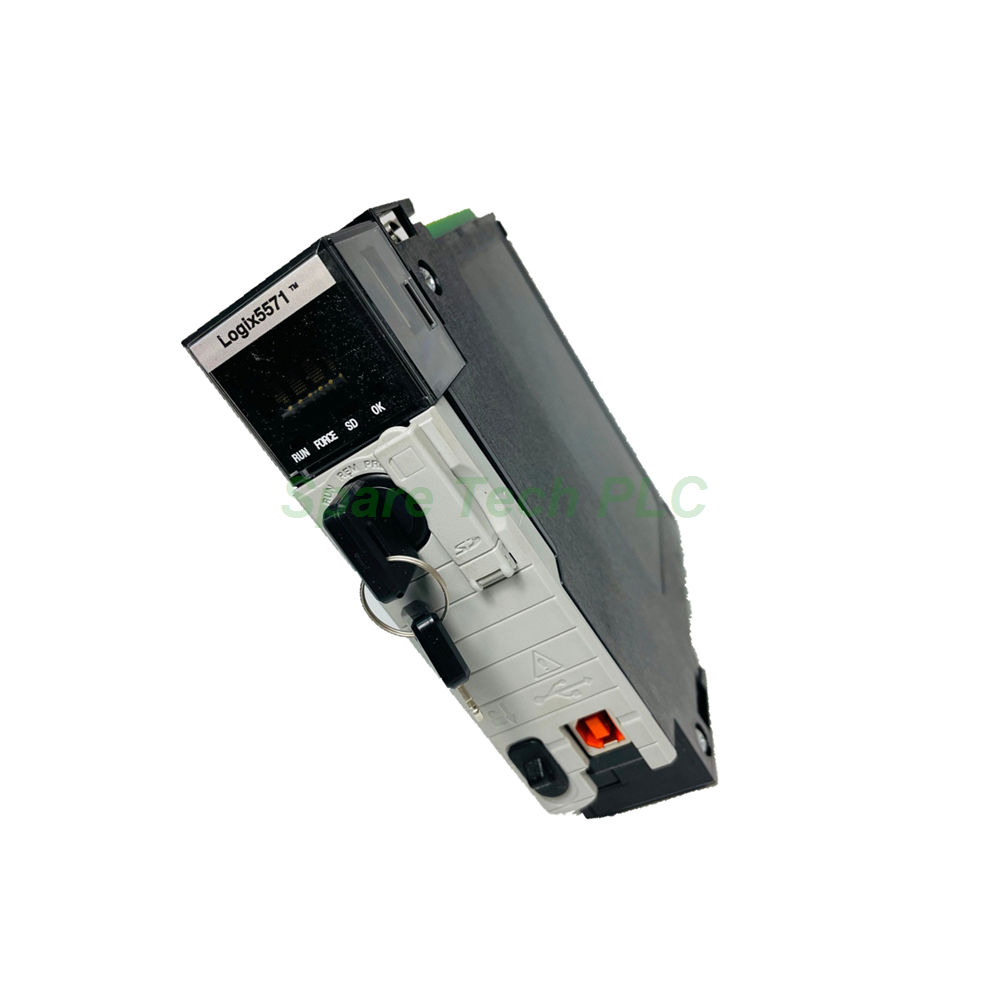
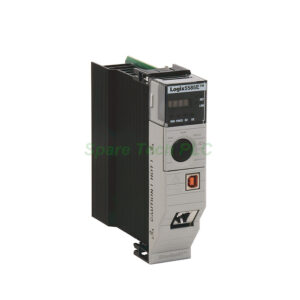
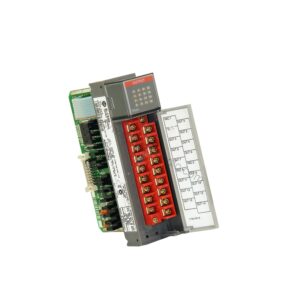
1756-L73 Logix5673 Controller for ControlLogix Platforms
Product Introduction
The 1756-L73 from Allen-Bradley stands as a powerful processor module within the ControlLogix 5570 product family. This Programmable Automation Controller (PAC) handles large-scale factory and process automation applications with remarkable efficiency.
To begin with, this controller provides 8 MB of user memory for complex logic and data management, plus 0.98 MB of dedicated I/O memory. Consequently, it supports up to 128,000 digital I/O points and 4,000 analog I/O channels. Meanwhile, its processing architecture accommodates 32 controller tasks, with 100 programs per task, and event tasks accept all event triggers. This capacity enables sophisticated application partitioning and flexible execution scheduling.
Battery-Free Memory Retention Technology
A significant innovation in the 1756-L73 is its energy storage technology, which eliminates the need for traditional batteries. Instead, capacitor-based modules retain volatile memory contents during short power interruptions. This design reduces maintenance requirements and eliminates battery replacement costs.
For permanent program storage, the controller accepts Secure Digital (SD) cards as optional nonvolatile memory. However, Rockwell Automation recommends using only approved SD cards to prevent data corruption or loss. The SD card primarily stores diagnostic data that the system writes automatically when faults occur, which greatly aids troubleshooting efforts.
Communication Interfaces and Network Support
The 1756-L73 features a built-in USB 2.0 port that operates at full speed (12 Mbps). This port handles programming, configuration, and online edits efficiently. Moreover, it eliminates the need for expensive proprietary programming cables, as standard USB cables suffice.
Furthermore, this controller supports an extensive range of communication networks. Specifically, it works with EtherNet/IP, ControlNet, DeviceNet, SynchLink, Data Highway Plus (DH+) , and Remote I/O (RIO) . It also integrates with third-party protocols via gateways and protocol converters. Such broad compatibility ensures seamless integration into existing plant infrastructures.
Integrated Motion Control Capabilities
Beyond standard logic control, the 1756-L73 offers integrated motion control functionality. It supports SERCOS interface, analog motion sensors, and motion control over EtherNet/IP. Therefore, users can implement coordinated motion applications without requiring separate motion controllers.
Additionally, this controller supports multiple programming languages to accommodate different application requirements. For instance, programmers can use relay ladder, structured text, function block diagram, and sequential function chart . This flexibility allows teams to choose the most appropriate language for each specific control task.
Redundancy and System Availability
The 1756-L73 supports both simplex and high-availability redundant configurations. For mission-critical applications, you can pair two identical controllers on the same network to achieve full redundancy. This configuration minimizes downtime risks and ensures continuous system operation.
Moreover, the controller accommodates both local and distributed I/O topologies. In local configurations, I/O modules reside within the same chassis as the processor. Alternatively, distributed I/O topologies place expansion I/O modules remotely, communicating through the extended communication bus. This flexibility supports diverse system architectures.
Power Specifications and Environmental Ratings
Understanding the power requirements ensures reliable system integration. The 1756-L73 draws 5 mA at 1.2V DC and 800 mA at 5.1V DC from the chassis backplane. Its power dissipation measures 2.5 Watts, while thermal dissipation reaches 8.5 BTU per hour. These modest figures allow for dense chassis configurations without excessive heat accumulation.
Furthermore, this controller operates reliably across a wide temperature range. Specifically, the operating temperature spans 0 °C to 60 °C (32 °F to 140 °F) , while storage temperatures range from -40 °C to 85 °C (-40 °F to 185 °F) . Likewise, it withstands relative humidity from 5% to 95%, non-condensing. For shock and vibration, the module handles 30 g operating shock, 50 g non-operating shock, and 2 g vibration from 10 to 500 Hz. Note that with an SD card installed, the shock rating reaches 45 g.
Chassis and Power Supply Compatibility
The 1756-L73 fits into a wide variety of ControlLogix chassis. Compatible models include the 1756-A4, -A4K, -A7, -A7K, -A10, -A10K, -A13, -A13K, -A17, and -A17K. Its compact, single-slot design simplifies integration into new or existing control systems.
For power, this controller works with standard power supplies such as the 1756-PA50, -PA72, -PA72K, -PA75, -PA75K, -PB50, -PB72, -PB72K, -PB75, -PB75K, and -PH75. For redundant power configurations, compatible supplies include the 1756-PA75R, -PA75RK, -PB75R, -PB75RK, -PSCA2, and -PSCA2K.
Packaging and Shipping Information
Each shipment of the 1756-L73 includes the processor module itself. Please note that SD cards and USB cables are optional accessories and must be ordered separately based on your specific requirements.
We dispatch all orders via trusted global carriers, including Fedex, UPS, and DHL. The module follows the standard ControlLogix form factor and occupies one chassis slot.
Frequently Asked Questions (FAQ)
1. Does the 1756-L73 require a battery for memory backup?
No, the 1756-L73 uses energy storage technology instead of batteries. Capacitor-based modules retain volatile memory contents during short power interruptions, eliminating battery replacement costs.
2. What is the maximum I/O capacity of the 1756-L73?
The 1756-L73 supports up to 128,000 digital I/O points and 4,000 analog I/O channels. This capacity accommodates large-scale automation applications.
3. Can the 1756-L73 be used in a redundant system?
Yes, the 1756-L73 fully supports redundant controller configurations. You must pair it with an identical controller on the same network for redundancy operation.
4. What communication protocols does the 1756-L73 support?
This controller supports EtherNet/IP, ControlNet, DeviceNet, SynchLink, Data Highway Plus, Remote I/O, and third-party protocols via gateways.
5. What programming languages work with the 1756-L73?
The 1756-L73 supports relay ladder, structured text, function block diagram, and sequential function chart. This flexibility allows choosing the best language for each application.