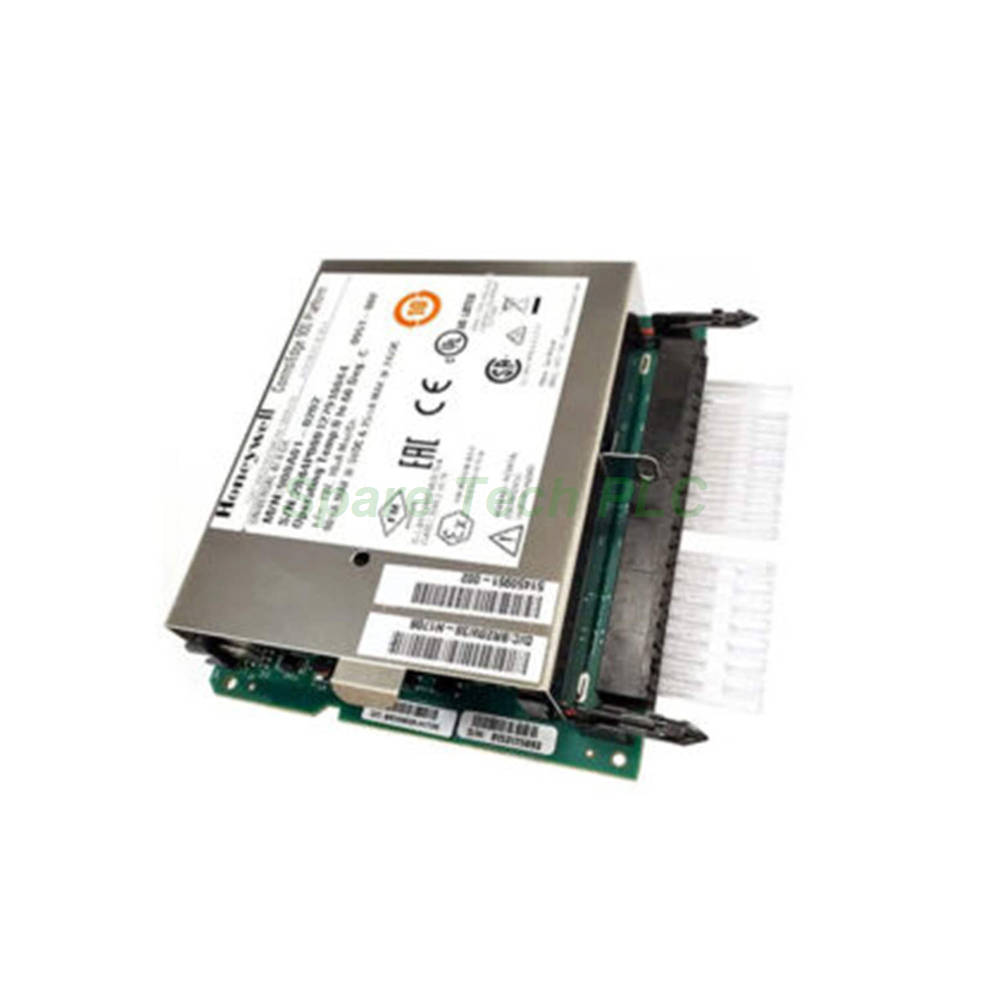
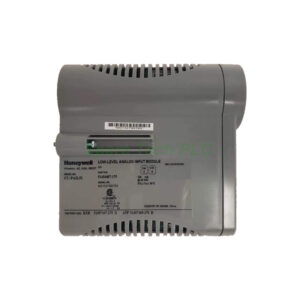
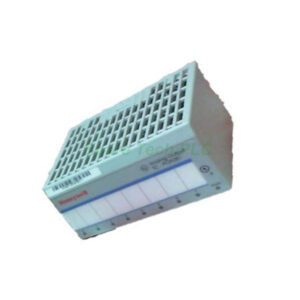
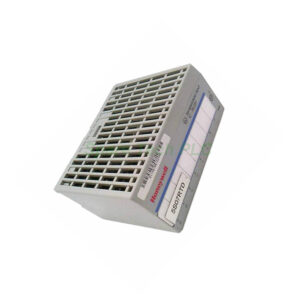
Honeywell 900K01-0201 4 Channel Pulse/Frequency/Quadrature Module
Product Introduction
The 900K01-0201 module offers three functions across four independent channels. You can set each channel as a pulse input, frequency input, or pulse output. The module accepts DC voltage signals from 0 to 24 VDC. Moreover, it provides open collector digital outputs rated at 5 to 24V and 30mA max. A green blinking LED confirms normal scanning. A red LED alerts you when channel or module diagnostics are needed. Please note that quadrature signal support is not available in the current release.
Pulse Input Specifications
For pulse input mode, the 900K01-0201 accepts voltages from 0 to 24 VDC. The minimum ON voltage is 3.0 VDC, and the maximum OFF voltage is 1.0 VDC. Input impedance is 25K ohm. The maximum measurable frequency is 10 KHz, with a minimum pulse width of 3 μsec.
The module includes a 32-bit pulse counter. You can configure a preset count value within the 32-bit range. Using HC Designer, you set the preset action as ON or OFF.
If preset action is ON: The digital output turns ON for 1 second. The counter resets and immediately resumes counting.
If preset action is OFF: The output latches ON and stays ON until a counter reset command is received. The counter does not reset and continues counting beyond the preset value.
Additionally, the counter supports a HOLD function. When the HOLD input is ON in ControlEdge Builder, the counter holds its current value. The counter resets only via its I/O data type when an OFF-to-ON transition occurs on the RST input.
Two counter flags are available. The OVERFLOW flag (STS=33) sets when the counter overflows. You can reset this flag with an OFF-to-ON transition on RST input. The PREI flag sets when the module's digital output turns ON.
Frequency Input Specifications
In frequency input mode, the 900K01-0201 measures from 10 Hz minimum to 100 KHz maximum. The same voltage and impedance specifications apply (0-24 VDC input, 3.0V ON minimum, 1.0V OFF maximum, 25K ohm impedance).
Minimum pulse width depends on the frequency range:
500 μsec for 10 Hz to 500 Hz
50 μsec for 10 Hz to 5 KHz
2.5 μsec for 10 Hz to 100 KHz
The digital output turns ON if the input frequency goes out of range. Otherwise, it remains OFF. This feature is useful for out-of-range alarms.
Pulse Output Specifications
For pulse output, you can use any one of the four channels on the 900K01-0201. However, using a channel for output makes that same channel unavailable for pulse or frequency input. The digital output is open collector type, rated at 5 to 24V, 30mA max.
The output frequency range is 25 Hz to 10 KHz, with a fixed 50% duty cycle. You can select the pulse output duration as CONTINUOUS or NUMBERED PULSES. Therefore, the module supports both continuous waveform generation and precise pulse train counting.
Mechanical & Environmental Parameters
The 900K01-0201 operates within the same industrial temperature range as other 900 series modules. It is designed for panel mounting inside a protected control cabinet. Always observe proper clearance for airflow and wiring access. The module connects to the backplane via the standard 900 series form factor.
Frequently Asked Questions (FAQ)
1. Does the 900K01-0201 support quadrature encoder signals?
No, quadrature signal is not supported in the current release. The module supports only single-channel pulse and frequency inputs.
2. Can I use all four channels for frequency input at the same time?
Yes, you can configure all four channels as frequency inputs. Each channel measures independently up to 100 KHz maximum.
3. What happens when the counter reaches the preset value with action OFF?
The digital output latches ON and remains ON. The counter does not reset and continues counting beyond the preset value. You must send a reset command to clear the output.
4. How do I reset the OVERFLOW flag on the 900K01-0201?
You reset the OVERFLOW flag by applying an OFF-to-ON transition on the RST input via the I/O data type in ControlEdge Builder.
5. Can I use one channel for pulse output and another channel for pulse input simultaneously?
Yes, each channel operates independently. However, using a channel for output disables its input function. Other channels remain fully available for input.