Home /
Products /
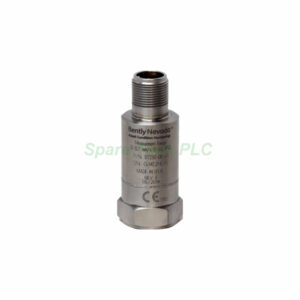
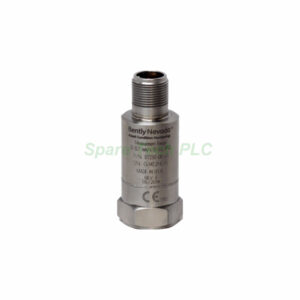
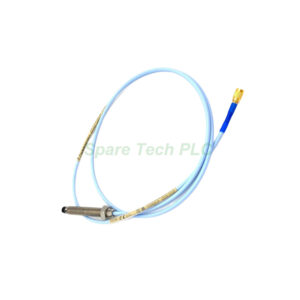
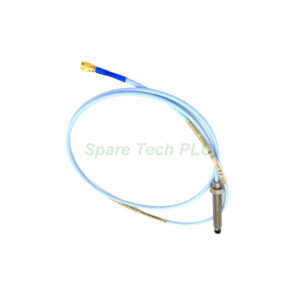
177230-02-01-05 Bently Nevada 4-20 mA Vibration Sensor
177230-02-01-05 Bently Nevada 4-20 mA Vibration Sensor
177230-02-01-05
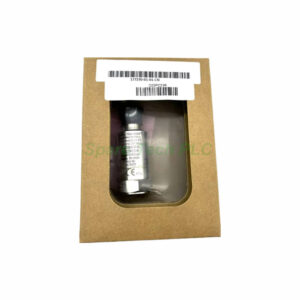
Manufacturer: Bently Nevada Series: Transmitter Model Number: 177230-02-01-05 Weight: 0.131KG Condition: In Stock Availability: 100% Original Brand New Product Origin: U.S.A Shipping port: Xiamen Warranty: 12 Month
Bently Nevada 177230-02-01-05 Seismic Transmitter for High-Range Vibration Monitoring
The Bently Nevada 177230-02-01-05 seismic transmitter measures vibration velocity in rotating machinery. You can use it with PLCs, DCS, or SCADA systems that have current-limited internal power supplies. This device converts RMS vibration levels into a standard 4-20 mA signal. Therefore, it integrates easily into existing monitoring systems.
Key Technical Specifications of the 177230-02-01-05
The 177230-02-01-05 offers a measurement range of 0 to 50.8 mm/s (0 to 2.0 in/s). This higher range suits machines with stronger vibration signatures. Its frequency response spans 10 Hz to 1 kHz (±10%), which equals 600 to 60,000 cps. This model provides an RMS (Root Mean Square) output rather than peak values. The main loop sensitivity shows 4 ±0.3 mA at 0.0 mm/s and 20 ±2 mA at full scale. Settling time stays under 15 seconds within 2% of final value. Additionally, the mounted resonant frequency exceeds 12 kHz. Transverse sensitivity is less than 5% of sensitivity.
For electrical requirements, this sensor needs an excitation voltage of 12 to 30 Vdc, current limited to 40 mA. Typically, host systems limit current between 30 mA and 35 mA. The sensing element uses a ceramic/shear design. Electrical isolation is greater than 10⁸ ohms, and breakdown voltage reaches 600 Vrms with less than 1 mA leakage.
Mechanical and Environmental Features
The case material is 316L stainless steel, which resists corrosion effectively. Diameter measures 25.4 mm (1.00 in), and height is 66.0 mm (2.60 in). Weight is 0.131 kg (4.62 oz). The connector is a 3-pin MIL-C-5015, also made of 316L stainless steel.
Mounting options include a ¼-28 UNF hole in the body. Other available threads are M6 X 1 SI and M8 x 1.25 SI. You should apply a mounting torque of 4 to 7 N-m (35.4 to 62.0 in-lbf). Operating temperature ranges from -40°C to +85°C (-40°F to +185°F). The transmitter handles relative humidity up to 100% non-submerged. Shock survivability is 9.810 m/s² (1.000 g peak) for a drop test. Magnetic field sensitivity stays below 20 μm/s/gauss peak.
Frequency Response: Understanding RMS Detection
This particular model uses a 10 Hz to 1 kHz frequency response with RMS detection. RMS provides a measure of the average energy in the vibration signal. Many industrial standards specify RMS for overall machine vibration monitoring. Therefore, the 177230-02-01-05 suits applications where higher vibration levels exist and RMS values are preferred.
Why Choose This Seismic Transmitter for Your Application
This product is hermetically sealed, so it resists moisture and contamination. Its high resonant frequency avoids mechanical interference. Moreover, the low transverse sensitivity reduces measurement errors. The multiple approvals (CSA/NRTL/C, ATEX/IECEx) make it suitable for hazardous areas.
Compared to other sensors, the 177230-02-01-05 offers simple two-wire loop power. You do not need separate signal conditioners. As a result, installation costs stay lower. Many engineers prefer this model for larger machinery, such as heavy compressors, gearboxes, and high-speed turbines that generate stronger vibration signatures.
Installation Guide for the 177230-02-01-05
First, prepare a flat mounting surface on the machine. Next, drill and tap a ¼-28 UNF hole. Alternatively, use M6 or M8 threads if specified. Clean the hole thoroughly before installation.
Then, apply anti-seize compound on the mounting threads. Tighten to 4 to 7 N-m torque. Do not overtighten, as this may damage the sensor. After mounting, connect the 3-pin MIL-C-5015 connector. Verify that your power supply provides 12 to 30 Vdc with current limiting.
Finally, power up the system and allow 15 seconds for settling. Check the 4 mA reading at zero vibration. If the reading deviates, inspect the wiring. Remember that the Bently Nevada 177230-02-01-05 works best when directly coupled to the bearing housing.
1. What machines work best with the 177230-02-01-05? This model suits high-energy machinery like large compressors, gearboxes, and high-speed turbines. Its 50.8 mm/s range handles stronger vibration levels.
2. Can I use this transmitter with a 24V PLC analog input card? Yes, you can. Most PLC analog input cards accept 4-20 mA signals. Ensure the card provides a current loop supply in the 30-35 mA range.
3. Why does this model use RMS instead of peak detection? RMS provides a measure of the average energy in the vibration signal. Many industrial standards specify RMS for overall machine vibration monitoring.
4. Is the dynamic signal on Pin C isolated from the loop? No, the dynamic signal references Pin B (loop return). Do not ground Pin B at more than one point.
5. Can this transmitter be submerged? No. It handles 100% relative humidity but only in non-submerged conditions. Do not immerse it in liquid.
Attention: The above product information is sourced from the internet and cannot be guaranteed to be authentic.
For specific product parameters and prices, please contact
SpareTech PLC professionals in a timely manner.
Brand Name
Bently Nevada
Model No.
177230-02-01-05
Product Type
Seismic Transmitter
hasMerchantReturnPolicy
Adjust according to reality
Shippingdetails
Adjust according to reality
The Bently Nevada 177230-02-01-05 is a seismic transmitter for high-range vibration monitoring. It converts RMS velocity readings into a 4-20 mA signal. This sensor works with PLCs, DCS, and SCADA systems. Its 316L stainless steel housing ensures reliable operation in harsh environments. SpareTech PLC provides you with a PDF version of the instructions about
Bently Nevada 177230-02-01-05,
where you can download the
Bently Nevada 177230-02-01-05 manual PDF for free: Download PDF