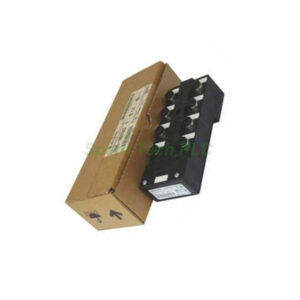
1769-IF8 8-Ch Analog Input by Allen-Bradley
Product Introduction
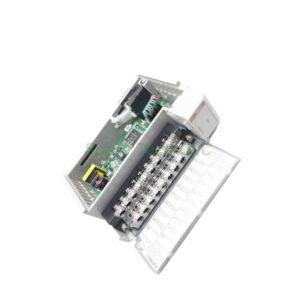
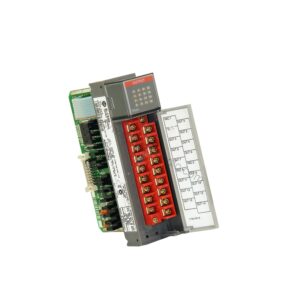
The Allen‑Bradley 1769-IF8 module belongs to the CompactLogix I/O family. It offers eight analog input channels for current or voltage signals. You can connect field devices like pressure transmitters, flow meters, or temperature sensors. Moreover, each channel supports both differential and single‑ended wiring. This flexibility makes the 1769-IF8 suitable for many industrial applications.
Additionally, the 1769-IF8 handles multiple signal ranges. For current, it accepts 0‑20 mA, 4‑20 mA, 0‑21 mA (full range), and 3.2‑21 mA. For voltage, it accepts ±10V, 0‑10V, 0‑5V, and 1‑5V. The full voltage range extends to ±10.5V. A sigma‑delta converter inside the module ensures high accuracy. The resolution reaches 16 bits for unipolar signals. Therefore, this module delivers precise measurement results.
Technical Specifications
Key Parameters:
Number of inputs: 8 channels (differential or single‑ended)
Input current ranges: 0‑20 mA, 4‑20 mA, 0‑21 mA (full range), 3.2‑21 mA
Input voltage ranges: ±10V, 0‑10V, 0‑5V, 1‑5V, ±10.5V full range
Resolution: 16‑bit (unipolar)
Converter type: Sigma‑Delta
Rated working voltage: 30V AC / 30V DC
Wire size: 22‑14 AWG solid copper wire (90°C)
Recommended cable: Belden 8761 shielded cable
Channel diagnostics: Over‑range, under‑range, process alarms by bit reporting
Power supply distance rating: 8 modules from system power supply
Backplane current draw: 120 mA at 5V DC, 70 mA at 24V DC
Heat dissipation: 3.64 Watts maximum
Input impedance: 220 kΩ (voltage terminal), 250 Ω (current terminal)
Common mode rejection ratio: >60 dB at 50‑60 Hz
Overall accuracy: ±0.2% (voltage), ±0.35% (current)
Repeatability: ±0.03%
Mechanical & Environmental Parameters
The 1769-IF8 measures 118 mm in height (138 mm including mounting tabs), 87 mm in depth, and 52.5 mm in width. Its weight is approximately 0.45 kg (0.99 lbs). You can mount it on a DIN rail or a panel. The module works in open‑type enclosures. It requires a clean, dry industrial environment. Do not exceed Over Voltage Category II circuits.
The operating temperature range is 0 to 60°C (32 to 140°F). Additionally, the storage temperature ranges from -40 to 85°C (-40 to 185°F). Relative humidity can reach 95% without condensation. The module also resists shock and vibration. Maximum operating altitude is 2000 meters without derating.
Installation Guide
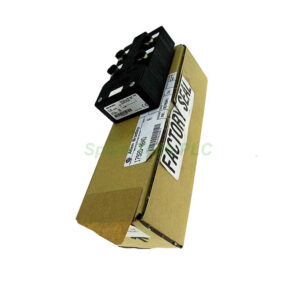
First, ensure the system power supply is turned off. Next, mount the 1769-IF8 onto the DIN rail or panel. Connect it to the adjacent module using the bus interface. Then, wire your analog sensors to the removable terminal block. The replacement part number for this block is 1769-RTBN18. Use shielded cable like Belden 8761 to reduce noise. Keep cable lengths as short as possible.
After wiring, insert the terminal block into the module. Finally, power up the system and check the fault status LED. This LED turns on if any channel error or diagnostic failure occurs. The 1769-IF8 performs automatic self‑diagnostics. It reports over‑range or under‑range conditions by bit reporting.
Why Choose This 8-Channel Analog Module?
The 1769-IF8 offers clear benefits over smaller modules. For instance, eight channels save panel space and reduce cost per point. You do not need multiple modules for many sensors. Furthermore, the module supports both current and voltage inputs on the same device. You can configure each channel independently.
The built‑in diagnostics help you find open circuits or out‑of‑range conditions quickly. Therefore, downtime decreases and maintenance becomes easier. Additionally, the high input impedance (220 kΩ for voltage) minimizes loading on your sensors. The 250 Ω impedance for current loops ensures standard 4‑20 mA operation.
Compatibility
This module works with CompactLogix 5370 controllers and MicroLogix 1500. It also fits into any 1769 Compact I/O chassis. The bus interface supplies 5V and 24V DC power to the module. No external power supply is necessary. However, remember the power supply distance rating. You cannot place this module more than 8 slots away from the system power supply. Otherwise, voltage drop may occur.
Data Conversion and Processing
The 1769-IF8 converts each analog signal using the sigma‑delta method. The converted signal occupies 16 bits in the processor's memory for unipolar signals. Inside the register, binary bits represent the input signal value. To display proper engineering values, you can use a scale instruction.
The module lets you configure data in several formats. You can choose engineering units, percent range, scaled for PID, or raw data. This flexibility makes the 1769-IF8 suitable for various control applications.
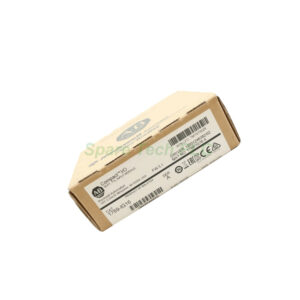
Packaging List
Note: No certificates or warranty documents are included in the package.
Shipping Information
We ship worldwide using FedEx, UPS, or DHL. The gross weight is 0.45 kg. Standard delivery takes 3‑7 business days. A tracking number will be provided after shipment.
Frequently Asked Questions (FAQ)
1. Can I mix current and voltage signals on the same 1769-IF8 module?
Yes, you can configure each channel independently. For example, channel 0 can accept a 4‑20 mA current loop while channel 1 accepts a ±10V voltage signal on the same 1769-IF8.
2. What replacement terminal block works with the 1769-IF8?
The correct replacement is part number 1769-RTBN18. This removable terminal block allows easy wiring changes without removing the module from the DIN rail.
3. How far can I place this module from the system power supply?
The power supply distance rating is 8. This means the 1769-IF8 must be installed no more than 8 modules away from the system power supply. Exceeding this limit may cause voltage drops.
4. What type of cable is best for wiring this analog input module?
Allen‑Bradley recommends Belden 8761 shielded cable. Using shielded cable reduces electrical noise and improves signal accuracy. Keep the cable length as short as possible.
5. Does the 1769-IF8 support single‑ended input wiring?
Yes, it supports both differential and single‑ended inputs. You can choose either wiring method per channel. For best noise rejection in noisy environments, differential wiring is recommended.