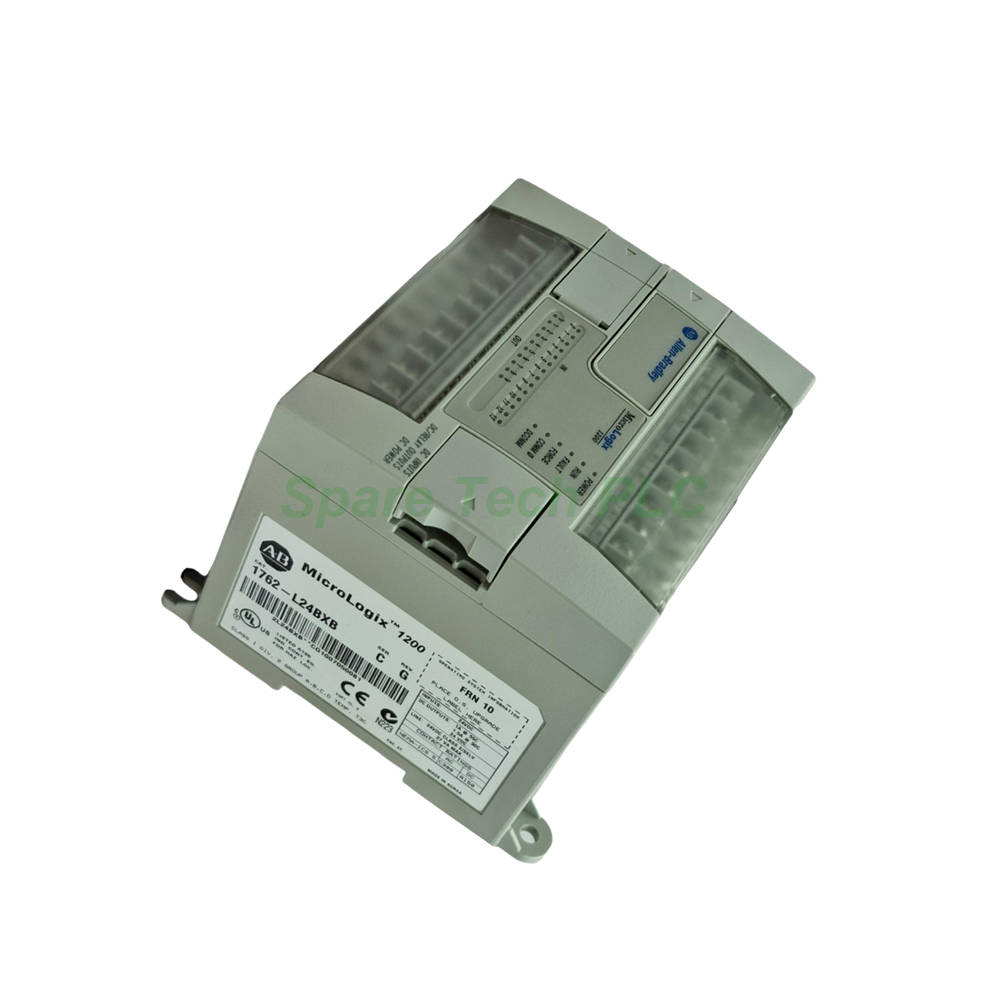
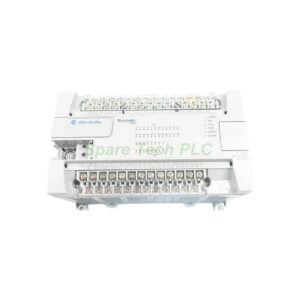
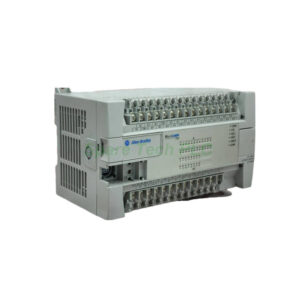
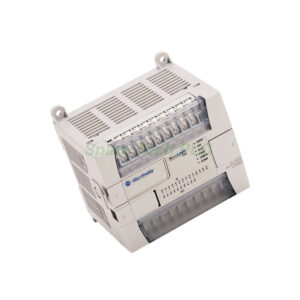
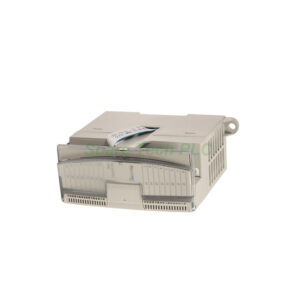
1762-L24BXB MicroLogix 1200 Mixed I/O Controller
Product Introduction
The 1762-L24BXB from Allen‑Bradley is a feature‑rich programmable logic controller within the MicroLogix 1200 family. This compact unit integrates a power supply, processor, and a diverse mix of I/O into a single housing. Consequently, it provides a cost‑effective solution for applications that require multiple output types without additional expansion modules.
This controller features fourteen 24V DC digital inputs, which include ten standard inputs and four fast‑response inputs for high‑speed counting and positioning tasks. The output section is particularly versatile, comprising five relay outputs, four 24V DC FET outputs, and one dedicated high‑speed FET output. This combination allows you to drive AC loads (via relays), DC loads (via FETs), and perform high‑speed pulse operations with a single controller.
Additionally, the built‑in 8‑pin mini‑DIN serial port supports DF1, DH‑485, ASCII, and MODBUS protocols, enabling seamless integration with HMIs, SCADA systems, and other automation devices. The controller operates on a 24V DC supply and includes a built‑in power supply that delivers 400 mA at 5V DC and 350 mA at 24V DC for powering expansion modules and other loads.
Moreover, the 1762-L24BXB is designed for industrial environments with a wide operating temperature range and robust shock and vibration tolerance. Its dual mounting options (DIN rail or panel) and compact dimensions make it an ideal choice for control panels with limited space. Whether you need general‑purpose machine control or specialised counting and positioning, this controller delivers reliable performance.
Technical Specifications
The 1762-L24BXB offers comprehensive performance across its mixed I/O, communication, and power features. Key parameters are detailed below:
Power Supply
Nominal input voltage: 24V DC
Inrush current: 15A for 20 ms
Power supply usage: 27 W
Heat dissipation: 17 W
User power output: 400 mA at 5V DC; 350 mA at 24V DC
Sensor power output: None (no dedicated sensor supply)
Input Specifications (14 DC Inputs)
Input type: 24V DC (sink/source configurable)
Input configuration: 10 standard + 4 fast
Fast input frequency: Up to 20 kHz (for high‑speed counting and positioning)
Output Specifications (10 Mixed Outputs)
Communication
Port: 1 x 8‑pin mini‑DIN RS232 (front panel)
Supported protocols: DF1, DH‑485, ASCII, MODBUS
Applications: Programming, configuration, online edits, HMI/SCADA communication
Additional Features
These specifications make the 1762-L24BXB exceptionally flexible for applications that require both AC and DC load control, combined with high‑speed input/output capabilities.
Mechanical & Environmental Ratings
The controller is built for industrial environments. Its mechanical and environmental characteristics include:
Dimensions (H x W x D):
Weight: Approximately 1.09 kg (2.4 lb)
Mounting: 35 mm DIN rail or direct panel mounting
Operating temperature: 0–55 °C (32–131 °F)
Storage temperature: –40 to 85 °C (–40 to 185 °F)
Relative humidity: 5–95% non‑condensing
Vibration tolerance: 1.5G at 10–500 Hz
Shock tolerance: 15G
For optimal performance, install the 1762-L24BXB in an industrial enclosure that reduces electrical interference and environmental exposure. Keep the unit away from load lines, power lines, relays, AC motor drives, and other sources of electrical noise.
Installation Guidelines
Proper installation of the 1762-L24BXB ensures optimal performance and longevity. Follow these steps:
Mounting: Secure the controller on a 35 mm DIN rail or directly onto a mounting plate. Ensure horizontal orientation and maintain adequate clearance for airflow around the unit.
Power Connection: Connect the 24V DC power supply to the designated input terminals. Verify that the voltage matches the controller’s rating and that the supply can handle the inrush current of 15A for 20 ms. Install appropriate overcurrent protection.
Grounding: Connect the ground terminal to the system’s protective earth. A low‑impedance ground path is essential for both safety and noise reduction.
Input Wiring: Connect DC field devices to the input terminals. Configure each input as sink or source according to your sensor wiring. For fast inputs, use shielded cables to minimise noise and ensure accurate high‑speed readings.
Output Wiring: Connect loads to the appropriate output terminals:
Relay outputs: Suitable for AC or DC loads; use external surge suppression for inductive loads.
FET outputs: Suitable for DC loads; provide fast solid‑state switching.
High‑speed FET output: Use for pulse‑width modulation (PWM) or high‑frequency on/off control.
Communication: Connect the RS232 port to an HMI, programming terminal, or other compatible device. Configure the protocol and baud rate in the controller’s program.
Configuration: Use RSLogix 500 or Connected Components Workbench to program the controller. Configure I/O, communication parameters, and application logic as required.
Important Safety Notes:
Always disconnect power before installing or wiring any device.
Use shielded cables for fast inputs and high‑speed outputs to reduce EMI.
Use a master control relay for emergency machine shutdown.
After installation, power up the system and verify that the 1762-L24BXB operates correctly. Check the status LEDs for power, run, and fault conditions. Always follow ESD precautions when handling the unit.
Packaging List
When you order the 1762-L24BXB, the package includes:
1762-L24BXB MicroLogix 1200 controller (1 unit)
Removable terminal blocks (input and output)
DIN‑rail mounting clips (pre‑installed)
Quick‑start installation guide (printed)
Note: Programming cables, software, and expansion I/O modules are sold separately.
Frequently Asked Questions (FAQ)
1. What is the difference between the standard FET outputs and the high‑speed FET output?
The standard FET outputs are suitable for general‑purpose DC switching, while the high‑speed FET output is optimised for pulse applications such as PWM control, stepper motor driving, or high‑frequency on/off operations. The high‑speed output offers faster response times.
2. Can I use the 1762-L24BXB for motion control applications?
Yes, the four fast inputs and the high‑speed FET output make this controller suitable for basic motion control tasks, including encoder feedback counting, position monitoring, and PWM speed control for small DC motors.
3. Why does this controller not have a sensor power output?
The 1762-L24BXB does not include a dedicated sensor supply. Therefore, you must use an external 24V DC power supply to power your sensors and field devices. This design keeps the controller compact and reduces internal heat generation.
4. What protocols can I use for HMI communication?
The built‑in RS232 port supports DF1, DH‑485, ASCII, and MODBUS protocols. For MODBUS applications, the controller can operate as either a master or slave, depending on your configuration.
5. What shipping carriers do you use?
We ship all orders via FedEx, UPS, or DHL to ensure fast and reliable delivery worldwide. Please contact our sales team for tracking information and estimated delivery times.