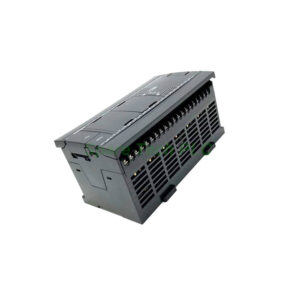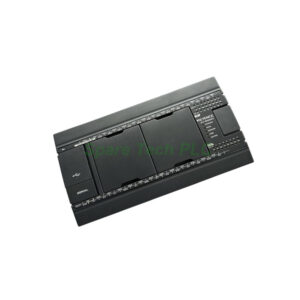

Allen-Bradley 1790D-T4T0 D-Series I/O – TC Input Wiring & Calibration Guide
Product Introduction
The Allen-Bradley 1790D-T4T0 connects directly to thermocouple sensors. This module provides four differential input channels. Each channel supports multiple thermocouple types. Firstly, you save panel space. Secondly, the 1790D-T4T0 reduces external signal conditioners. Moreover, it interfaces with a controller through the D-Series backplane. Specifically, this module delivers 16-bit resolution. Therefore, you get precise temperature readings. The module updates all channels every 400 milliseconds. Besides that, it includes open-circuit detection. You can monitor sensor health continuously. Furthermore,operates on 24V DC power from the base unit.
Core Value
This thermocouple module delivers reliable temperature data. Its key benefit is sensor type flexibility. You configure each channel individually. Besides that, improves system accuracy. Cold junction compensation happens automatically. Meanwhile, the module rejects common-mode noise. This feature works well in electrically noisy plants. Furthermore, you reduce wiring costs. Thermocouples connect directly to the 1790D-T4T0. No additional transmitters are needed. Consequently, your BOM becomes simpler. The Allen-Bradley 1790D-T4T0 also supports scaling in engineering units. You read degrees Celsius or Fahrenheit directly.

Technical Insights
The Allen-Bradley 1790D-T4T0 accepts eight thermocouple types. Type J ranges from -210°C to 1200°C. Type K ranges from -270°C to 1370°C. Moreover, the module provides 1°C or 0.1°C resolution. Input impedance is 10 megohms. The common mode rejection ratio exceeds 120 dB. Additionally, the 1790D-T4T0 has an accuracy of ±0.5% of full scale. Update time per module is 400 ms maximum. The module dissipates 1.5 W of power. Operating temperature ranges from 0°C to 55°C. Use shielded thermocouple extension wire for best results. also features 500V DC isolation between channels and backplane.
Installation & Maintenance
Install the Allen-Bradley 1790D-T4T0 onto a 1790D-TN4C0 terminal base. Firstly, power down the system. Secondly, align the module with the base pins. Thirdly, press firmly until latched. Then, connect thermocouple wires to the RTB. Follow these wiring rules:
Use proper thermocouple extension grade wire.
Maintain polarity according to sensor color codes.
Route TC wires away from power cables.
Connect shield drain wires to earth ground only at one end.
For maintenance, periodically check for loose connections. Clean the module face with dry compressed air. Also, verify cold junction compensation updates. Re-calibrate the 1790D-T4T0 every two years in critical applications.

Buyer’s Guide FAQ
1. What thermocouple types work with the Allen-Bradley 1790D-T4T0?
This module supports J, K, T, E, R, S, B, and N types. You configure each channel separately.
2. Does the 1790D-T4T0 require an external CJC sensor?
No. Cold junction compensation is built into the module. It uses an internal temperature sensor.
3. How many channels does the Allen-Bradley 1790D-T4T0 provide?
The module offers four differential analog input channels. Each channel connects to one thermocouple.
4. What base unit works with the 1790D-T4T0?
You must mount this module on a 1790D-TN4C0 terminal base unit. The base provides power and backplane connection.
5. Can I detect a broken thermocouple with the 1790D-T4T0?
Yes. The module includes open-circuit detection. It sets the input value to an over-range reading when a break occurs.