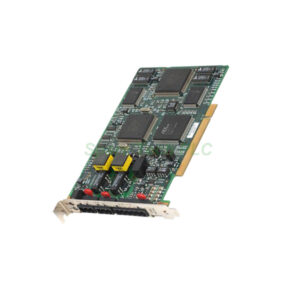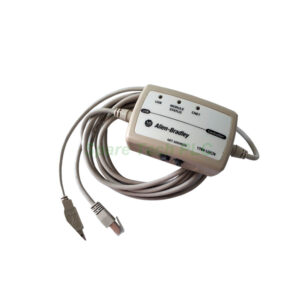

Allen-Bradley 1769-IT6 Compact I/O Technical Guide
Product Introduction
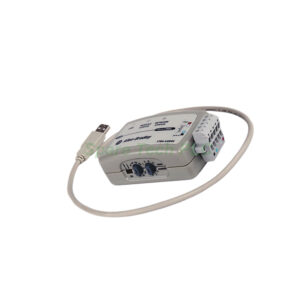
The Allen-Bradley 1769-IT6 is a six-channel thermocouple and millivolt input module. It belongs to the Compact I/O family. This module offers precise temperature measurement capabilities. Specifically, it supports J, K, T, E, R, S, B, N, and C thermocouple types. Additionally, it accepts ±50 mV and ±100 mV signals. The 1769-IT6 integrates seamlessly with CompactLogix and MicroLogix 1500 controllers. It converts analog sensor signals into digital data for the control system. The module features two integral cold junction compensation (CJC) sensors. These sensors ensure accurate readings despite ambient temperature variations.
Core Value
The 1769-IT6 delivers high measurement accuracy and system reliability. Its primary value lies in its ability to support diverse thermocouple types within a single, compact module. This versatility simplifies inventory management and system design. Furthermore, the module's built-in surge suppression protects against high-voltage transients. This feature enhances durability in industrial environments. The 1769-IT6 also provides channel diagnostics. These include open-circuit, over-range, and under-range detection. This diagnostic capability allows for rapid troubleshooting. Consequently, it helps minimize costly downtime.
Technical Insights
This module uses a Delta-Sigma converter type. It provides high-resolution data conversion with excellent noise rejection. Specifically, it offers common-mode rejection of 115 dB minimum at 50/60 Hz. The Allen-Bradley 1769-IT6 features selectable input filters. These include 10 Hz, 50 Hz, 60 Hz, 250 Hz, 500 Hz, and 1 kHz options. Users can choose a filter to balance update time and noise rejection. The module automatically calibrates upon power-up. Furthermore, it can perform a user-programmed calibration every five minutes. This auto-calibration maintains accuracy over time. Moreover, the module draws a maximum bus current of 100 mA at 5V DC and 40 mA at 24V DC. Its maximum heat dissipation is 1.5 W.
Installation & Maintenance
Firstly, mount the 1769-IT6 in a single slot of a CompactLogix chassis. It requires a power supply distance rating of up to 8 modules. Secondly, maintain a minimum spacing of two inches on all sides. This clearance ensures adequate ventilation. Thirdly, install the module at least two slots away from the AC power supply. This practice helps to reduce electrical noise. Specifically, use shielded, twisted-pair thermocouple extension wire. This wiring practice preserves signal integrity. Subsequently, after installation, verify the module's OK status indicator lights up. The module requires no manual calibration. However, periodically inspect the removable terminal block. Ensure connections remain secure to maintain measurement reliability.

Buyer’s Guide FAQ
Q1: What types of thermocouples does the Allen-Bradley 1769-IT6 support?
The 1769-IT6 supports B, C, E, J, K, N, R, S, and T thermocouple types. It also accepts ±50 mV and ±100 mV signals.
Q2: How many input channels does the 1769-IT6 have?
This module provides six (6) differential input channels. It also integrates two cold junction compensation (CJC) sensors.
Q3: What is the power supply distance rating for the 1769-IT6?
The power supply distance rating is 8 modules. This means you can place the 1769-IT6 up to 8 slots away from the power supply in the chassis.
Q4: How does the 1769-IT6 ensure accurate temperature measurement?
It uses auto-calibration upon power-up and every time you enable a channel. Additionally, you can program it to perform auto-calibration every five minutes. The module also includes automatic cold junction compensation.
Q5: What is the current draw and heat dissipation of the 1769-IT6?
The 1769-IT6 draws 100 mA at 5V DC and 40 mA at 24V DC. Its maximum heat dissipation is 1.5 Watts.