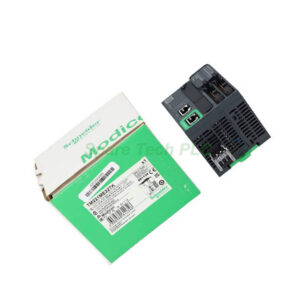
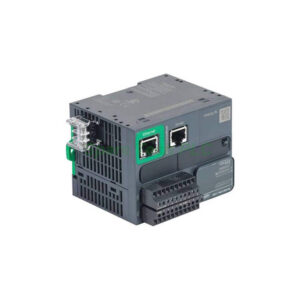
Product Introduction
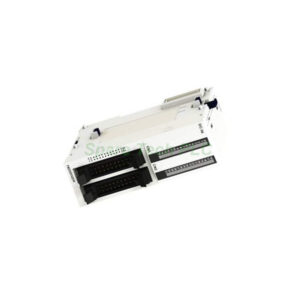
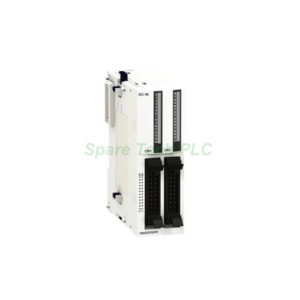
The TWDDDO16TK belongs to Schneider Electric’s Twido range, a compact automation solution for small to medium-scale control systems. This discrete output module delivers 16 solid-state transistor outputs, making it ideal for driving solenoids, relays, indicator lights, and other DC loads. Its sourcing logic configuration simplifies wiring in many industrial applications. With robust protection features and reliable photocoupler isolation, the TWDDDO16TK ensures stable operation in demanding environments. This module fits seamlessly into Twido bases, expanding your system’s output capacity without complicating the control architecture.
Technical Specifications
Output Characteristics
The TWDDDO16TK provides 16 discrete transistor outputs, each rated at 24V DC with a sourcing logic configuration. Every channel supports up to 0.5A continuous current, while each common point handles a maximum of 2A. The output voltage limits range from 20.4V to 28.8V DC, accommodating typical industrial power supply variations. At state 1, the residual voltage stays ≤ 0.2V, ensuring efficient power delivery to connected loads.
Response and Filtering
This module achieves rapid response times: 300 µs for state 1 transitions and 450 µs for state 0 transitions. Additionally, it incorporates an 8 ms filter time for both state 0 and state 1, which effectively suppresses electrical noise and prevents false triggering. This balance between speed and stability makes the TWDDDO16TK suitable for high-speed production lines and precision control tasks.
Protection and Isolation
The TWDDDO16TK includes comprehensive overload and short-circuit protection, safeguarding both the module and connected devices from electrical faults. Moreover, the insulation between channels and internal logic is rated at 1500 Vrms for one minute via photocoupler, providing robust galvanic isolation. This design enhances system reliability and reduces the risk of ground loop issues.
Power Consumption
Power requirements remain moderate: the TWDDDO16TK draws only 5 mA at 5V DC when all outputs are off, and 10 mA at 5V DC when all outputs are on. At 24V DC, it consumes 40 mA with all outputs activated. Consequently, this module places minimal additional load on your system’s power budget, allowing efficient use of available resources.
Load Compatibility
The module can drive inductive loads up to 2000 mH, making it versatile for relay coils and small solenoids. Additionally, it supports tungsten loads up to 16W, which is beneficial for lamp control applications. However, always verify that your specific load requirements fall within these limits to ensure long-term reliability.
Mechanical and Environmental Parameters
Physical Dimensions
Weighing only 0.07 kg, the TWDDDO16TK is lightweight and compact. Its small footprint saves valuable panel space, particularly useful in crowded control cabinets. The HE-10 connector simplifies wiring and facilitates quick module replacement.
Environmental Conditions
The operating temperature range spans 0°C to 55°C, suitable for most indoor industrial settings. For storage, the module tolerates temperatures from -25°C to 70°C, accommodating various warehouse conditions. Furthermore, the IP20 protection rating safeguards against solid objects larger than 12 mm, ensuring basic protection in typical control environments.
Certifications and Compliance
This module carries CSA and UL certifications, demonstrating compliance with North American safety standards. Additionally, it bears the CE marking and meets RoHS EUR requirements, with a compliance date of 0630. These certifications simplify system approvals and ensure environmental responsibility.
Installation Guidelines
Mounting Considerations
First, verify that your Twido base station has an available slot for the TWDDDO16TK. Next, ensure the power supply is turned off before installing or removing the module. Align the module with the guide rails and push it firmly until it clicks into place. Finally, secure the module using the retaining clips to prevent accidental disconnection.
Wiring Instructions
Connect your field devices to the HE-10 connector using appropriate shielded cables. For optimal performance, keep signal wires separated from high-power conductors to minimize electromagnetic interference. Additionally, use ferrules on stranded wires to ensure reliable terminations. The sourcing configuration means outputs provide positive voltage to the load; therefore, connect the load’s negative side to the common return.
Configuration and Setup
After installation, configure the TWDDDO16TK within your Twido programming environment. Assign appropriate output addresses and set any necessary parameters, such as default states during CPU stop. Test each channel individually to confirm correct operation before commissioning your entire system.
Packaging List
TWDDDO16TK discrete output module (1 unit)
HE-10 connector (pre-attached)
Installation guide (printed quick-start sheet)
Plastic retaining clips (2 pieces, pre-installed)
Note: Cables, power supplies, and programming software are sold separately.
Shipping Information
All orders ship via FedEx, UPS, or DHL with tracking numbers provided. Expedited shipping options are available upon request. Proper anti-static packaging protects the module during transit.
Frequently Asked Questions
1. Is the TWDDDO16TK compatible with all Twido controllers?
Yes, the TWDDDO16TK works with all Twido programmable controllers that support discrete output modules. However, always check your base station’s capacity to ensure sufficient slot availability.
2. Can I connect AC loads to this module?
No, this module provides DC outputs only. For AC load control, consider using a relay output module or an external solid-state relay interfaced with the TWDDDO16TK.
3. What happens if I exceed the 0.5A per channel rating?
The module’s short-circuit and overload protection will activate, shutting down the affected channel to prevent damage. After resolving the fault, recycle power or reset the output to resume normal operation.
4. How do I wire the common points for the TWDDDO16TK?
This module has two common points, each serving eight outputs. Connect the DC power supply’s negative terminal to both common points. Each output then sources positive voltage to the load.
5. Does the module retain output states during a CPU stop?
You can configure the output behavior during CPU stop using the Twido programming software. The default setting typically turns all outputs off, but you can customize this for safety-critical applications.