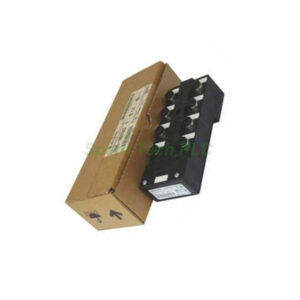
Product Introduction
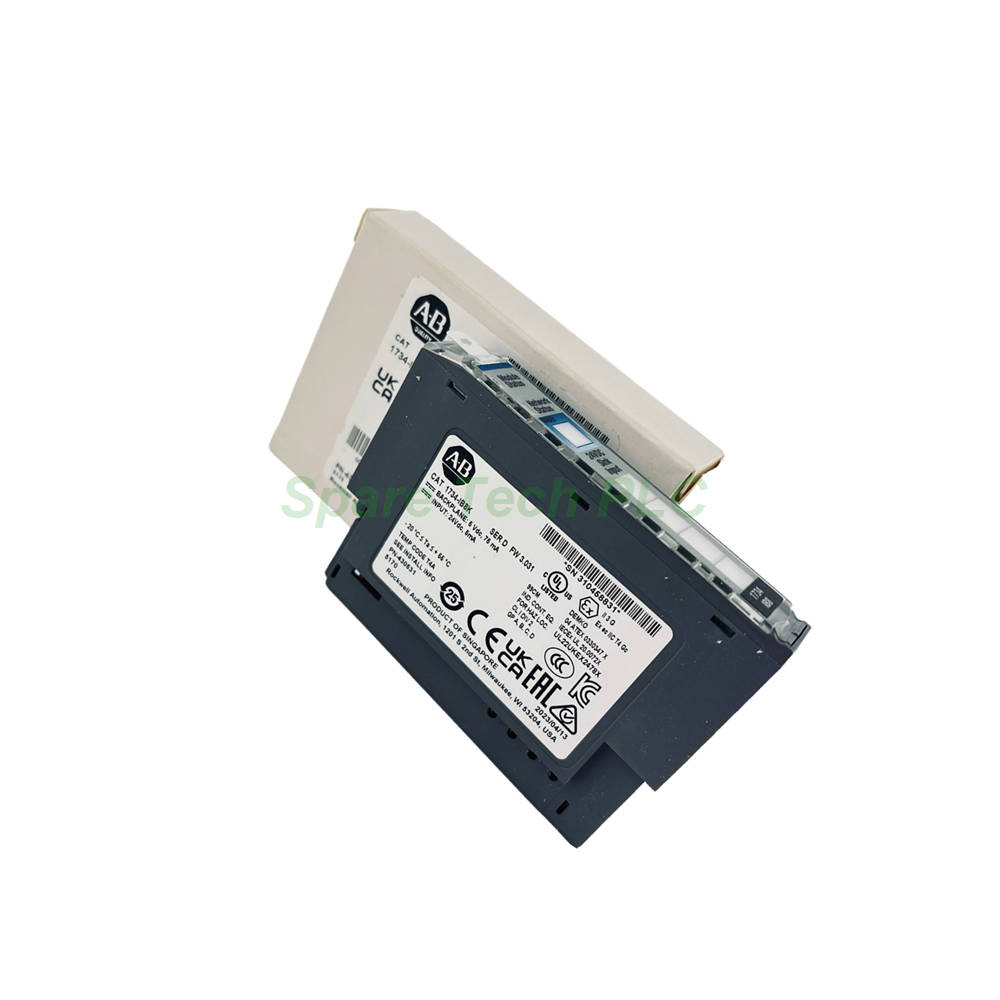
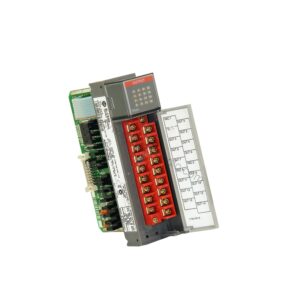
The Allen-Bradley 1734-8CFGDLX combines flexible I/O configuration with onboard logic execution. This module features eight self-configuring points that automatically adapt as either inputs or outputs based on your wiring. Additionally, it integrates DeviceLogix Smart Component Technology, which enables local logic solving directly at the I/O level.
This distributed intelligence approach reduces response delays and offloads processing from the main PLC. For instance, you can program the 1734-8CFGDLX to perform simple decisions like latching, timing, or interlocking without involving the central controller. Consequently, system performance improves while overall costs decrease.
Technical Specifications
The Allen-Bradley 1734-8CFGDLX operates with a nominal voltage of 24V DC. Its input voltage range spans from a minimum of 11V DC up to 28.8V DC. On-state input current ranges between 2.0 mA and 5.0 mA per channel, ensuring compatibility with most standard sensors and switches.
For power consumption, this module draws 100 mA at 5V DC from the POINTBus backplane. At maximum output load of 28.8V DC, power dissipation reaches 2.6 W, while thermal dissipation measures 8.9 BTU/hour. These efficient ratings allow dense packing in control cabinets without overheating concerns.
Furthermore, each input channel features independently adjustable debounce filters. You can set filter times in millisecond increments, with a default value of 1000 ms. This customization helps reject electrical noise and prevents false triggering in harsh industrial settings.
DeviceLogix and Operating Modes
The 1734-8CFGDLX stands out due to its versatile operating modes. First, it functions as a standard 8-point configurable I/O module using ODVA pre-defined produce and consume assemblies. In this mode, it communicates seamlessly over ControlNet, DeviceNet, or EtherNet/IP networks.
Second, when DeviceLogix is enabled, the module operates as a standalone logic engine. It reads local inputs, executes your programmed logic, and directly controls onboard outputs. This mode is perfect for distributed control applications where fast local response matters more than central supervision.
Third, the 1734-8CFGDLX supports peer-to-peer communication through the "Auto Produce" parameter. This feature automatically generates I/O data without requiring a master controller. As a result, multiple modules can share data directly, enabling coordinated actions across distributed points.
Compatibility and Installation
The 1734-8CFGDLX requires compatible terminal bases for proper operation. Supported bases include 1734-TOP, 1734-TOPS, 1734-TB, and 1734-TBS wiring base units. Before installation, ensure the mounting base is correctly keyed. You can mount the module either before or after the base assembly is secured to the DIN rail.
Moreover, this module supports POINTBus backplane features like auto-baud detection, auto-address assignment, and hot-swapping. You can remove or insert the 1734-8CFGDLX under power without disrupting other modules in the system. This capability significantly reduces maintenance downtime.
Environmental and Mechanical Parameters
The 1734-8CFGDLX operates reliably across a wide temperature range from -20°C to 55°C. Its open-style enclosure allows natural convection cooling, but it must be installed inside a clean, dry cabinet. All connected circuits require power from a PELV or SELV-compliant source for safety compliance.
Physically, this module shares the compact POINT I/O footprint. It weighs approximately 0.25 kg and mounts onto standard 35 mm DIN rails. Its slim design saves valuable panel space while providing eight flexible I/O points with intelligence.
Installation Guidelines
Installing the 1734-8CFGDLX follows a simple workflow. Start by mounting a compatible terminal base (1734-TB, 1734-TBS, 1734-TOP, or 1734-TOPS) onto the DIN rail. Next, snap the module firmly into the base until it locks securely. Verify the keying matches the base position.
After mechanical installation, wire each I/O point according to your application. Each channel accepts either an input device (like a proximity sensor) or an output device (like a pilot light). The module auto-detects the device type and configures accordingly. Finally, program the DeviceLogix function using RSLogix 5000 or Studio 5000 with the appropriate AOP.
Packaging List
Your shipment for the Allen-Bradley 1734-8CFGDLX includes the following items:
One POINT I/O DeviceLogix Configurable Module (1734-8CFGDLX)
One removable wiring label for terminal identification
One quick-start installation sheet
Note: Terminal base (1734-TB/TBS/TOP/TOPS) and cables are sold separately.
Shipping & Delivery
We ship all orders via FedEx, UPS, or DHL with tracking numbers provided. Standard delivery takes 3–7 business days depending on your region. Expedited shipping options are available upon request.
Frequently Asked Questions
1. What makes the 1734-8CFGDLX different from the standard 1734-8CFG?
The 1734-8CFGDLX includes built-in DeviceLogix logic capability. This allows local decision-making without a central PLC, while the standard 1734-8CFG only offers configurable I/O without onboard logic.
2. Can the 1734-8CFGDLX operate without a network master?
Yes. In "Auto Produce" mode, the 1734-8CFGDLX automatically generates I/O data and shares it peer-to-peer with other POINT I/O modules, eliminating the need for a master controller.
3. What terminal bases are compatible with this module?
The Allen-Bradley 1734-8CFGDLX works with 1734-TOP, 1734-TOPS, 1734-TB, and 1734-TBS bases. Always verify the keying before installation.
4. How do I program the DeviceLogix function?
You use RSLogix 5000 or Studio 5000 software with the appropriate Add-On Profile (AOP). The logic is created using function block or ladder diagrams.
5. Does this module support hot-swapping?
Absolutely. The 1734-8CFGDLX supports insertion and removal under power, thanks to the POINTBus backplane. This minimizes downtime during maintenance.