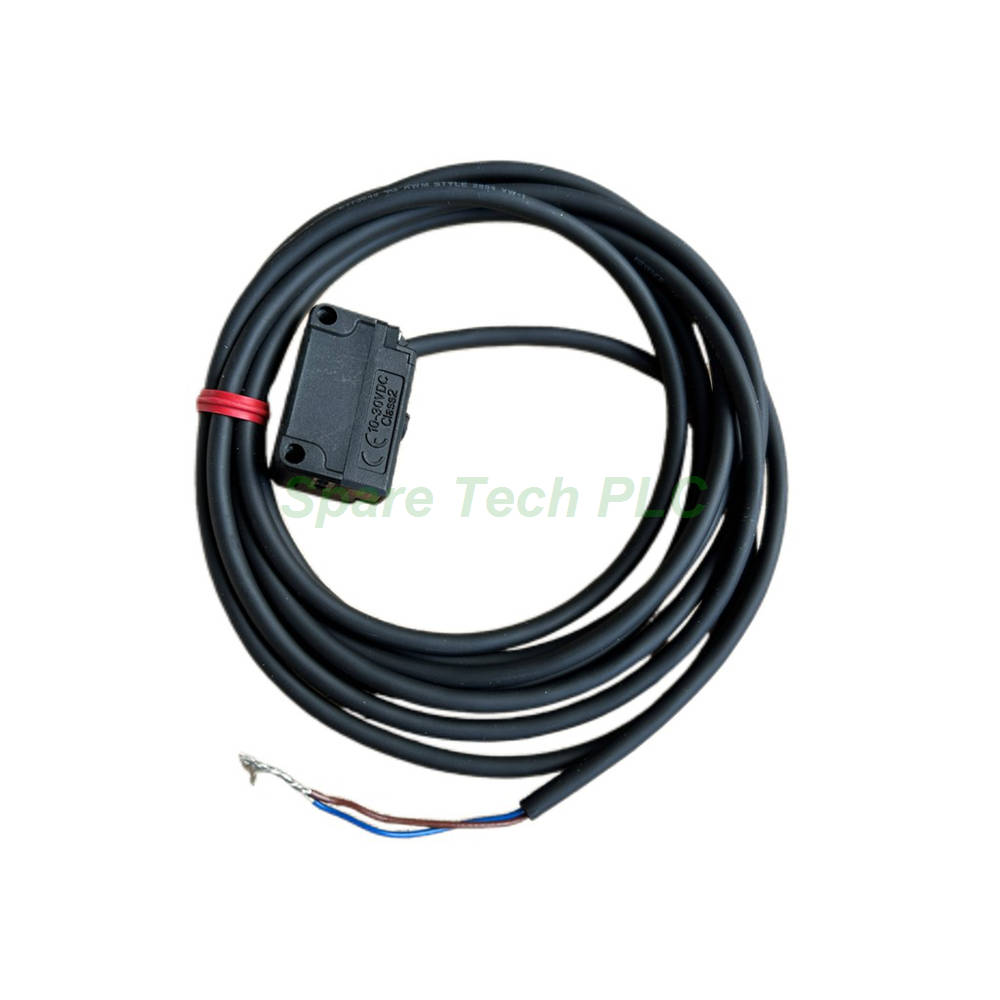
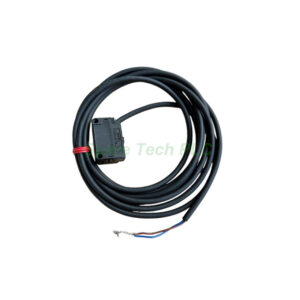
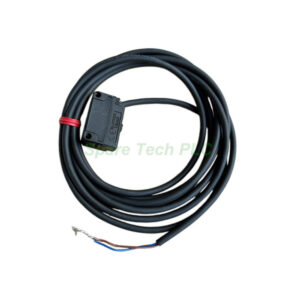
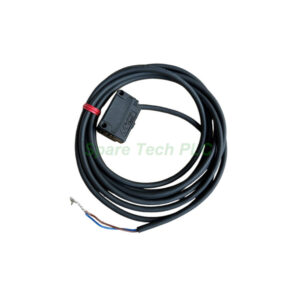
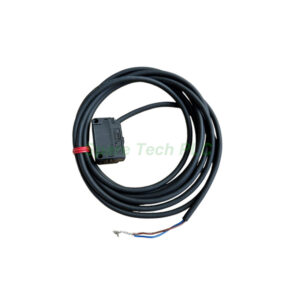
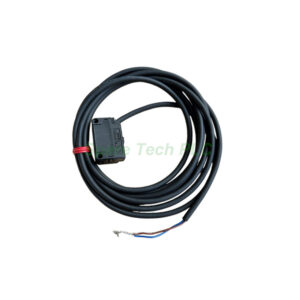
PZ-G41EN Diffuse Reflective Sensor
Product Introduction
The Keyence PZ-G41EN belongs to the PZ-G series of built-in amplifier photoelectric sensors. Specifically, this is a diffuse reflective model with a long-range detection capability. It detects objects by emitting a red LED light and measuring the reflected light returning to the receiver. With a maximum sensing distance of 1 meter, this sensor suits various industrial automation tasks. The PZ-G41EN comes with an M12 pigtail connector and an NPN output configuration. Its robust IP69K enclosure rating ensures reliable operation in demanding environments.
Technical Specifications
The PZ-G41EN operates on a supply voltage of 10 to 30 VDC with a ripple tolerance of 10% P-P. Current consumption remains low at 34 mA or less. Regarding output, the sensor provides an NPN open collector type capable of switching up to 100 mA at 30 VDC maximum. Residual voltage stays at 1 V or less. Additionally, the response time is a quick 500 µs maximum, making it suitable for high-speed detection applications. A 1-turn trimmer with a 230-degree range allows for convenient sensitivity adjustment.
For operation modes, users can select between LIGHT-ON and DARK-ON using a switch on the device. This flexibility supports different application requirements. Furthermore, the sensor includes protection circuits for reversed polarity, overcurrent, and surge. This design helps prevent damage from common electrical faults. The automatic different frequency function also allows up to 2 units to be mounted closely without optical interference.
Environmental and Mechanical Parameters
The PZ-G41EN sensor operates effectively in temperatures ranging from -20 to +55 °C without freezing. Relative humidity tolerance spans 35 to 85% RH without condensation. For harsh environments, the enclosure meets IEC IP67, NEMA 4A, 6, 12, and DIN IP69K standards. This rating confirms protection against dust ingress and high-pressure water washdowns.
Regarding the housing, the main body uses glass-fiber reinforced PBT for durability. Meanwhile, the lens cover consists of Polyarylate (PAR). The sensor weighs approximately 30 g for this rectangular M12 pigtail model. Vibration resistance adheres to 10 to 55 Hz with a double amplitude of 1.5 mm across all three axes. Shock resistance withstands 1,000 m/s² for six times in each direction. These specifications ensure dependable performance in machinery subject to constant vibration.
Installation Guidelines
Mounting the PZ-G41EN requires attention to the tightening torque specification. For the rectangular model with a mounting hole, the maximum torque is 0.5 N·m. Exceeding this value risks damaging the housing. When installing the sensor, avoid routing the cable alongside power lines or high-voltage sources. Such wiring practice may introduce electrical interference or cause permanent damage to the internal electronics.
For sensitivity adjustment on reflective models, follow a three-step procedure. First, place the target in position and slowly rotate the trimmer from MIN toward MAX until the orange output LED turns on. Next, remove the target and adjust the trimmer from MIN toward MAX until the output indicator turns on again. Finally, set the trimmer to the midpoint between these two positions. Verify that the green stable operation LED illuminates both with and without the target present.
Packaging List
Shipping is available via Fedex, UPS, DHL.
FAQ
Q1: What is the maximum detecting distance of the PZ-G41EN?
A: The maximum detecting distance is 1 meter when detecting a 30 x 30 cm white paper target.
Q2: Does the PZ-G41EN come with a cable included?
A: No. The M12 connector model requires a separate cable. The connector type design uses an M12 pigtail, and cables are sold separately.
Q3: What output type does this sensor provide?
A: The PZ-G41EN features an NPN open collector output rated at 30 VDC maximum and 100 mA maximum.
Q4: Can I use multiple PZ-G41EN sensors close together?
A: Yes. The automatic different frequency function allows up to 2 units to operate in proximity without mutual interference.
Q5: How do I adjust the sensitivity on this sensor?
A: Use the 1-turn trimmer (230°). Rotate it to find the midpoint between the ON position with the target present and the ON position with the target absent.