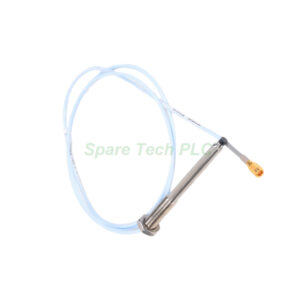
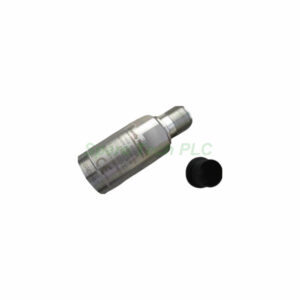
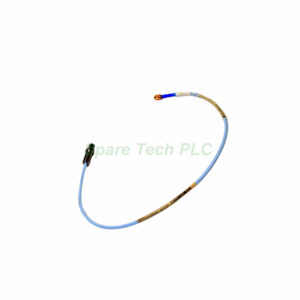
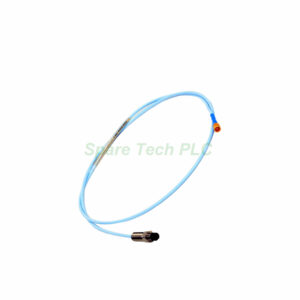
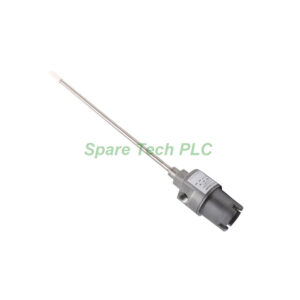
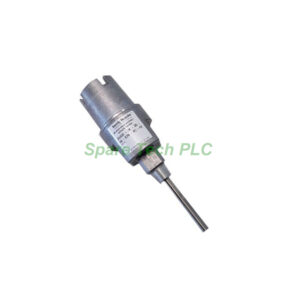
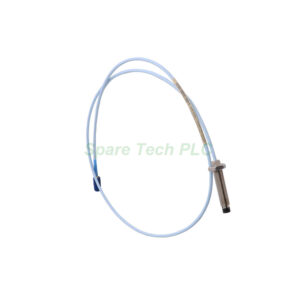
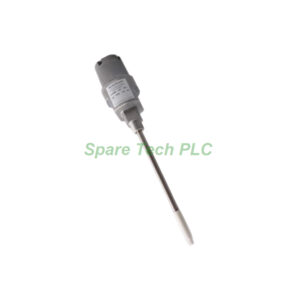
Bently Nevada 330907-05-30-70-12-00 NSv Reverse Mount Probe with FluidLoc
Product Introduction
The Bently Nevada 330907-05-30-70-12-00 is a premium 3300 NSv reverse mount proximity probe engineered for demanding rotating machinery monitoring applications. This configuration includes M10X1 probe threads, a 7.0 meter (23.0 feet) total length, and a Miniature coaxial ClickLoc connector with FluidLoc cable for enhanced fluid resistance. Additionally, this probe offers increased chemical resistance compared to the 3300 RAM probe, making it particularly well-suited for process compressor applications where exposure to aggressive media is common. For instance, its side-view characteristics are superior to those of the 3000-series 190 probe when gapping at the same target distance, providing more reliable measurements in confined mounting spaces.
This reverse mount probe incorporates the patented TipLoc molding method, which creates a robust, durable bond between the probe tip and the probe body. Furthermore, all transducer system components feature gold-plated brass ClickLoc connectors that lock securely into place, effectively preventing connection loosening caused by machinery vibration. Consequently, the 330907-05-30-70-12-00 delivers stable, uninterrupted measurements in even the most challenging industrial environments. Moreover, its linear range spans 1.5 mm (60 mils) , beginning at approximately 0.25 mm from the target and extending from 0.25 to 1.75 mm (10 to 70 mils), which corresponds to roughly -1 to -13 Vdc output.
Technical Specifications
Electrical Characteristics
The probe's electrical parameters are critical for achieving accurate proximity measurement performance. First, the probe DC resistance from the center conductor to the outer conductor (RPROBE) measures 5.9 ± 0.9 ohms for this 7.0-meter length configuration. Second, for field wiring, you can use conductors ranging from 0.2 to 1.5 mm² (16 to 24 AWG), with 0.25 to 0.75 mm² (18 to 23 AWG) recommended when using ferrules for secure terminations. Meanwhile, Bently Nevada recommends using three-conductor shielded triad cable to maintain optimal signal integrity over extended runs. Furthermore, the maximum field wiring length between the 3300 XL NSv Proximitor Sensor and the monitor is 305 meters (1,000 feet) . However, you should always consult the frequency response graphs (Figure 16 and Figure 17) for signal rolloff characteristics at high frequencies when deploying longer field wiring lengths.
Mechanical Construction
Built with a Polyphenylene sulfide (PPS) probe tip and an AISI 304 stainless steel (SST) probe case, this sensor offers excellent mechanical strength and corrosion resistance. Additionally, the reverse mount design accommodates a maximum thread engagement length of 15 mm for the M10x1 thread specification. Specifically, the system weight for the probe alone ranges from approximately 14 to 150 g (0.5 to 5.3 oz) , depending on the exact configuration and cable length. Besides, the maximum rated torque for reverse mount probes is 22.6 N•m (200 in•lb) , while the recommended installation torque is 7.5 N•m (66 in•lb) to ensure proper fixation without causing mechanical damage.
Environmental Ratings
The 330907-05-30-70-12-00 operates reliably across an exceptionally wide temperature spectrum. First, its operating temperature range spans -52°C to +177°C (-62°F to +351°F) . Second, the storage temperature range is identical, from -52°C to +177°C, providing excellent thermal stability. However, you must note that exposing the probe to temperatures below -34°C (-30°F) for a sustained period may cause premature failure of the pressure seal. Furthermore, this probe is specifically designed to seal differential pressure between the probe tip and case, utilizing a Viton O-ring as the primary sealing material. Consequently, it performs exceptionally well in high-pressure process environments commonly found in compressor applications.
Installation Guidelines
Proper installation of the 330907-05-30-70-12-00 is essential for achieving accurate, repeatable measurements and maximizing service life. First, ensure the mounting surface is clean and the threads are completely free from debris or damage. Next, apply the recommended torque of 7.5 N•m (66 in•lb) when installing the reverse mount probe, and never exceed the 22.6 N•m (200 in•lb) maximum rating to avoid thread stripping or case deformation. Remember, the recommended gap setting for this probe is 1.0 mm (40 mils) , which positions the probe optimally within its linear range for the best signal-to-noise ratio. For field wiring, use three-conductor shielded triad cable and observe proper termination practices to maintain signal integrity. Finally, always verify that the ClickLoc connector is fully engaged and locked, as its positive locking mechanism prevents loosening from continuous machinery vibration.
Packaging List
1 x Bently Nevada 330907-05-30-70-12-00 NSv Reverse Mount Probe (M10X1 threads, 7.0m FluidLoc cable)
Installation instructions (reference drawing)
Note: Cables, mounting hardware, and Proximitor sensors are sold separately. Shipping is handled via FedEx, UPS, or DHL.
Frequently Asked Questions
1. What makes the FluidLoc cable different from standard cable on this probe?
The FluidLoc cable offers enhanced resistance to fluids and chemicals commonly found in process compressor environments. Therefore, it provides superior durability and longer service life in harsh conditions.
2. What is the linear range of this Bently Nevada NSv probe?
The linear range spans 1.5 mm (60 mils) , beginning at approximately 0.25 mm from the target. Specifically, the usable range extends from 0.25 to 1.75 mm (10 to 70 mils).
3. Can I use this 7.0-meter probe with longer field wiring?
Yes, the maximum field wiring length is 305 meters (1,000 feet) between the Proximitor and the monitor. However, you should consult the frequency response graphs for high-frequency signal rolloff characteristics.
4. What torque should I apply when installing this reverse mount probe?
The recommended installation torque is 7.5 N•m (66 in•lb) . Furthermore, never exceed the maximum rated torque of 22.6 N•m (200 in•lb) to avoid damaging the probe or threads.
5. What temperature limits should I observe for this probe?
The operating and storage temperature range is -52°C to +177°C (-62°F to +351°F) . However, avoid prolonged exposure below -34°C (-30°F) to prevent premature pressure seal failure.