Product Introduction
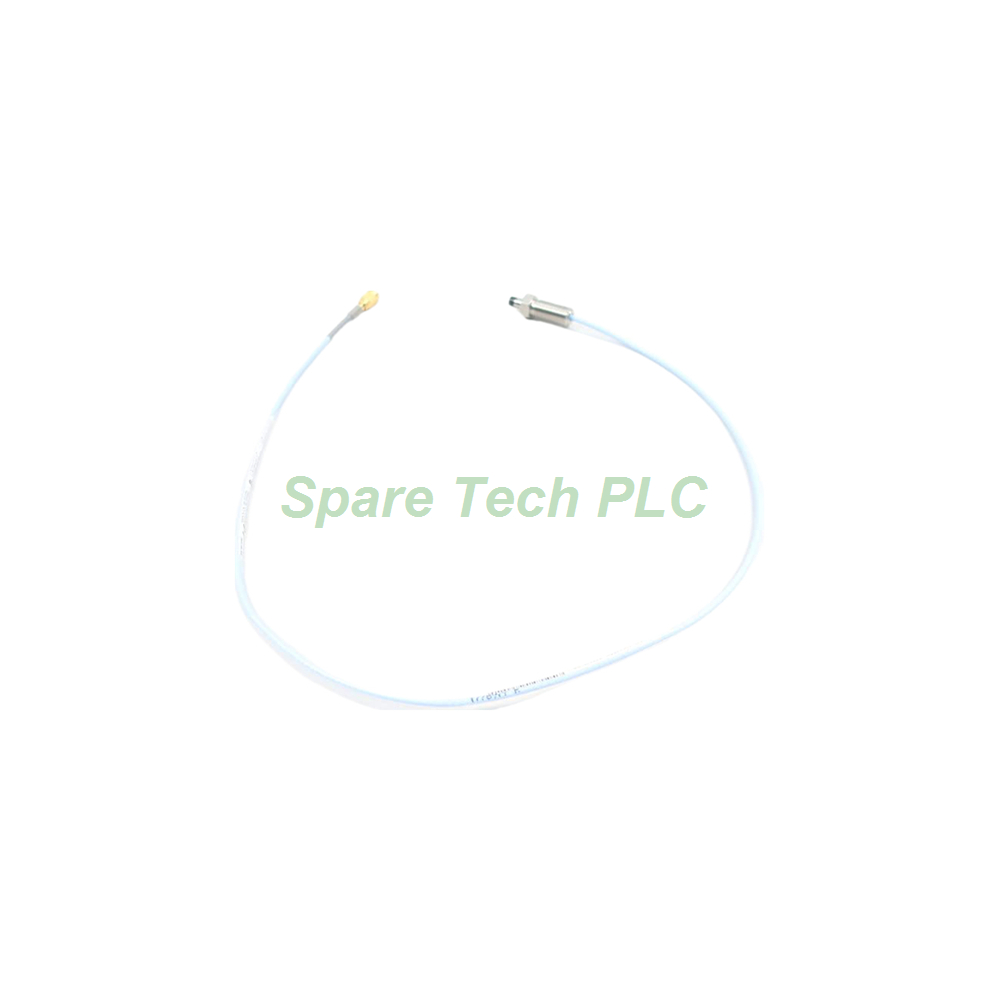
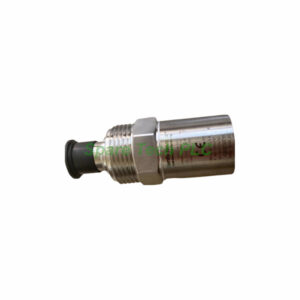
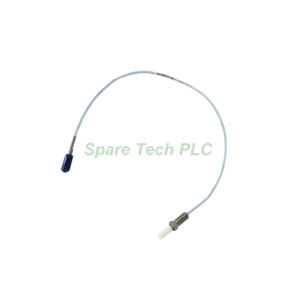
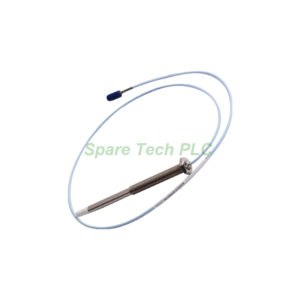
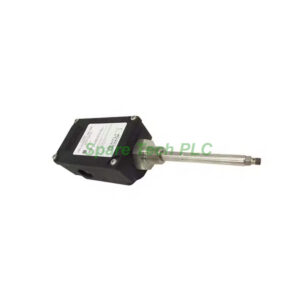
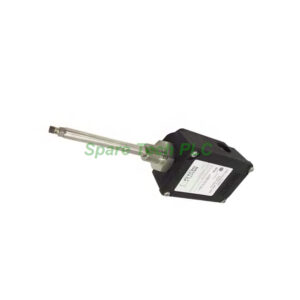
The Bently Nevada 330906-02-12-50-02-05 sets a high standard for proximity probe technology. Specifically, this device is engineered for demanding turbomachinery applications. Meanwhile, its reverse mount configuration provides a versatile solution for space-constrained installations. Furthermore, the probe's robust construction ensures reliable performance in harsh environments. Moreover, it delivers accurate measurements that are critical for effective predictive maintenance. In fact, this model exemplifies the quality and reliability expected from the Bently Nevada brand.
Technical Specifications
Electrical Characteristics
The 330906-02-12-50-02-05 operates with specific electrical parameters for precise measurement. For instance, the probe's DC resistance is a key specification that directly affects signal quality. Accordingly, for this 5.0-meter version, the resistance between the center and outer conductors is 5.3 ± 0.7 ohms. Additionally, field wiring must use a three-conductor shielded triad cable to minimize interference. This wiring can extend to a maximum of 305 meters (1,000 feet) in length. However, using longer cables may cause signal rolloff at high frequencies. Therefore, it is essential to consult the appropriate frequency response graphs before finalizing the installation layout.
Linear Range and Gap
This model offers a reliable linear range of 1.5 mm (60 mils). To begin with, the range starts at approximately 0.25 mm (10 mils) from the target surface. Then, it extends continuously from 0.25 to 1.75 mm (10 to 70 mils). In practice, this corresponds to an output voltage of approximately -1 to -13 Vdc. Furthermore, the recommended gap setting for optimal system performance is 1.0 mm (40 mils). Consequently, this places the target in the most linear portion of the probe's operating range. As a result, the sensor delivers the most accurate and repeatable measurement data.
Connector and Cable Options
This specific unit comes with a 02 connector option. Specifically, this indicates a miniature coaxial ClickLoc connector with a standard cable assembly. Moreover, the ClickLoc connectors lock securely into place once engaged. Therefore, they effectively prevent any loosening caused by vibration or thermal cycling. Meanwhile, the total length option 50 denotes a 5.0-meter (16.4 feet) cable. This length provides ample flexibility for installation while still maintaining signal integrity.
Mechanical & Environmental Parameters
Material and Construction
The probe is manufactured using high-grade materials selected for durability. For example, the probe tip is made from Polyphenylene sulfide (PPS), a rugged engineering plastic. Meanwhile, the probe case is constructed from AISI 304 stainless steel (SST). Consequently, this combination offers robust resistance to corrosion, wear, and chemical attack. Additionally, the reverse mount design uses a 3/8-24 UNF thread for secure attachment. Furthermore, the patented TipLoc molding method creates an exceptionally robust bond between the probe tip and its body. As a result, this prevents internal separation and ensures a long operational service life.
Temperature and Pressure Ratings
Environmental resilience is a key attribute of the Bently Nevada 330906-02-12-50-02-05. For instance, its operating temperature range extends from -52°C to +177°C (-62°F to +351°F). Similarly, the storage temperature range is identical to the operating range. However, prolonged exposure below -34°C (-30°F) may cause premature failure of the pressure seal. Therefore, users should avoid sustained low-temperature operation whenever possible. In addition, the probe is designed to seal differential pressure between the tip and case. Specifically, it utilizes a Viton O-ring for this sealing function, which provides excellent chemical compatibility.
Torque Specifications and Weight
Proper installation torque is critical for the reverse mount configuration. On one hand, the maximum rated torque for these probes is 22.6 N•m (200 in•lb). On the other hand, the recommended torque is significantly lower at 7.5 N•m (66 in•lb). Therefore, applying the recommended torque prevents thread damage and ensures proper sealing. Moreover, the system weight varies depending on the specific cable length. For this 5.0-meter version, the probe itself weighs approximately 14 to 150 g (0.5 to 5.3 oz). Finally, the maximum recommended length of thread engagement for the M10x1 thread is 15 mm.
Installation Guidelines
Pre-Installation Checks
Before installing the 330906-02-12-50-02-05, several preliminary steps are essential. First, inspect the probe and cable carefully for any signs of physical damage. Next, verify that the model number and specifications match your system requirements precisely. Meanwhile, ensure the target surface is clean, smooth, and free of debris. Finally, confirm that the field wiring length does not exceed the maximum of 305 meters.
Mounting Procedure
First, thread the probe into the mounting hole by hand to ensure proper alignment. Next, use a calibrated torque wrench to tighten it to the recommended 7.5 N•m (66 in•lb). This prevents overtightening and potential damage to the threads. Then, connect the probe to the extension cable using the ClickLoc connector. Meanwhile, ensure that a secure lock is achieved by listening for the audible click. Finally, route the cable carefully to avoid sharp bends or excessive strain.
Gapping and Setup
After mounting, proceed with the electrical setup and gapping procedure. First, connect the system to the power supply and monitoring equipment. Next, use a micrometer or the system's voltage reading to set the initial gap. Then, adjust the probe incrementally until the output voltage corresponds to the recommended 1.0 mm (40 mils) gap. Consequently, this step is essential for achieving accurate vibration and position monitoring. Therefore, take care to perform this adjustment slowly and methodically.
Packaging List
This product is shipped with the following items:
Note: Additional mounting hardware, cables, and connectors may be required for a complete system and are sold separately.
Shipping Method: Orders are shipped via Fedex, UPS, or DHL.
FAQ
Q1: What is the primary advantage of this NSv probe over the older RAM model?
A1: The primary advantage is its increased chemical resistance compared to the 3300 RAM probe. As a result, it offers reliable operation in many process compressor applications where chemical exposure is a concern.
Q2: What is the significance of the "02" in the model number 330906-02-12-50-02-05?
A2: The "02" at the end of the model number designates the connector option. Specifically, it indicates that this unit comes with a miniature coaxial ClickLoc connector, which provides a secure, locking connection that prevents loosening.
Q3: What is the recommended gap setting for this reverse mount probe?
A3: The recommended gap setting for the 330906-02-12-50-02-05 is 1.0 mm (40 mils). Consequently, this places the target within the center of the probe's linear range (0.25 to 1.75 mm) for optimal measurement accuracy.
Q4: What is the maximum length of the field wiring between this probe and the monitor?
A4: The maximum recommended length of field wiring between the 3300 XL NSv Proximitor Sensor and the monitor is 305 meters (1,000 feet). However, be aware that longer lengths may cause signal rolloff at high frequencies.
Q5: What is the maximum torque I should apply when installing this probe?
A5: The maximum rated torque is 22.6 N•m (200 in•lb). However, the recommended installation torque is only 7.5 N•m (66 in•lb). Therefore, applying the lower recommended torque will prevent thread damage and ensure proper sealing.