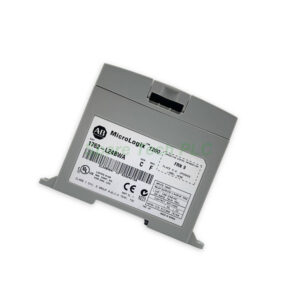
Allen‑Bradley 1785‑L40L PLC‑5/40L Processor – High‑Capacity Control with Extended Local I/O
The Allen‑Bradley 1785‑L40L is a high‑performance standard processor from the PLC‑5 family. This controller is built for larger automation systems that need substantial memory, extensive I/O capacity, and flexible chassis expansion. First, it delivers 48 kilowords of user memory with battery‑backed static RAM, which provides ample space for complex logic, data handling, and communication tasks. Additionally, you can protect your program using an optional EEPROM module like the 1785‑ME16, ‑ME32, ‑ME64, or ‑M100 for permanent backup. Meanwhile, the processor draws 3.3 A from the backplane at 5 V DC and dissipates approximately 17 W of heat during normal operation.
I/O Capacity and Addressing Modes
The 1785‑L40L excels in I/O handling with support for up to 2048 total I/O points. You can choose any mix of discrete and analog modules, or configure complementary operation with 2048 inputs and 2048 outputs simultaneously. Furthermore, the analog I/O capacity also reaches 2048 points, making this controller suitable for process‑intensive applications. For addressing flexibility, the 1785‑L40L offers three distinct modes. First, half‑slot addressing handles any combination of 8‑point, 16‑point, and 32‑point modules. Second, single‑slot addressing works with 8‑point and 16‑point modules, while 32‑point modules occupy I/O pairs. Third, double‑slot addressing provides another configuration option. This variety ensures compatibility with a wide range of Bulletin 1771, 1794, 1746, and 1791 I/O modules.
Extended Local I/O Link and Chassis Support
One standout feature of the 1785‑L40L is its extended local I/O link capability. When paired with an extended local I/O adapter, this processor scans up to 16 extended local I/O chassis directly. This eliminates the need for remote communication on those racks, reducing network latency and simplifying configuration. In total, the 1785‑L40L manages up to 61 I/O chassis. Specifically, it supports 16 extended local chassis and up to 32 universal remote chassis per I/O link. Therefore, you can build large, distributed systems with both local high‑speed racks and remote racks spread across your facility. The I/O scan time is notably fast: 0.5 ms per extended local rack, 10 ms at 57.6 kbit/s, 7 ms at 115.2 kbit/s, and just 3 ms at 230.4 kbit/s for remote links.
Embedded Communication Ports
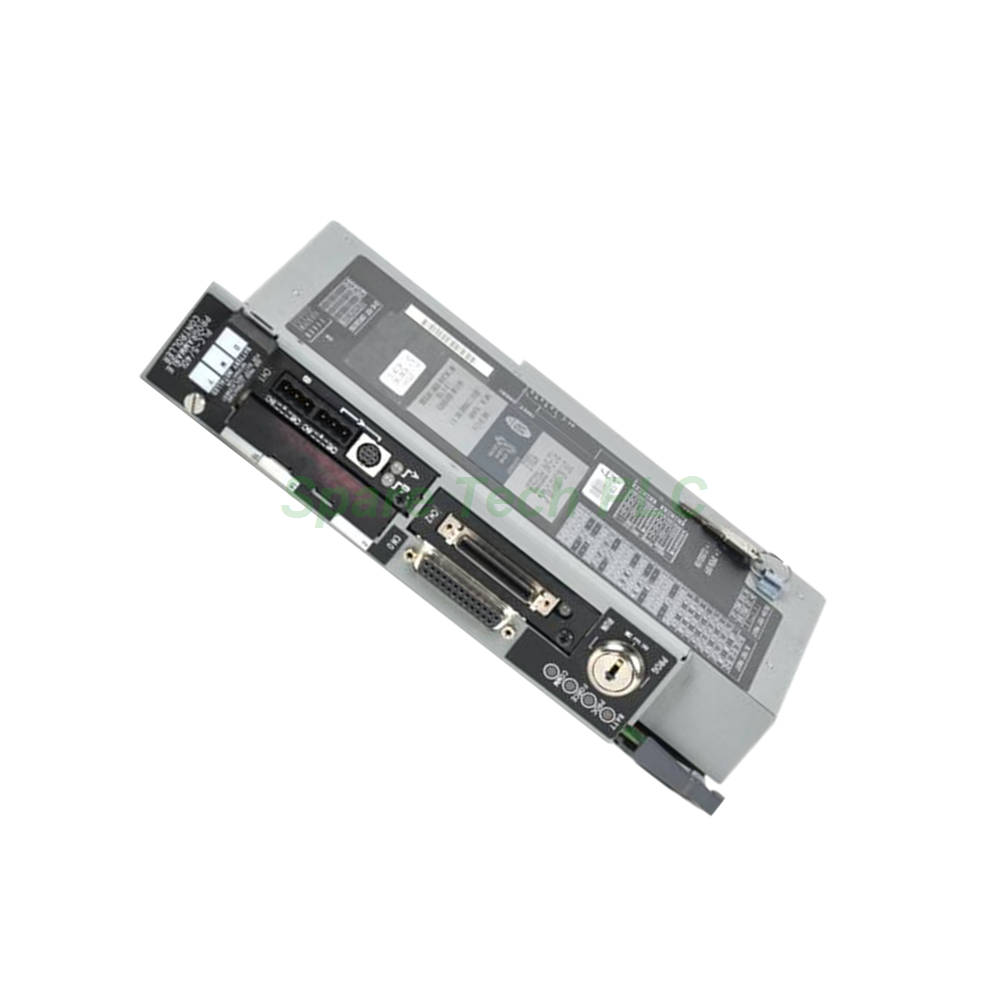
The 1785‑L40L includes two combo ports labeled Channel 1A and Channel 1B. Each port functions as a DH+ or Remote I/O (RIO) scanner or adapter, giving you the flexibility to build peer‑to‑peer DH+ networks or connect remote I/O racks. Additionally, a dedicated 25‑pin serial port supports RS‑232, RS‑423, and RS‑422A standards. You can configure this serial port for ASCII, DF1 full‑duplex master, DF1 half‑duplex master, or half‑duplex slave protocols. For advanced applications, the control coprocessor expansion port is also available. Furthermore, voltage isolation exists between the communication ports and between the ports and the relay cartridge, tested at 500 V and 1000 V for 60 seconds. This isolation enhances system reliability in electrically noisy environments.
Front Panel Indicators and Mode Selection
The front panel of the 1785‑L40L provides clear visual status feedback. A BATT LED indicates battery condition, while a PROC LED shows the processor’s operating state. The FORCE LED lights up when I/O forces are enabled, and a COMM LED monitors serial port activity. Channels 1A and 1B each have dedicated status indicators as well. A three‑position keyswitch lets you select RUN, PROG, or REM modes. In RUN mode, the processor executes the program and activates outputs. PROG mode halts execution for programming and maintenance. REM mode enables remote programming while the controller continues its logic scan. This design simplifies troubleshooting and system management.
Power and Environmental Specifications
The 1785‑L40L requires a backplane current of 3.3 A at 5 V DC and dissipates 17 W of power. It operates within a temperature range of 0 °C to 60 °C (32 °F to 140 °F) and is designed for open‑enclosure installations. The controller complies with UL, CE, C‑TICK, and CSA certifications, ensuring global acceptance for industrial applications. Weighing only 1.42 kg, this module is lightweight and easy to install in standard 1771 I/O chassis. The 1785‑L40L also supports the optional 1785‑RC relay cartridge for additional output capabilities.
Installation Guidelines
Install the 1785‑L40L in the leftmost slot of a 1771 I/O chassis. Begin by turning off chassis power before inserting the processor. Align the module with the card guides and push it firmly into the backplane connector until it seats properly. Secure the module using the retaining screws. Next, connect DH+ or Remote I/O cables to Channels 1A and 1B as required. Attach serial devices to the 25‑pin port for programming or HMI communication. If you plan to use extended local I/O, connect the extended local adapter to the designated port. Finally, set the keyswitch to the desired mode and apply power. Always verify that the total backplane current does not exceed your power supply rating.
Frequently Asked Questions
1. What is the maximum I/O capacity of the 1785‑L40L?
The 1785‑L40L supports up to 2048 I/O points in any mixed configuration. It also offers complementary mode with 2048 inputs and 2048 outputs.
2. Can this controller handle extended local I/O chassis?
Yes, the 1785‑L40L supports up to 16 extended local I/O chassis when used with an extended local I/O adapter. This feature provides high‑speed local expansion.
3. How many total I/O chassis can the 1785‑L40L manage?
This processor manages up to 61 I/O chassis in total, including 16 extended local chassis and 32 universal remote chassis per I/O link.
4. What communication protocols does the serial port support?
The serial port supports ASCII, DF1 full‑duplex master, DF1 half‑duplex master, and half‑duplex slave protocols.
5. What certifications does the 1785‑L40L hold?
The 1785‑L40L is certified with UL, CE, C‑TICK, and CSA, making it suitable for international industrial installations.