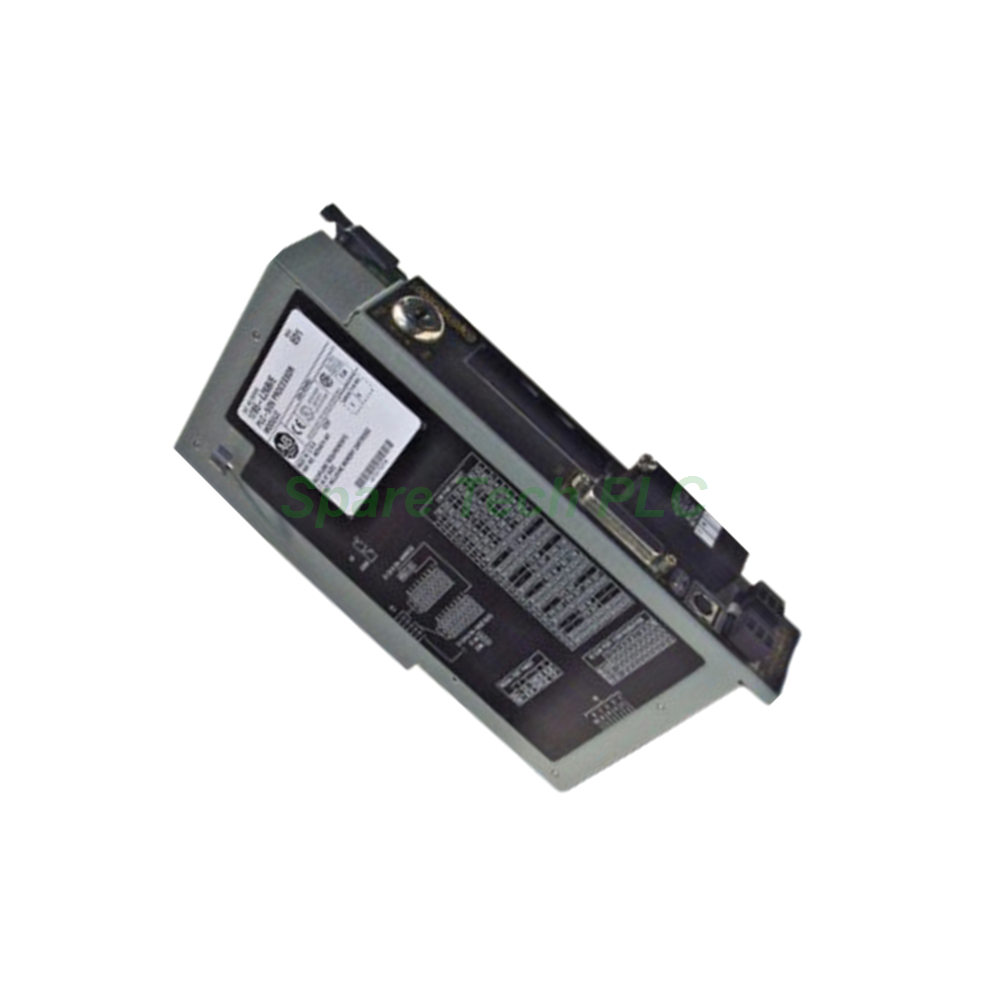
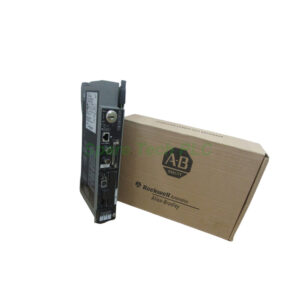
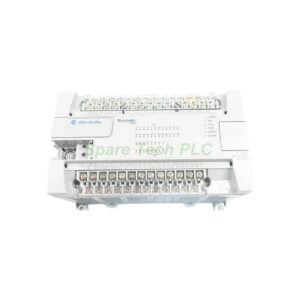
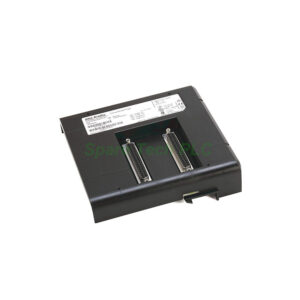
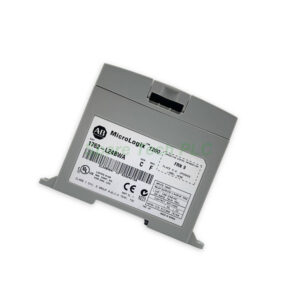
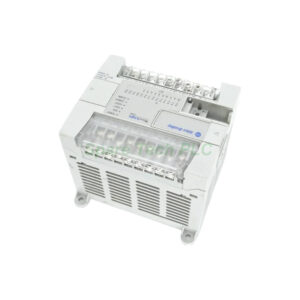
1785-L26B PLC-5/26 Standard Processor by Allen-Bradley
Product Introduction
The Allen-Bradley 1785-L26B is a standard processor from the PLC-5 series, specifically the PLC-5/26 model. This controller features 16K words of battery-backed SRAM for program and data retention. It supports up to 512 total I/O in any mix, or 512 inputs plus 512 outputs in complementary mode, making it versatile for medium-scale applications. The processor communicates via DH+, RS-232, and remote I/O ports, and it can manage up to 13 I/O chassis. With protected memory, a relay cartridge option, and support for multiple I/O platforms (1771, 1794, 1746, and 1791), the 1785-L26B serves as a dependable backbone for industrial control systems.
Technical Specifications
The 1785-L26B offers a comprehensive set of features for demanding control tasks. Its maximum user memory reaches 16 kilowords of battery-backed SRAM, ensuring program retention during power interruptions. The processor supports EEPROM program backup using 1785-ME16, -ME32, -ME64, or -M100 cartridges for added security.
For I/O handling, this module supports up to 512 analog I/O points and 512 total I/O in any mix. In complementary mode, it accommodates 512 inputs and 512 outputs simultaneously. The I/O scan time varies with baud rate: 10 ms at 57.6 kbit/s, 7 ms at 115.2 kbit/s, and 3 ms at 230.4 kbit/s, ensuring fast response for time-critical processes.
Power consumption is rated at 2.6 amps at 5V DC from the backplane. The module provides voltage isolation between communication ports (tested at 500V for 1 minute) and between the communication port and relay cartridge (tested at 1000V for 1 minute), enhancing system reliability and safety.
Memory and Data Protection
The 1785-L26B includes protected memory, which prevents unauthorized access or accidental overwrites of critical program sections. This feature is particularly valuable in regulated industries where program integrity is mandatory. The battery-backed SRAM retains data during power loss, and users can optionally use EEPROM cartridges for non-volatile program storage without battery dependency.
Communication and Networking
Connectivity is a strong point of the 1785-L26B. It includes a 25-pin D-shell serial port that supports RS-232 and RS-423 interfaces for programming and operator interface connections. A DH+ (Data Highway Plus) port enables integration into plant-wide networks, allowing communication with other PLCs, HMIs, and supervisory systems.
Additionally, the processor features a Remote I/O port (Channel 1B) for connecting remote I/O chassis. This capability extends the control system's reach without sacrificing performance. The module also supports a control coprocessor expansion port for enhanced processing power when needed.
I/O Addressing and Compatibility
The 1785-L26B supports three hardware addressing modes to accommodate various I/O module configurations:
2-slot mode: Works with any mix of 8-point modules, a pair of 16-point modules (no 32-point modules)
1-slot mode: Supports any mix of 8-point or 16-point modules, plus a pair of 32-point modules
Half-slot mode: Allows any mix of 8-point, 16-point, and 32-point modules
This flexibility makes the 1785-L26B compatible with most 1771, 1794, 1746, and 1791 I/O modules, including 8-point, 16-point, 32-point, and intelligent I/O variants. The processor can manage up to 4 I/O racks locally and 13 I/O chassis total when using remote configurations.
Mechanical and Environmental Parameters
Physically, the 1785-L26B measures standard PLC-5 dimensions and weighs approximately 1.42 kg (3 lbs). It uses an open-style enclosure suitable for panel mounting.
Operating temperature ranges from 0 to 60°C (32 to 140°F), with a relative humidity of 5-95% (non-condensing). The module withstands operational shocks of 30G and vibrations of 1G at 10-500 Hz, making it robust for industrial environments. It carries UL, CE, CSA, and C-TICK certifications, ensuring compliance with global safety and electromagnetic standards.
Installation Guidance
Installing the Allen-Bradley 1785-L26B requires placing it in the left-most slot of a 1771 I/O chassis. First, ensure the chassis is powered off. Insert the processor into the designated slot, aligning it with the backplane connectors. Secure the module with the retaining screws.
Next, connect the DH+ network cable to the DH+ port for plant-wide communication. Use the 25-pin serial port for programming via RS-232 or RS-423. For remote I/O, attach the Remote I/O cable to Channel 1B. If using a relay cartridge (1785-RC), install it in the designated slot for external device interfacing.
After wiring all connections, power on the chassis and observe the LED indicators. These LEDs display processor status, communication activity, and fault conditions, enabling quick diagnostics. Finally, download your program using compatible software and verify proper operation.
Packaging List
Your shipment of the 1785-L26B includes the following items:
1785-L26B PLC-5/26 standard processor module
Installation instructions manual
Quick start guide (printed)
Note: Certificates and warranty documents are not included in this package. Memory cartridges and relay cartridges are optional accessories and sold separately.
Shipping Information
All orders are shipped via FedEx, UPS, or DHL to ensure fast and reliable delivery. Tracking numbers will be provided once your order leaves our warehouse.
Frequently Asked Questions (FAQ)
1. What is the memory capacity of the 1785-L26B?
The 1785-L26B provides 16K words of battery-backed SRAM for user programs and data.
2. How many I/O points can this processor handle?
It supports up to 512 total I/O in any mix, or 512 inputs plus 512 outputs in complementary mode.
3. Which communication ports are available?
The module includes a DH+ port, a 25-pin RS-232/RS-423 serial port, and a Remote I/O port (Channel 1B).
4. Can I use EEPROM for program backup?
Yes, the 1785-L26B supports EEPROM cartridges such as 1785-ME16, -ME32, -ME64, and -M100 for non-volatile storage.
5. What addressing modes does it support?
The processor offers 2-slot, 1-slot, and half-slot addressing modes to accommodate various I/O module types.