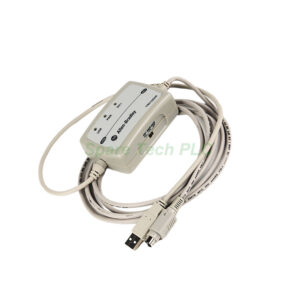
1771-HSAR IMC Servo Controller by Allen-Bradley
Product Introduction
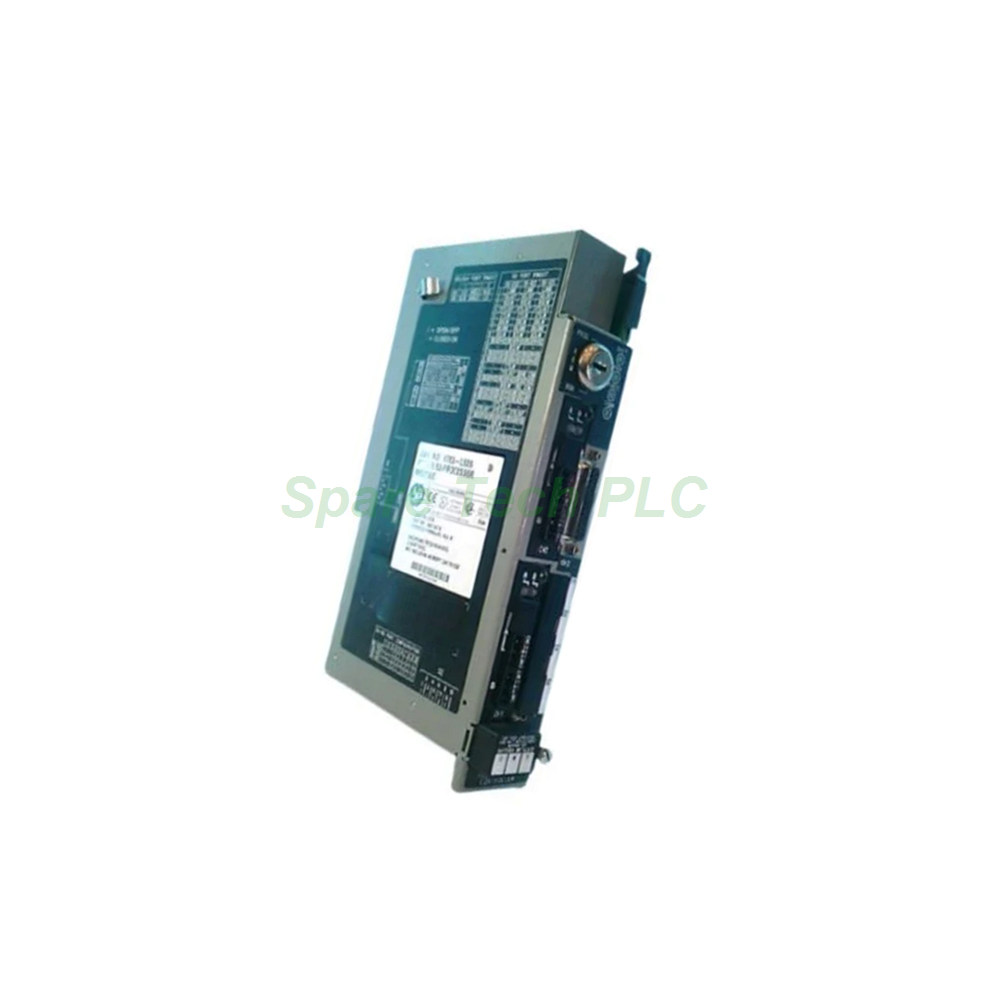
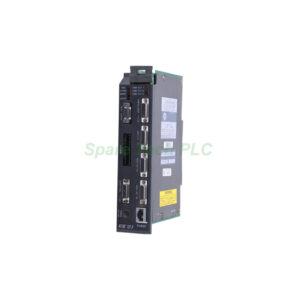
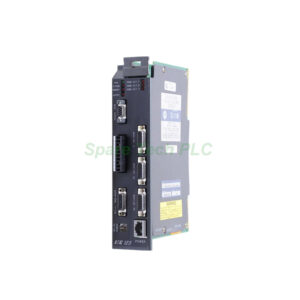
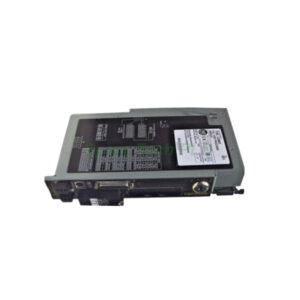
The Allen-Bradley 1771-HSAR servo controller module is an intelligent motion controller from the PLC-5 series. This module installs directly into a 1771 I/O chassis and operates with a 120V or 220V AC power supply, typically the 1771-PS7. It includes a 96 KB battery-backed memory cartridge (lithium battery) that stores application programs and AMP parameters. The module processes resolver feedback and auxiliary encoder signals, outputs ±10V DC analog commands, and updates each axis within 2 ms. With its RS-232 port and optional hand-held pendant, the 1771-HSAR offers flexible programming and on-site tuning capabilities.
Technical Specifications
The 1771-HSAR delivers a robust set of technical features for demanding servo applications. Its maximum differential input frequency reaches 250 kHz, while single-ended inputs operate at 20 kHz. The analog command outputs supply a ±10V DC range, ensuring compatibility with a wide variety of servo drives and amplifiers.
For power, the module draws 1.7 amperes from the backplane and relies on an external power supply rated at 120V or 220V AC, connected via the 1771-CAS power connector cable. The fuse voltage is rated at 120 volts for circuit protection. The memory subsystem uses a 96 KB lithium battery-backed cartridge, which ships with the controller. This battery typically lasts 3 years and can back up the memory for up to 10 years, providing reliable program retention even during power outages.
Additionally, the 1771-HSAR includes an AUX FDBK connector, a 15-pin port that supplies power to an auxiliary encoder and receives feedback signals from both the auxiliary encoder and a resolver rotor. This dual-feedback capability enhances positioning accuracy and system flexibility. The pulse capture time ranges from 50 to 9,999 microseconds, offering fine resolution for position event detection.
Connectivity and Programming Features
The front panel of the 1771-HSAR houses several critical connectors. A 9-pin RS-232 port supports uploading and downloading MML programs and AMP parameters, as well as testing and debugging MML code. This port connects to T35 and T50 offline development systems using the 1771-CT50 cable.
Moreover, the module uses specialized cables for various termination panel connections:
1771-CAP Axis E-Stop connector cable for emergency stop integration
1771-CAPA AUX FDBK connector cable for auxiliary feedback termination
1771-CAS power connector cable for supply connection
For added convenience, operators can connect a hand-held pendant through the ODS (Offline Development System) to modify system variables and parameters directly on the factory floor. This feature significantly reduces commissioning and maintenance time.
Mechanical and Environmental Parameters
Physically, the 1771-HSAR measures 3.5 x 6.5 x 2.0 inches (89 x 165 x 51 mm) and occupies two slots per expansion chassis. Its operating temperature spans 0 to 60°C, with a relative humidity range of 5-95% (non-condensing). These ratings ensure dependable operation in typical industrial environments. The module carries c-UL, C-TICK, and CE certifications, confirming compliance with international safety and electromagnetic compatibility standards.
Installation Guidance
Installing the Allen-Bradley 1771-HSAR follows a clear and systematic process. First, ensure the 1771 I/O chassis is powered off completely. Insert the module into an available slot pair, aligning it carefully with the backplane connectors. Next, connect the external power supply (120V or 220V AC) using the 1771-CAS cable to the controller's power connector.
For field wiring, attach the 1771-WA wiring arm to simplify connections to solenoids, indicators, and AC motor starters. Then, connect the Axis E-Stop cable (1771-CAP) to the termination panel's E-STOP connector for safety integration. Similarly, connect the auxiliary feedback cable (1771-CAPA) to the termination panel's AUX FDBK port.
After physical mounting, link the RS-232 port to a T35 or T50 ODS using the 1771-CT50 cable for programming. Optionally, you can attach a hand-held pendant through the ODS for interactive parameter adjustments. Finally, power on the chassis and observe the LED indicators to confirm normal operation. These LEDs provide real-time feedback on power status, communication activity, and axis health.
Packaging List
Your shipment of the 1771-HSAR includes the following items:
1771-HSAR IMC servo controller module
1771-WA wiring arm for field terminations
96 KB lithium battery-backed memory cartridge (pre-installed)
1771-CAS power connector cable
Quick start guide (printed)
Installation instructions manual
Note: Certificates and warranty documents are not included in this package.
Shipping Information
All orders are shipped via FedEx, UPS, or DHL to ensure fast and reliable delivery. Tracking numbers will be provided once your order leaves our warehouse.
Frequently Asked Questions (FAQ)
1. Which power supply works with the 1771-HSAR?
The module accepts a 120V or 220V AC power supply, typically the 1771-PS7, connected via the 1771-CAS cable.
2. How long does the lithium battery last?
The battery typically lasts 3 years under normal use, but it can back up memory for up to 10 years maximum.
3. What memory capacity does the 1771-HSAR have?
It includes a 96 KB battery-backed memory cartridge that stores application programs and AMP parameters.
4. Can I use an auxiliary encoder with this module?
Yes, the 1771-HSAR has a 15-pin AUX FDBK connector that powers an auxiliary encoder and receives its feedback signals.
5. How do I modify parameters without a computer?
You can connect a hand-held pendant via the ODS terminal and adjust system variables and parameters directly on site.