Product Introduction
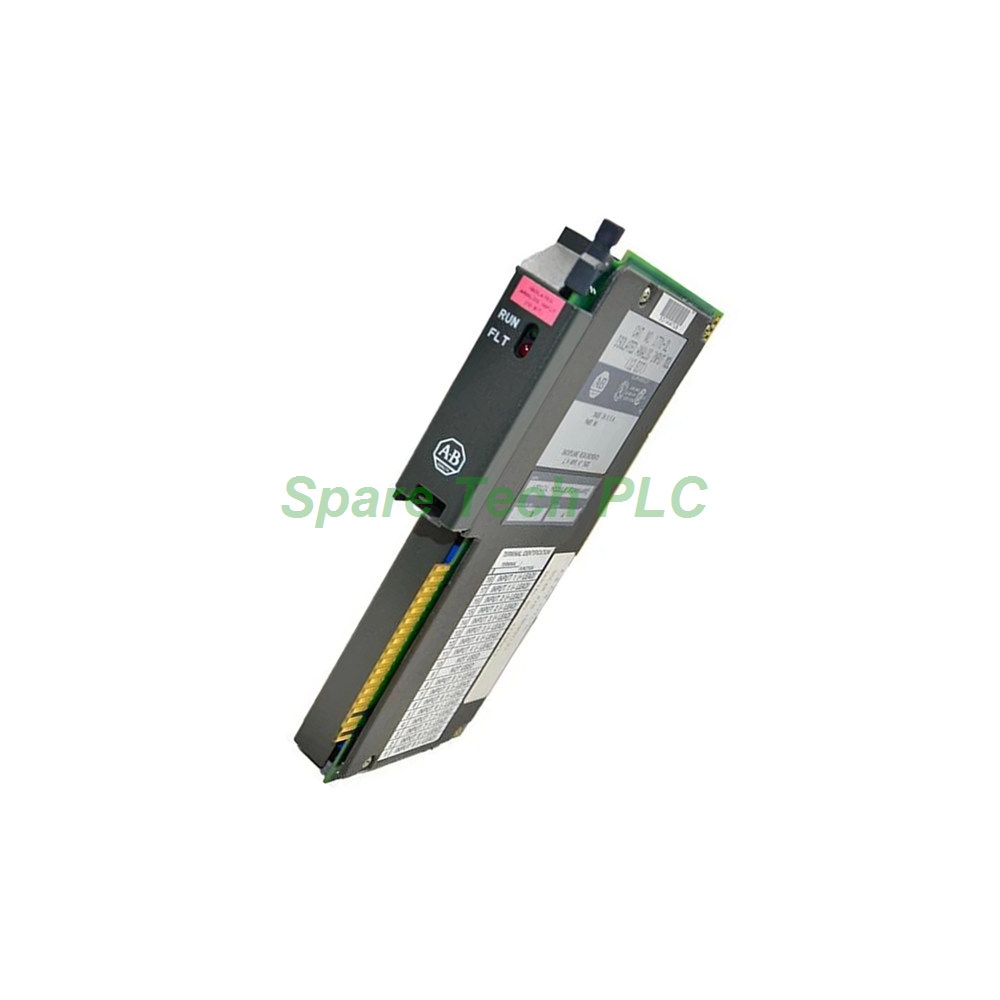
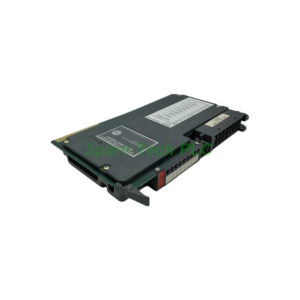
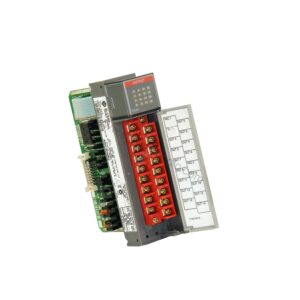
The Allen-Bradley 1771-IL analog input module provides a flexible and dependable solution for integrating field instruments into your PLC5 control system. This module features eight fully isolated differential input channels, which help eliminate ground loop issues and enhance signal integrity. You can configure each channel for popular unipolar voltage ranges like 0–5V, 1–5V, and 0–10V, as well as unipolar current ranges such as 0–20mA and 4–20mA. Its 16‑bit resolution ensures precise measurement across the full scale, while the built‑in auto‑calibration function maintains accuracy over time. Furthermore, the 1771-IL is compatible with any 1771 I/O chassis, making it a versatile choice for system upgrades or new installations.
Technical Specifications
Input Channels and Ranges
The 1771-IL provides eight isolated differential inputs. These channels support only unipolar signal types, where the measurement starts from zero. For voltage, you can select 1–5V, 0–5V, or 0–10V DC. For current, the module accepts 4–20mA and 0–20mA. This selection of unipolar input options allows the Allen‑Bradley 1771‑IL to connect to various sensors and transmitters without requiring external signal conditioners.
Resolution and Data Format
This module uses a 16‑bit binary format over the full input range. For all unipolar signals, the digital count spans from 0000 to +4095. The module supports natural binary or BCD scaling to ±9999, giving you flexibility in your PLC program. The internal scan rate is 50 milliseconds for all eight channels, and the channel update time is 500 ms. This speed is adequate for many monitoring and control loops. Additionally, the data format is user‑selectable, making it easy to integrate the Allen‑Bradley 1771‑IL with different PLC programs and HMI systems.
Accuracy Performance
The voltage accuracy is typically 0.01% of full scale at 25°C, with a maximum of 0.05%. For current inputs, typical accuracy is 0.06%, and maximum accuracy is 0.1% at 25°C (which includes a 0.05% allowance when using the internal current resistor). Therefore, the 1771-IL delivers reliable and repeatable measurements for critical process applications.
Built‑In Protection and Diagnostics
To improve system reliability, the 1771-IL includes integral open‑circuit detection. This feature alerts you to broken sensor wires or disconnected inputs. The module also provides input overvoltage protection, which safeguards the circuitry against accidental high‑voltage spikes. Moreover, the auto‑calibration capability compensates for drift caused by temperature changes, ensuring consistent performance without manual intervention.
Mechanical and Environmental Parameters
Power and Backplane
The 1771-IL draws 1.3 Amperes from the backplane and does not require an external power supply. It occupies a single slot in any 1771 chassis, making it space‑efficient. The wiring arm for this module is the 1771‑WG (sold separately), which simplifies field wiring and maintenance.
Mounting and Dimensions
This module is rack‑mountable and fits standard 1771 I/O racks. Its compact design allows you to install multiple analog modules in the same chassis, expanding your I/O capacity as needed. The module’s robust construction ensures it withstands typical industrial environments, though it is classified as an earlier model and should be used within specified temperature and humidity ranges.
Signal Delay
For AC signals, the typical off‑delay is 24 ms (±10 ms). For DC signals, the typical off‑delay is 20 ms (±9 ms). These delays are important to consider when designing time‑critical control logic.
Installation Guidelines
Chassis Placement
First, insert the 1771-IL into any available slot in your 1771 I/O chassis. Ensure the chassis is powered off before installation to prevent damage. The module’s single‑slot width allows flexible positioning, but you should avoid placing it next to high‑voltage or high‑noise modules to maintain signal quality.
Wiring Connections
Next, connect the 1771‑WG wiring arm to the module’s front connector. Use shielded twisted‑pair cables for analog signals to reduce electrical interference. Each channel accepts differential inputs, so wire the positive and negative terminals accordingly. For current loops, remember to install the internal resistor jumper per the manual. Always double‑check polarity and signal levels before energizing the system.
Configuration and Setup
After installation, configure the input ranges using the module’s dip switches or through the PLC configuration software. You must also set the data format (natural binary or BCD) to match your application. Finally, perform a block transfer read command in your PLC5 program to retrieve the analog values. The Allen‑Bradley 1771‑IL is now ready for operation.
Packaging List
Allen-Bradley 1771-IL analog input module (1 unit)
Product documentation (user manual and quick start guide)
No additional certificates or warranty cards included
Shipping Method: FedEx, UPS, or DHL
Frequently Asked Questions
1. Is the 1771-IL compatible with all 1771 chassis?
Yes, the Allen‑Bradley 1771‑IL works with any 1771 I/O chassis. It fits into a single slot and draws power from the backplane without needing an external supply.
2. What is the digital count range for unipolar signals on this module?
For all unipolar ranges (0–5V, 1–5V, 0–10V, 0–20mA, and 4–20mA), the 1771-IL converts the input to a digital value from 0000 to +4095.
3. How do I connect a 4–20mA sensor to the 1771-IL?
Connect the sensor’s positive wire to the channel’s input terminal and the negative to the common terminal. Ensure the internal current resistor is enabled. Then configure the channel for the 4–20mA range. The Allen‑Bradley 1771‑IL will convert the current to a digital value.
4. What should I do if the module shows an open‑circuit error?
Check the wiring for broken or loose connections. The open‑circuit detection feature of the 1771-IL triggers when the input current or voltage drops below a threshold. Repair or replace the field wiring and reset the module.
5. Can I use the 1771-IL in a new project today?
Although the 1771-IL is an earlier model, it remains a reliable choice for legacy PLC5 systems. For new installations, consider newer analog modules, but the Allen‑Bradley 1771‑IL is still widely available and supported for upgrades.