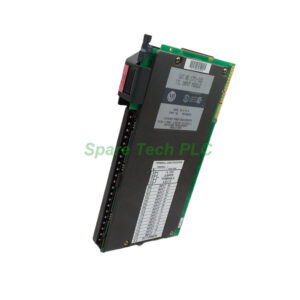
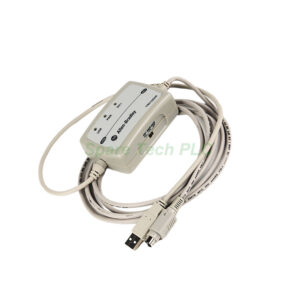
1771-IFMS | Allen-Bradley 8-Channel Fast Analog Input
Product Introduction
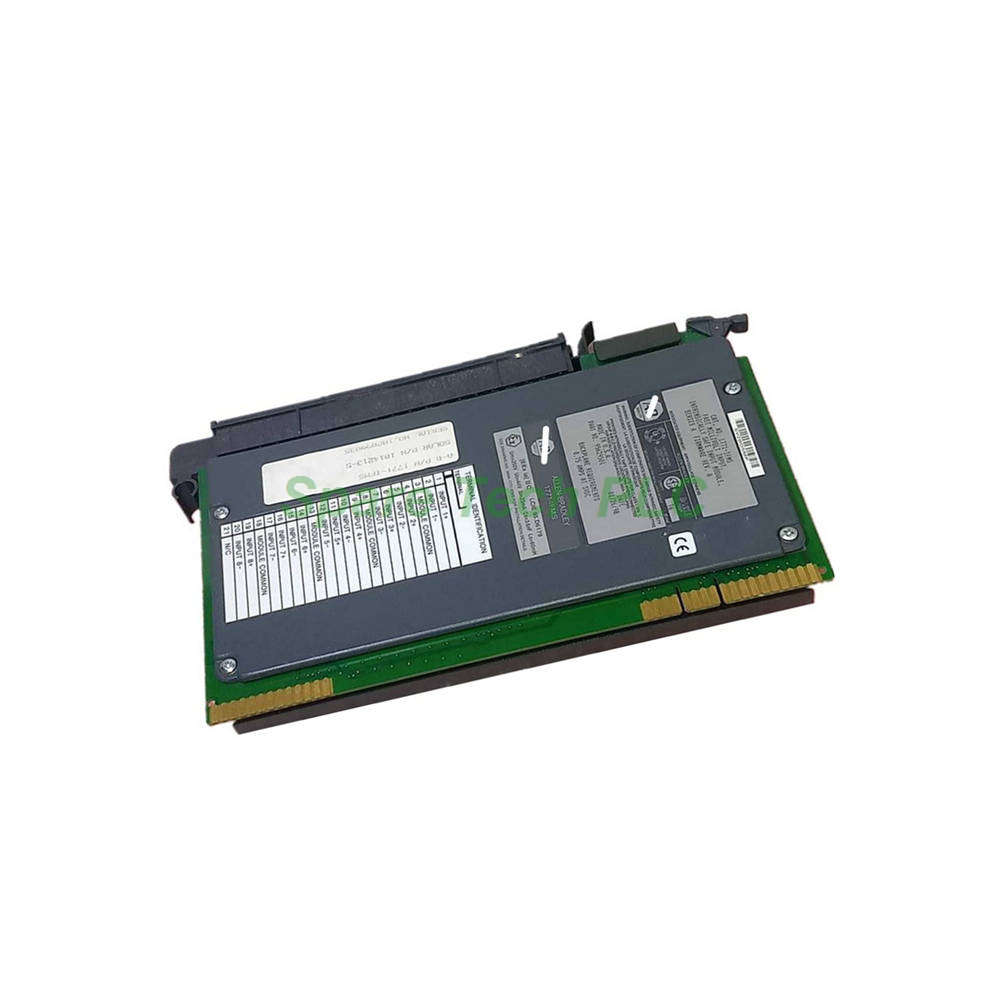
The Allen‑Bradley 1771‑IFMS is a specialized analog input module for the 1771 I/O chassis. This fast millivolt input module provides a reliable solution for reading low-level DC signals from sensors like thermocouples, strain gauges, and pressure transducers. Its key feature is the intrinsic safety barrier, which allows you to connect field devices in hazardous areas without external isolators. Therefore, it integrates directly with your PLC-5 processor, offering a streamlined and secure method for data acquisition.
Technical Specifications
Input Characteristics
The 1771‑IFMS module handles sensitive signals with exceptional precision. It features eight (8) differential input channels, which reject common-mode noise effectively for more stable readings. The module accepts a voltage input range of 0‑50 millivolts, a typical range for many high-precision sensors. An internal analog-to-digital converter provides a 12-bit binary resolution. This offers a data format of ±32,767 binary or ±9999 BCD.
The module achieves an accuracy rating of 0.1% of range at 25 °C. Moreover, the linearity and repeatability both fall within ±1 LSB. This combination ensures that the data reaching the PLC exactly represents the physical process.
Performance and Speed
This module earns its "fast" designation through its rapid scan time. It updates all eight channels in just 14.5 milliseconds without digital filtering. This high speed suits applications requiring quick response times, such as closed-loop control or high-speed monitoring. The A/D converter uses a monotonic output with no missing codes, guaranteeing that every bit change corresponds to a genuine and consistent change in the input voltage. Additionally, the typical DC signal delay measures 20 ms, while the AC delay reaches 24 ms.
Mechanical and Environmental Parameters
Power and Protection
The Allen‑Bradley 1771‑IFMS draws a backplane current of 750 milliamperes at 5 Volts DC. It offers robust protection for the control system. The module features an input overvoltage protection rating of 32 Volts, safeguarding the circuitry from accidental high-voltage spikes. Furthermore, it meets the T6 North American temperature code, a critical requirement for environments with potentially flammable gases or dust.
Environmental Ratings
This 1771 analog input module performs reliably in demanding industrial environments. It operates within a temperature range of 0 to 60 °C. For storage, it can tolerate temperatures from -40 to 85 °C. The module withstands a relative humidity of 5 to 95% non-condensing. Its shock resistance measures 15 G while operating and 30 G when non-operating.
Installation and Wiring Guide
System Compatibility
The 1771‑IFMS works seamlessly with the PLC-5 family of processors. It mounts directly into a standard 1771 I/O rack. However, the module does not support Removal and Insertion Under Power (RIUP). Therefore, you must power down the entire chassis before installing or removing this module to prevent potential damage. Always handle the module carefully to avoid electrostatic discharge.
Wiring with the 1771-WG Arm
Proper wiring is essential for achieving the specified accuracy and maintaining the intrinsic safety rating. This module requires the dedicated 1771‑WG wiring arm. For connecting field devices, use solid or stranded copper wire with a gauge of 22 to 14 AWG. The insulation should have a rating of 75 °C or higher. The recommended torque for the terminal screws falls between 0.8 and 1.0 Nm (7 to 9 lb-in) . For the non-intrinsically safe side, ensure connected equipment does not generate voltages exceeding 250 Volts RMS.
Packaging List
Your Allen‑Bradley 1771‑IFMS order will include the following items:
Note: The module and its accessories ship in protective anti-static packaging to prevent ESD damage during transit. All orders ship via FedEx, UPS, or DHL.
Frequently Asked Questions (FAQ)
Q1: What type of sensors can I connect to the 1771‑IFMS?
This module works best with devices that output a low-level millivolt signal. This includes thermocouples, strain gauges, and current shunts. Its intrinsic safety rating makes it suitable for connecting to sensors located in hazardous areas, such as those measuring temperature or pressure.
Q2: What are the resolution and accuracy of the 1771-IFMS?
The Allen‑Bradley 1771‑IFMS provides a 12‑bit binary resolution. The module’s accuracy reaches 0.1% of the input range at 25 °C. This ensures your PLC-5 receives precise, repeatable data for critical control processes.
Q3: Can I install this 1771-IFMS module while the system runs?
No, you cannot. This module does not support RIUP (Removal and Insertion Under Power). You must always disconnect the main power to the 1771 chassis before you install or remove the 1771‑IFMS to avoid damaging the module.
Q4: Which wiring arm works with this module?
This analog input module requires the 1771‑WG wiring arm. This specific arm ensures proper connections and maintains the certification for the intrinsic safety barrier. Ensure your chassis includes this accessory.
Q5: What is the maximum input voltage the 1771‑IFMS can handle?
The module specifically measures a 0‑50 mV signal. For protection against faults, it can withstand an overvoltage up to 32 Volts. For normal operation, do not exceed its maximum signal range.