Product Introduction
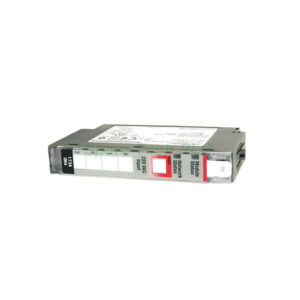
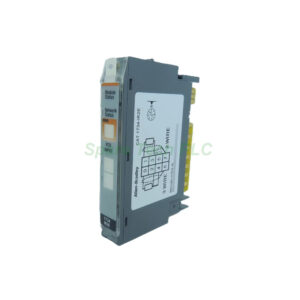
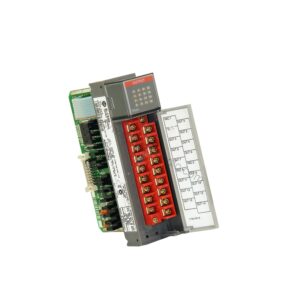
The 1734-IR2 from Allen‑Bradley is a high-performance RTD input module designed for the POINT I/O platform. This compact unit provides two single-ended, non-isolated input channels for direct temperature sensing. It supports a wide variety of RTD types, including 100 Pt α=0.00385, 200 Pt α=0.00385, 100 Pt α=0.003916, 200 Pt α=0.003916, 10 Cu α=0.00427, 100 Ni α=0.00618, 120 Ni α=0.00618, and 120 Ni α=0.00672. Additionally, the 1734-IR2 accepts direct 0–600 Ω resistance signals, making it versatile for both temperature and general resistance measurement tasks.
High-Resolution Temperature Sensing
This module features a 16-bit delta-sigma converter that delivers excellent measurement precision. Specifically, it offers 9.5 mΩ per count and 0.03 °C per count for Pt385 at 25 °C. Such fine resolution ensures accurate temperature tracking in critical processes. Furthermore, the absolute accuracy reaches 0.1% of full scale at 25 °C, guaranteeing reliable data for control systems. Therefore, engineers can trust the 1734-IR2 for demanding temperature monitoring applications.
Flexible Notch Filter Settings
The 1734-IR2 includes configurable digital notch filters to reject power-line noise. Users can select from nine different notch frequencies: 50 Hz, 60 Hz (default), 100 Hz, 120 Hz, 200 Hz, 240 Hz, 300 Hz, 400 Hz, and 480 Hz. Each setting directly affects the input update rate per module. For instance, at 50 Hz the update rate is 40 ms, while at 480 Hz it drops to just 4 ms. Meanwhile, the per-channel step response ranges from 60 ms at 50 Hz down to 6 ms at 480 Hz. Consequently, this flexibility allows optimization between noise rejection and speed based on your specific environment.
Mechanical and Environmental Specifications
Physically, the 1734-IR2 measures 56 x 12 x 75.5 mm (2.2 x 0.47 x 2.97 inches) and weighs only 0.08 pounds (0.036 kg). Its open-style enclosure requires installation inside a protected cabinet. The module operates reliably between -20 °C and 55 °C, accommodating most industrial settings. Power dissipation is rated at 1.0 W at 28.8V DC, with thermal dissipation of 3.3 BTU/hour. Moreover, it draws 220 mA from the 5V DC backplane supply. The isolation voltage is 50 volts continuous, providing basic protection for connected circuits.
Installation and Wiring Guidance
Mounting the 1734-IR2 requires a compatible wiring base assembly, such as the 1734-TB, 1734-TBS, 1734-TOP, or 1734-TOPS. These bases provide the physical and electrical interface to the POINT I/O backplane. During installation, ensure proper grounding and shielding to maintain measurement integrity. Since the inputs are single-ended and non-isolated, use twisted-pair cables and keep sensor wiring away from high-voltage conductors. Additionally, verify the keyswitch position is set to 6 before inserting the module. This step prevents incorrect insertion and protects both the module and the backplane.
Data Format and Integration
The 1734-IR2 outputs data as signed integers, simplifying integration with Rockwell Automation controllers. Its delta-sigma conversion method ensures high noise immunity and stable readings. For resistance inputs, the module linearizes the signal internally, providing direct temperature values when using RTD sensors. This feature reduces programming effort and speeds up system commissioning. Meanwhile, the default 60 Hz notch filter balances speed and noise rejection for most applications. However, you can easily adjust this setting via the configuration software to match your local power frequency or specific process requirements.
Typical Applications
This Allen-Bradley 1734-IR2 module excels in various industries, including pharmaceutical, food processing, HVAC, and semiconductor manufacturing. For example, it monitors reactor temperatures in chemical plants or tracks bearing temperatures in rotating machinery. Its ability to read both RTDs and resistance signals also makes it suitable for level measurement using resistive sensors. Additionally, the compact POINT I/O form factor enables dense channel mounting in space-constrained control panels. Therefore, the 1734-IR2 offers a cost-effective solution for distributed temperature sensing architectures.
Packaging List
1 x Allen-Bradley 1734-IR2 RTD Input Module
1 x Installation Instructions (printed)
1 x Removable terminal block (pre-installed on base, base not included)
Note: The module is shipped in anti-static packaging to prevent electrostatic damage during transit.
Shipping Method: FedEx, UPS, DHL
Frequently Asked Questions (FAQ)
1. Can the 1734-IR2 measure temperature from a 3-wire RTD?
Yes, the 1734-IR2 supports 3-wire RTD connections. However, since the inputs are single-ended, you must connect the third wire to the appropriate reference terminal to compensate for lead resistance.
2. What happens if I connect a 0–600 Ω resistance signal instead of an RTD?
The 1734-IR2 accepts direct 0–600 Ω resistance inputs without any configuration change. Simply wire the resistance source to the input terminals, and the module will output the raw resistance value in signed integer format.
3. How do I change the notch filter frequency on this module?
You can adjust the notch filter setting through the module's configuration file in your Rockwell Automation programming software (e.g., Studio 5000 Logix Designer). Select the desired frequency from the dropdown menu and download the changes to the controller.
4. Is the 1734-IR2 compatible with 2-wire RTD sensors?
Absolutely. For 2-wire RTDs, connect both sensor leads to the input terminals. Keep in mind that lead resistance may introduce a small offset error. For best accuracy, use 3-wire or 4-wire sensors if possible.
5. What is the difference between step response and update rate?
The step response is the time required for the module to settle to a new input value after a sudden change. The update rate is how often the module provides fresh data to the controller. Both parameters depend on the selected notch frequency and are listed in the technical specifications above.