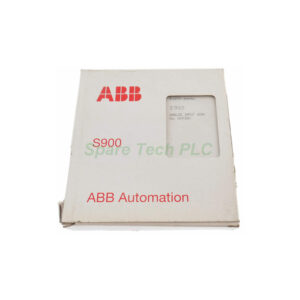
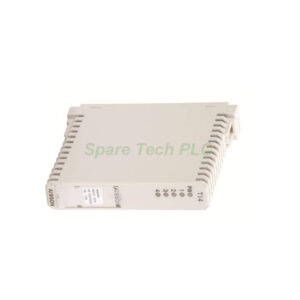
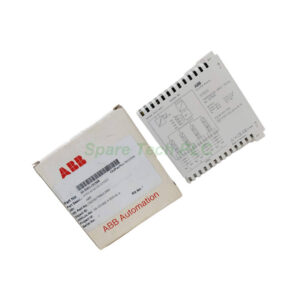
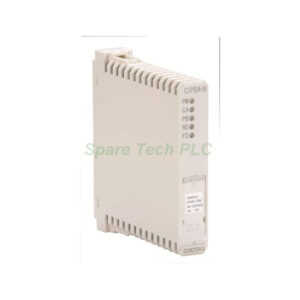
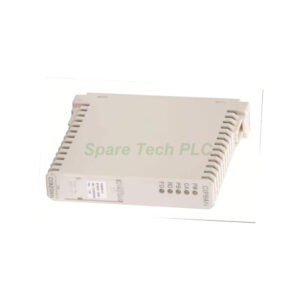
ABB AI910N 3KDE175513L9100 Analog Input Module for S900 I/O
Product Introduction
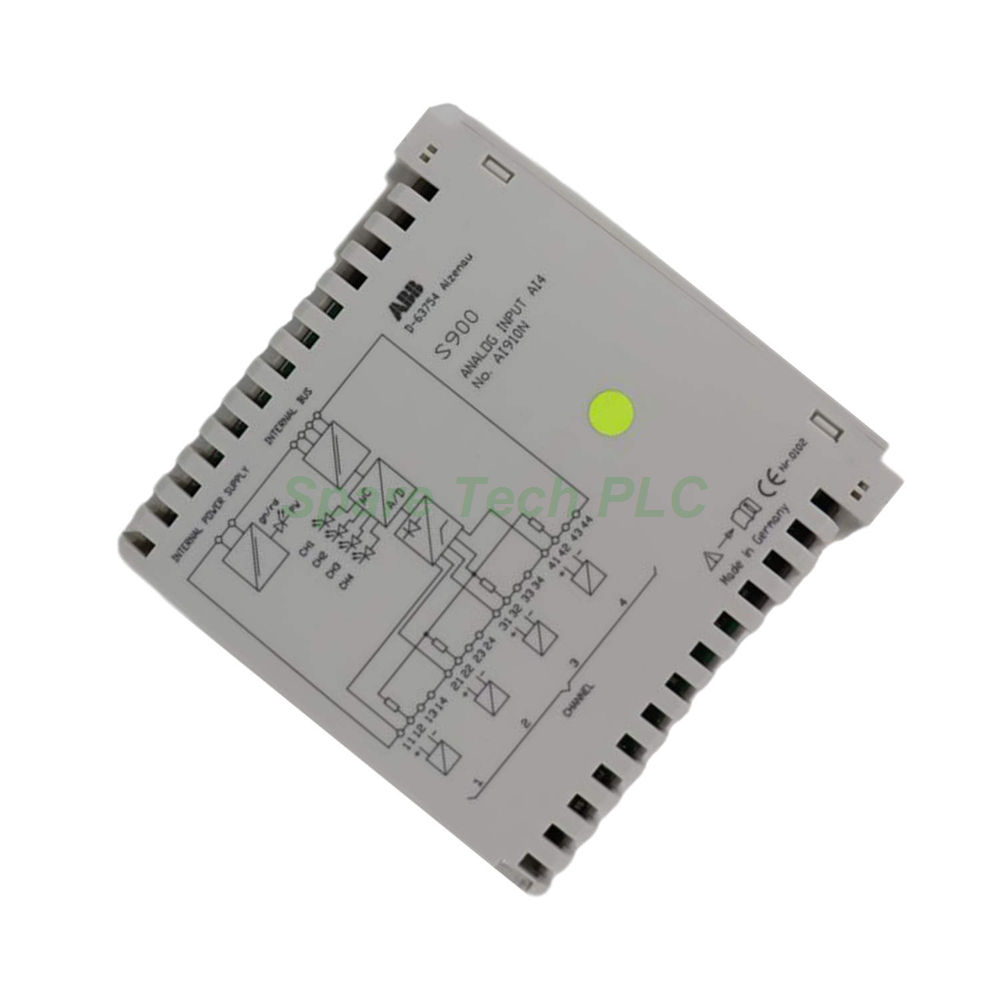
The ABB AI910N (3KDE175513L9100) belongs to the S900 I/O family and carries a Type N rating for safe (non-hazardous) areas. It connects loop-powered 2‑wire transmitters and provides four channels of 4‑20 mA analog input. Power and communication redundancy are available at the system level, making this module ideal for critical field installations.
Additionally, the AI910N supplies loop power directly to each connected transmitter. All four channels share a common return, which reduces wiring complexity. The module includes short and break detection, plus electrical isolation between input/bus and input/power for improved signal integrity.
Technical Specifications
The ABB AI910N is a non-intrinsically safe analog input module with four channels. It communicates with the control system via PROFIBUS DP through the S900 carrier.
Type: Analog Input (Type N for safe area)
Number of channels: 4
Signal type: 4‑20 mA
HART: No
SOE (Sequence of Events): N/A
Redundancy: No (power and communication redundancy available at system level)
Intrinsic safety: No
Mechanics: S900
Loop power supply: Yes, for 2‑wire transmitters
Common return: Yes (all channels share one return)
Short and break detection: Yes
Electrical isolation: Between input/bus and input/power
The AI910N supports hot swap and hot configuration in run. You can replace the module without stopping the system. Extended diagnostics are accessible via FDT/DTM tools.
Environmental and Certification Data
The ABB AI910N includes G3 coating to resist corrosive atmospheres. This feature suits chemical plants and offshore installations.
CE mark: Yes
Hazardous location: No (safe area only)
Corrosive atmosphere: ISA‑S71.04 G3 compliant
Max ambient temperature: -20 °C to +60 °C
Relative humidity: Max 93 % ±3 % at 40 °C
RoHS compliance: DIRECTIVE/2011/65/EU (EN 50581:2012)
WEEE compliance: DIRECTIVE/2012/19/EU
WEEE category: Small Equipment (no external dimension over 50 cm)
Dimensions:
Installation Guidelines
First, mount the S900 carrier in a non-hazardous control cabinet or field enclosure. Next, insert the ABB AI910N into an available slot on the carrier. The module clicks into place without tools.
Connect each 2‑wire transmitter to the corresponding channel terminals. The AI910N supplies loop power directly, so no external power supply is needed for the transmitters. Use shielded twisted-pair cables to minimize electrical noise.
For redundant setups, install two AI910N modules on separate carriers and configure the system for channel redundancy. The S900 system handles failover automatically.
Finally, power up the S900 system. The module auto‑detects and begins scanning analog values. Hot configuration allows parameter changes without stopping the controller.
Packaging List
ABB AI910N module (3KDE175513L9100)
Plastic dust cover for unused slots
Label strip for channel identification
Note: No certificates or warranty documents are included in the package.
Shipping Information
We ship all orders via FedEx, UPS, or DHL. Each shipment includes tracking and insurance. Delivery typically takes 3–7 business days.
Frequently Asked Questions (FAQ)
1. What is the difference between AI910N and AI910B?
The ABB AI910N is Type N for non-hazardous (safe) areas and has no intrinsic safety rating. The AI910B is Type B for Zone 2 hazardous areas and supports intrinsically safe field devices. Both provide four 4‑20 mA channels.
2. Can the AI910N connect to HART transmitters?
No, the AI910N does not support HART communication. It reads only the analog 4‑20 mA signal. For HART capability, select a different S900 analog input module.
3. Does the AI910N support module redundancy?
The AI910N itself is not redundant, but you can achieve channel redundancy by wiring one transmitter to two separate AI910N modules in different carriers. The S900 system supports this configuration.
4. Can I replace the AI910N while the system is running?
Yes, the AI910N supports hot swap functionality. You can remove and insert a new module without powering down the S900 I/O system.
5. What happens if a channel detects a short circuit?
The AI910N detects short and break conditions on each channel. It reports the fault to the control system via PROFIBUS DP, allowing operators to quickly locate and fix the wiring issue.