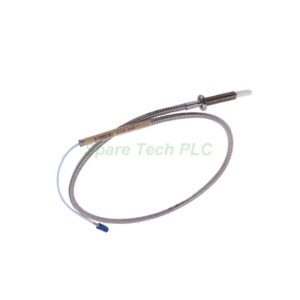
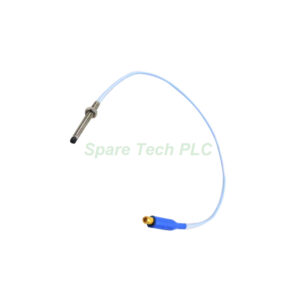
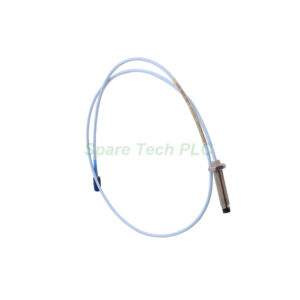
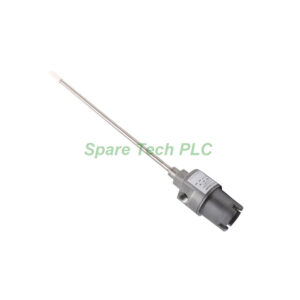
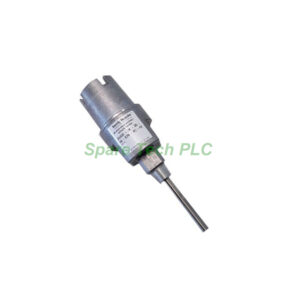
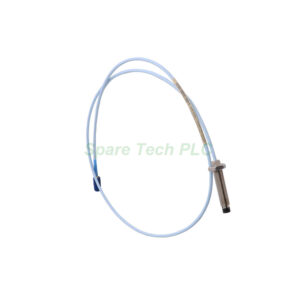
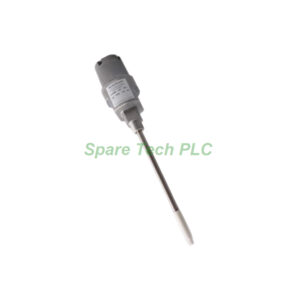
330701-00-20-10-02-00 Bently Nevada 3300 XL 11 mm Probe
Product Introduction
The Bently Nevada 330701-00-20-10-02-00 belongs to the trusted 3300 XL series, which enjoys a strong reputation for superior performance in eddy-current proximity transducer systems. This 3300 XL 11 mm probe serves specifically for non-contact vibration and displacement measurement on fluid film bearing machines, including steam turbines, compressors, and pumps. Its 11 mm tip offers a longer linear range than standard 8 mm systems, which makes it particularly effective for axial position monitoring and eccentricity detection. The probe outputs a voltage signal that changes proportionally with the distance between the tip and the conductive target, which enables precise machine condition monitoring. Because of its robust design and reliable output, the 330701-00-20-10-02-00 stands as a preferred choice for maintenance teams seeking consistent, repeatable data. This model comes without armor, which simplifies installation in applications where cable protection does not present a primary concern. Additionally, its 1/2-20 UNF thread allows for straightforward mounting into standard probe holders, ensuring compatibility with most existing machinery casings.
Technical Specifications
Probe Configuration and Ordering Code
The part number 330701-00-20-10-02-00 contains fully defined ordering options. The unthreaded length option "00" indicates a standard configuration, meaning no additional unthreaded segment exists between the probe tip and the threaded section. The overall case length option "20" specifies a 2.0-inch case, which provides adequate support for the internal coil assembly while maintaining a compact footprint. Meanwhile, the total length option "10" denotes a 1.0-meter (3.3 feet) cable, offering sufficient reach for many common machine installations without excess cable management. For the connector and cable type, option "02" provides a miniature coaxial ClickLoc connector, which ensures a positive locking mechanism that resists loosening from vibration. Finally, the agency approval option "00" means this probe does not carry specific third-party certifications, which is typical for standard industrial sensors.
Electrical and Material Properties
This probe exhibits a dc resistance of 5.9 ± 0.5 ohms from the center conductor to the outer conductor, which ensures consistent electrical performance across the 1.0-meter cable length. Furthermore, the probe cable features a 75 Ω triaxial design with fluoroethylene propylene (FEP) insulation, which offers excellent dielectric properties and resistance to harsh chemicals. The probe tip uses polyphenylene sulfide (PPS), a high-performance thermoplastic that withstands wear and maintains dimensional stability over time. In addition, the probe case utilizes AISI 304 stainless steel (SST), which provides corrosion resistance and structural integrity in industrial atmospheres. These carefully selected materials contribute to the probe's long service life and measurement accuracy.
Environmental and Operating Conditions
The 330701-00-20-10-02-00 operates reliably across a wide temperature range from -51°C to +177°C (-60°F to +351°F). However, exposing the probe to temperatures below -34°C (30°F) may cause premature failure of the pressure seal, so users should consider this limitation in cold startup conditions. For storage, the same temperature limits apply, allowing flexibility in warehouse environments. Additionally, the probe incorporates a Viton O-ring to seal differential pressure between the tip and case, which provides resistance to oil and high temperatures. While the probe does not undergo pressure testing before shipment, the sealing design meets standard industrial requirements for most turbine and compressor applications.
Thread and Torque Specifications
The probe case features a 1/2-20 UNF thread with a maximum length of thread engagement of 0.750 inches. This standard thread size ensures compatibility with common mounting hardware. For installation, the maximum recommended tightening torque is 15.2 N•m (133 in•lb), while the rated maximum is 45.2 N•m (400 in•lb). Importantly, users should avoid exceeding the recommended torque to prevent damage to the probe case or internal components. For the connector, the recommended torque is finger tight, with a maximum of 0.565 N•m (5 in•lb) to avoid over-tightening and potential connector damage. The cable has a minimum bend radius of 25.4 mm (1.0 inch), with or without stainless steel armor, which provides flexibility during routing.
Mechanical and Environmental Data
Physical Dimensions and Weight
The probe's overall length, including the cable, is 1.0 meter, with a case length of 2.0 inches. The compact design ensures it does not interfere with adjacent machine components. Additionally, the shipping weight is only 0.17 kg, which minimizes freight costs and facilitates easy handling during installation or replacement. The probe originates from U.S.A. manufacturing, reflecting high production standards and quality control.
Pressure Sealing and Application Notes
The 3300 XL 11 mm probe effectively seals differential pressure between the probe tip and case, which is particularly important in pressurized bearing housings. The Viton O-ring provides an effective seal against oil and process fluids. However, it is important to note that the probe does not undergo pressure testing prior to shipment. For applications requiring specific pressure ratings, users should contact the custom design department to request a pressure seal test. Despite this, the standard design suits the vast majority of industrial rotating machinery applications.
Installation Guide
Mounting Preparation
Before installing the 330701-00-20-10-02-00, ensure the mounting hole is clean and free of debris. The 1/2-20 UNF thread requires a mating hole with a minimum thread engagement of 0.750 inches for secure mounting. Meanwhile, the target surface should have a proper ground connection to ensure accurate eddy-current measurements. We recommend using a thread-locking compound if vibration is likely to be severe, although this is not required for standard applications.
Cable Routing and Connection
When routing the triaxial FEP cable, avoid sharp bends and keep the bend radius above 25.4 mm to maintain cable integrity. Additionally, secure the cable with appropriate clips or ties to prevent chafing or strain on the connector. For the ClickLoc connector, simply push and twist to lock, which ensures a secure and vibration-resistant connection. The connector requires only finger-tight torque, so no tools are necessary. Furthermore, keep the connector clean and dry before mating to maintain signal integrity.
Initial Setup and Calibration
After installation, perform a calibration using a target material that matches the machine's shaft material. Typically, the probe requires a 1.5 mm gap for optimal linear range. Use a voltage divider or signal conditioner to convert the probe's output to a usable range for your monitoring system. For precise measurements, follow the manufacturer's gap-voltage curve for the 3300 XL series. Finally, verify the output signal at multiple gap positions to confirm linearity.
Packaging List
The package includes the following items:
Bently Nevada 330701-00-20-10-02-00 3300 XL 11 mm Proximity Probe (1 unit)
Instruction manual (quick start guide)
Anti-static packaging bag for protection during transit
Note: This package does not include certificates of calibration or warranty documents. The probe ships as a standalone sensor.
Shipping Information
We dispatch all orders via FedEx, UPS, or DHL, depending on your location and shipping preference. We provide tracking numbers upon shipment. The gross weight of 0.17 kg ensures cost-effective shipping, even for express services. For international shipments, please ensure your customs documentation is accurate to avoid delays.
Frequently Asked Questions (FAQ)
1. What is the primary application of the 330701-00-20-10-02-00 probe?
This probe is ideal for non-contact vibration and position measurement on fluid film bearings in turbines, compressors, and pumps. Its 11 mm tip provides a longer linear range, making it suitable for axial position monitoring.
2. Can I use this probe without armor in a high-abrasion environment?
While this model does not include armor, the FEP-insulated cable offers good chemical resistance. However, in environments with high abrasion or mechanical wear, you may consider an armored version for additional protection.
3. How do I connect the ClickLoc connector?
Simply push the connector straight onto the mating receptacle and twist the locking collar until it clicks. Finger-tight torque is sufficient; do not use tools, as overtightening may damage the connector.
4. What is the maximum thread engagement length for mounting?
The maximum thread engagement is 0.750 inches (19 mm) for the 1/2-20 UNF thread. Ensure your mounting hole does not exceed this depth to prevent interference with the probe's internal coil.
5. Is the probe pre-calibrated for a specific target material?
The probe does not come pre-calibrated to a specific target material. You must perform calibration on-site using the actual shaft material to ensure accurate measurements. A typical 1.5 mm gap voltage is provided in the manual as a starting point.