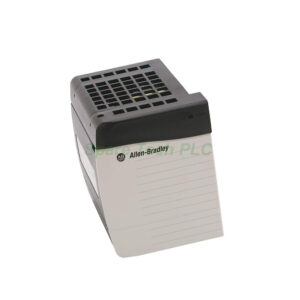
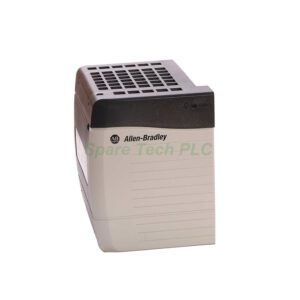
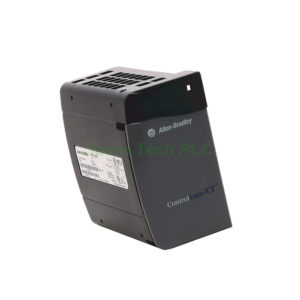
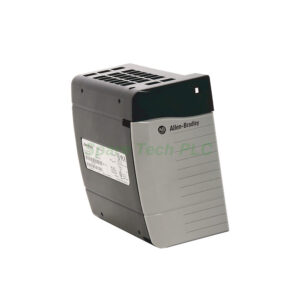
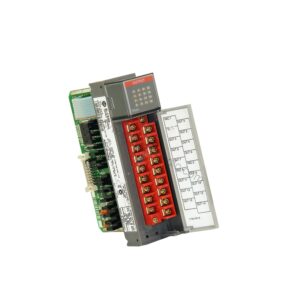
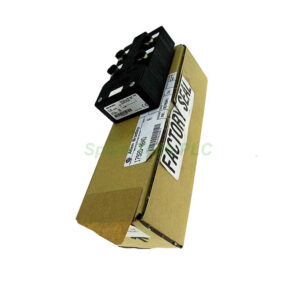
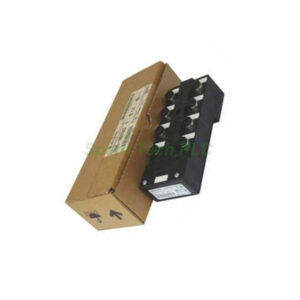
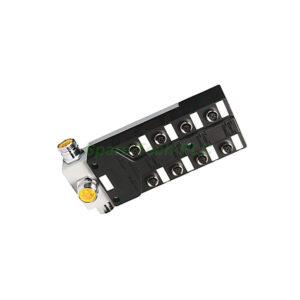
1756-PAXTR Allen‑Bradley ControlLogix-XT Redundant AC Power Supply Module
Product Introduction
The 1756-PAXTR belongs to the ControlLogix-XT extended temperature family. Allen‑Bradley designed this redundant power supply for harsh environments and high-availability systems. You can use one unit alone or pair two units for a redundant configuration. The module accepts 120-240V AC input (85-265V range) and delivers up to 65W output. Additionally, the 1756-PAXTR includes an annunciator port for status monitoring. Its reinforced insulation withstands 3250V DC for 60 seconds.
Key Technical Specifications
The 1756-PAXTR operates at an input frequency of 47-63 Hz. Maximum input power reaches 75 VA (65 watts). Continuous isolation voltage is rated at 250V AC. The module's dimensions are 17.5 x 14.5 x 13.7 cm (6.9 x 5.7 x 5.4 inches). Weight measures 1.45 kg. For redundancy, simply install two 1756-PAXTR modules in the same chassis. They automatically share the load. If one fails, the other continues supplying full power.
Extended Temperature Performance
The "XT" suffix signifies extreme temperature capability. The 1756-PAXTR operates reliably from -25 to 70 °C (-13 to 158 °F). Non-operating temperature ranges from -40 to 85 °C (-40 to 185 °F). Relative humidity tolerance is 5% to 95% non-condensing. Maximum operating altitude reaches 2000 meters (6560 feet). These specifications make the 1756-PAXTR suitable for outdoor cabinets, unheated warehouses, and desert installations.
Immunity and Protection Features
The 1756-PAXTR includes robust electrical immunity. Surge transient immunity reaches ±1 kV line-line (differential mode) and ±2 kV line-earth (common mode) on signal ports. Conducted RF immunity is 10 Vrms with 80% AM modulation from 150 kHz to 80 MHz. The module also withstands radiated RF and ESD events. Vibration rating is 2G at 10-500 Hz. Operating shock reaches 30G, while non-operating shock handles 50G.
Annunciator Port and Wiring Requirements
The 1756-PAXTR features an annunciator port that operates at 240V AC, 50/60 Hz. This port is not rated for pilot duty. For wiring, use copper conductors only (solid or stranded). Wire size ranges from 0.25 to 2.5 mm² (22 to 14 AWG). Insulation must be rated at 90 °C (194 °F) or higher with maximum thickness of 1.2 mm. Wire category 1 applies to power ports. Wire category 3 applies to annunciator ports. Tighten conductor screws to 0.79 N·m (7 lb·in).
Hazardous Location and Environmental Ratings
The 1756-PAXTR is engineered for pollution degree 2 environments (per EN/IEC 60664-1). You can install it in ATEX / IECEx Zone 2 certified enclosures. The enclosure must have a minimum IP54 ingress rating (per EN/IEC 60529). Access to the enclosure should require a tool. Never disconnect equipment unless power is shut off or the area is proven safe. These features make the 1756-PAXTR suitable for oil and gas facilities, chemical plants, and other hazardous locations.
Chassis Compatibility and Mounting
The 1756-PAXTR mounts in any slot of a 1756 chassis. However, for proper redundancy, install two units side by side. Compatible chassis include 1756-A4LXT, 1756-A5XT, 1756-A7LXT, 1756-A7XT, and 1756-A10XT models. The module uses an open-style enclosure. Therefore, you must install it inside a suitable cabinet that limits access to trained personnel. The leftmost slot is recommended but not required.
Redundancy Configuration
To build a redundant power system, you need two 1756-PAXTR modules. Install both in the same chassis. They operate in parallel, sharing the load. If one power supply fails, the other immediately takes over full load. This provides continuous operation without processor interruption. The annunciator port on each module signals status to your control system. You can monitor individual power supply health remotely.
Installation Guidelines
First, verify that the enclosure meets Zone 2 and IP54 requirements. Next, power down the chassis completely. Then, align the 1756-PAXTR with any chassis slot. Push firmly until the latches click. For redundant systems, install both modules. After that, connect AC supply wires to the power ports. Use 14 AWG copper wire rated at 90 °C. Connect annunciator wires separately if needed. Tighten all screws to 0.79 N·m. Additionally, ensure ambient temperature stays within -25 to 70 °C. Finally, apply power and verify status LEDs on both modules.
Typical Applications
You will find the 1756-PAXTR in critical infrastructure, oil and gas platforms, and pipeline monitoring stations. It also suits power generation plants, water treatment facilities, and mining operations. For outdoor automation cabinets in deserts or arctic regions, the extended temperature range proves essential. Any application requiring high availability and redundant power should consider this module.
Packaging List
1756-PAXTR power supply module – 1 unit (order two for redundancy)
Removable terminal block (power connector) – 1 piece
Annunciator terminal block – 1 piece
Installation instruction sheet – 1 copy
Note: No certificates or warranty documents are included in the package. For redundant systems, order two units separately.
Shipping
We ship via FedEx, UPS, or DHL. Standard transit time is 3–7 business days depending on your destination.
Frequently Asked Questions (FAQ)
1. Can I mix the 1756-PAXTR with a standard power supply for redundancy?
No. For proper redundancy, use two 1756-PAXTR modules. Mixing with standard power supplies is not supported.
2. What is the difference between 1756-PAXTR and 1756-PA75R?
The 1756-PAXTR is an XT extended temperature model (-25 to 70 °C). The 1756-PA75R is a standard temperature redundant supply (0 to 60 °C).
3. Does the 1756-PAXTR require a special chassis?
It works in standard 1756 chassis but performs best in ControlLogix-XT chassis like 1756-A7XT or 1756-A10XT.
4. What does the annunciator port do on the 1756-PAXTR?
The annunciator port provides status indication. It signals power supply health, load sharing status, and fault conditions to external monitoring systems.
5. Is the 1756-PAXTR certified for hazardous locations?
Yes. It is approved for ATEX / IECEx Zone 2 installations. The enclosure must have a minimum IP54 rating and require a tool for access.